Move by region
Body areas on the reformer
Explore broader body regions used in the exercise library. Each page links to related exercises, muscle groups, goals, and FAQs.
Body area
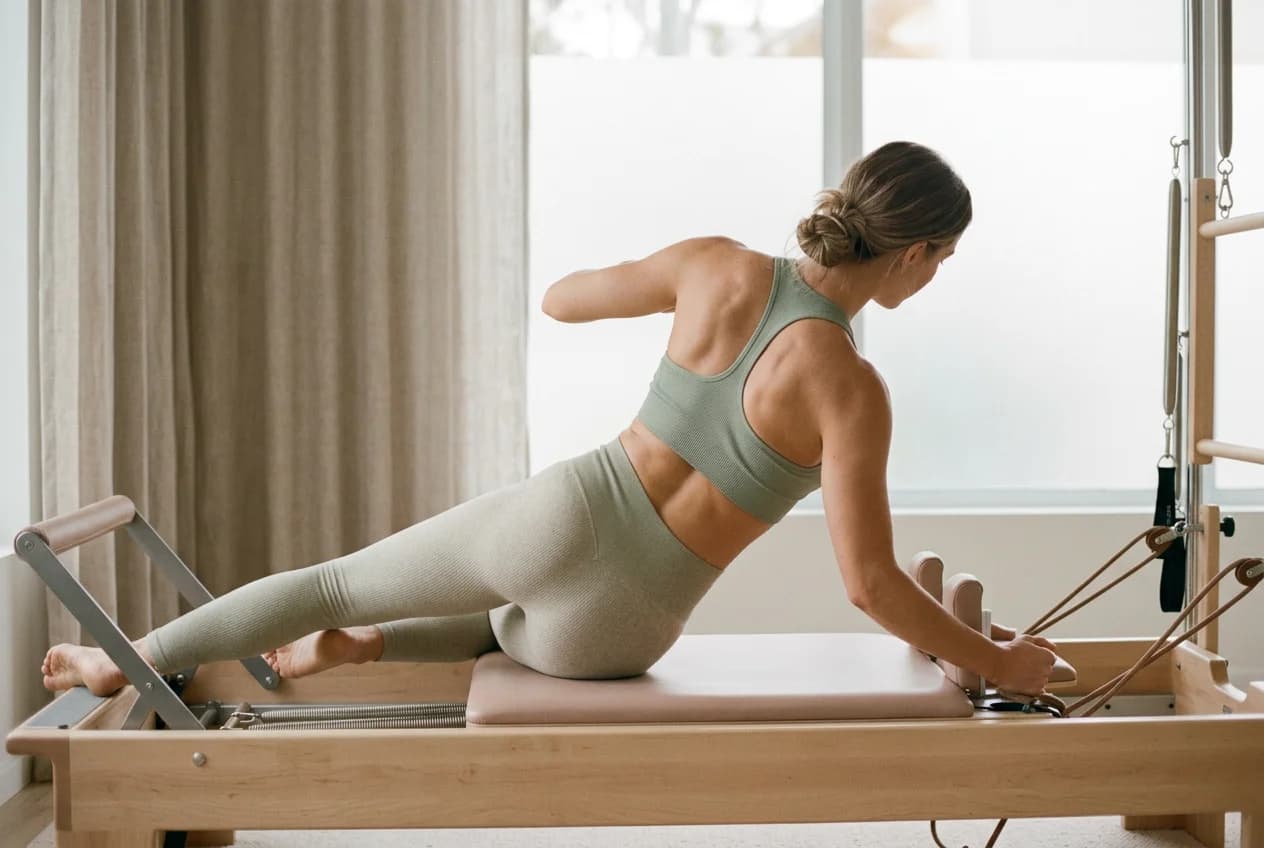
Back
The back body area covers posterior-chain support, spinal alignment awareness, and upper-back endurance on the reformer. Extension prep, long-box pulling, semi-circle, and supported thoracic mobility patterns all engage this area with spring-controlled feedback. Back-focused work here is training for awareness and endurance — not a substitute for medical advice if you have pain or a diagnosed condition. Smaller ranges and lighter springs often teach clearer mechanics than forcing large extension early on. Explore linked exercises for posterior-chain and postural support work, and pair with shoulders-and-arms or core pages when upper-body organisation matters.
Body area
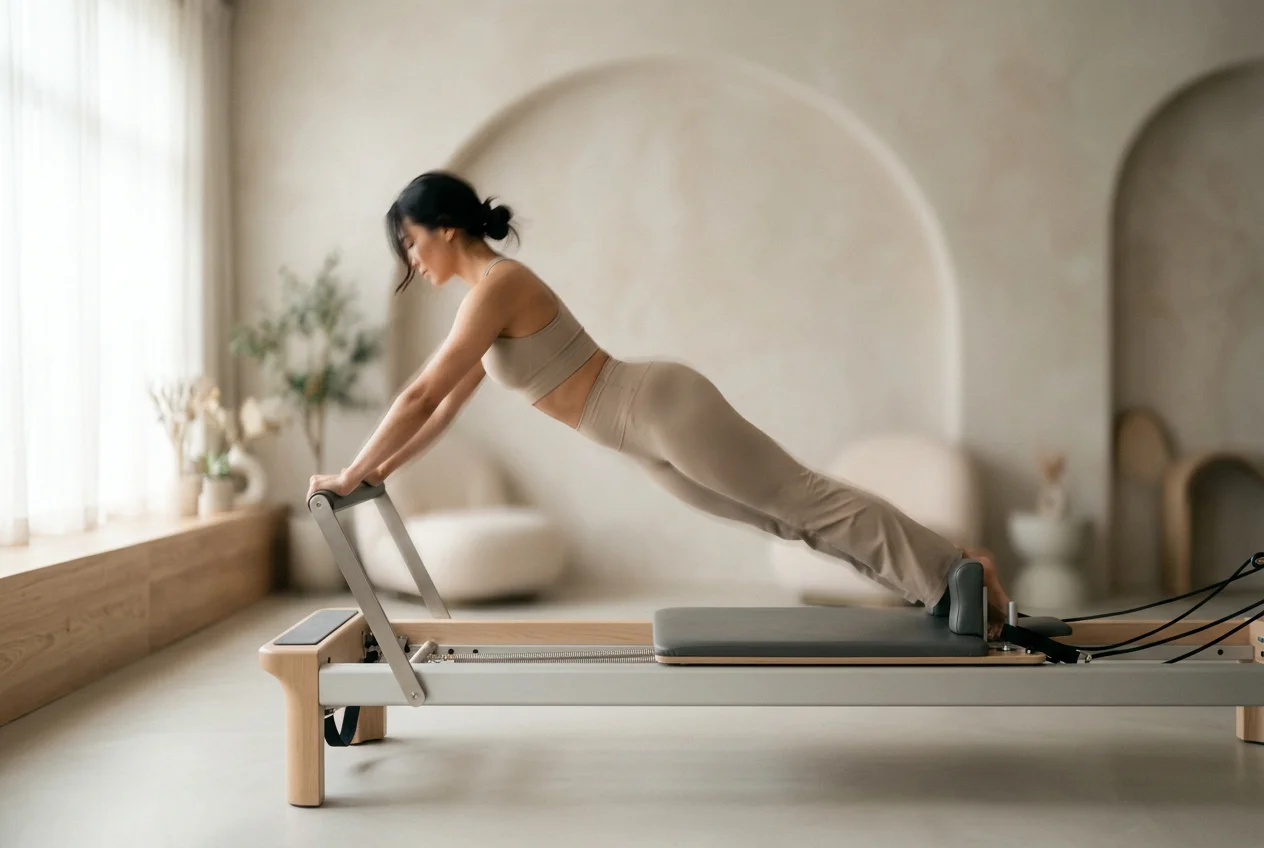
Core
The core body area covers deep trunk stabilisers, abdominals, and obliques that coordinate breathing, bracing, and spinal control on the reformer. Core-focused work appears across footwork, supine prep, strap exercises, and progressive flexion patterns. On this site, core is one of the most common body-area tags in the exercise library — from Hundred Prep and footwork through long stretch and chair progressions. The aim is steady, distributed tension rather than gripping or collapsing through the ribs. Use this page to find exercises that emphasise trunk organisation, then explore related muscle groups and goals for deeper context.
Body area
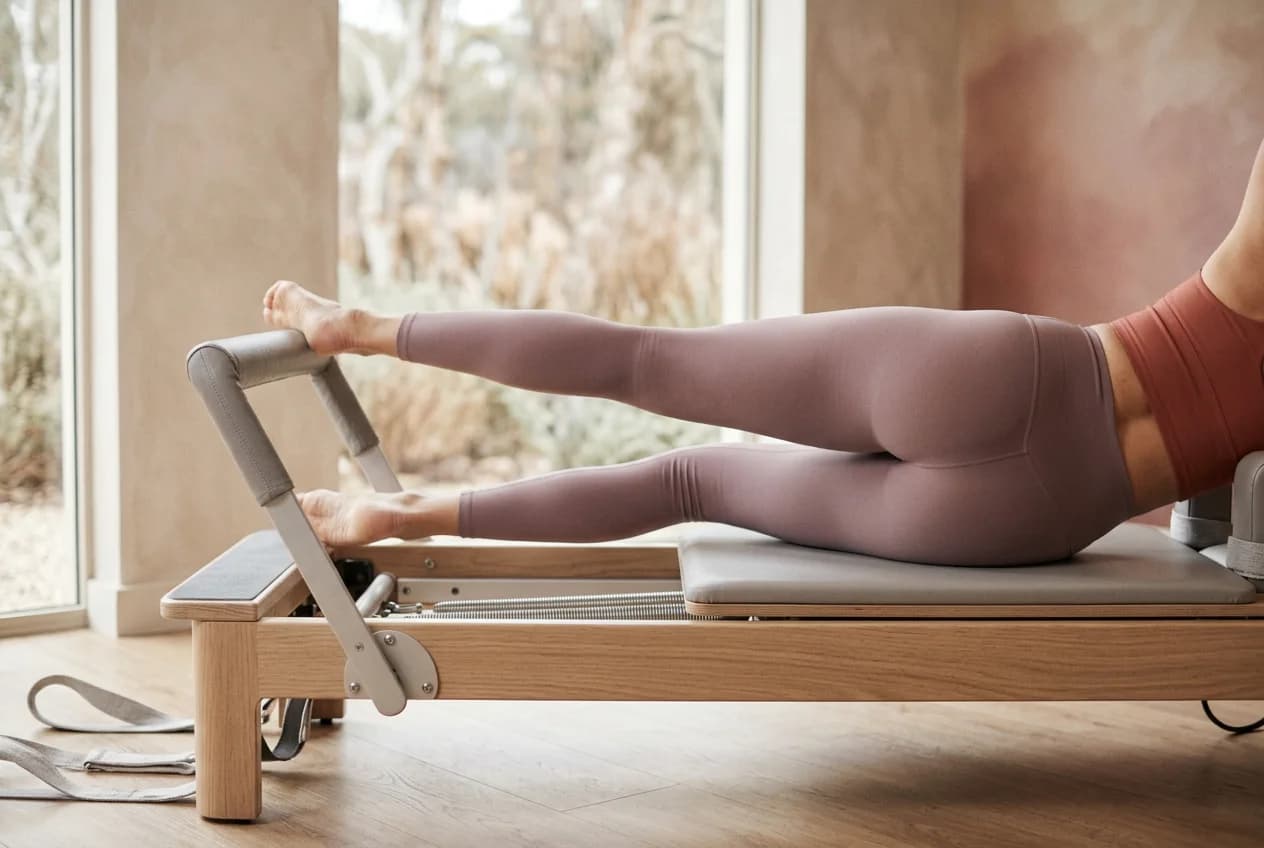
Glutes and Hips
The glutes and hips body area covers hip extension, external rotation, pelvic stability, and controlled hip mobility on the reformer. These patterns show up in footwork, bridging, strap circles, side-lying work, and standing splits progressions. Hip and glute control helps you manage carriage movement without tucking the pelvis or gripping the front of the hip. Spring setting, foot placement, and range all change how much load this area receives. Browse linked exercises here for hip stability and mobility work, then pair with core and lower-body pages for balanced training.
Body area
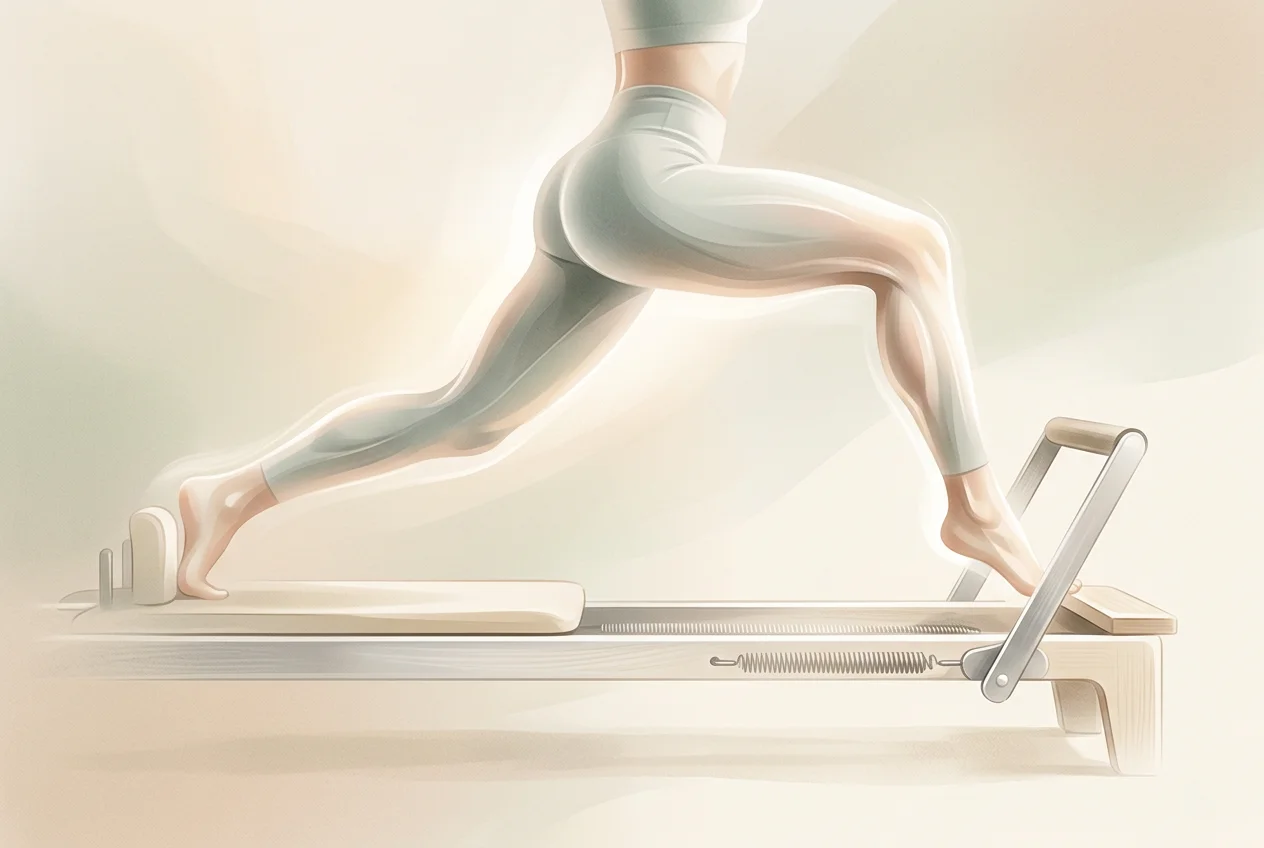
Lower Body
The lower body body area covers integrated leg strength, hamstring length, and foot-to-hip control through full ranges on the reformer. Footwork, lunges, side splits prep, and strap lower-and-lift patterns all load the lower body with spring feedback. Lower-body work on the reformer is rarely isolated — glutes, hamstrings, hip flexors, and core stabilisers usually share the load. That integration is useful for building control before adding speed or advanced choreography. Use this page to discover leg-focused exercises, then filter the full library by level or equipment when you want a narrower list.
Body area
Shoulders and Arms
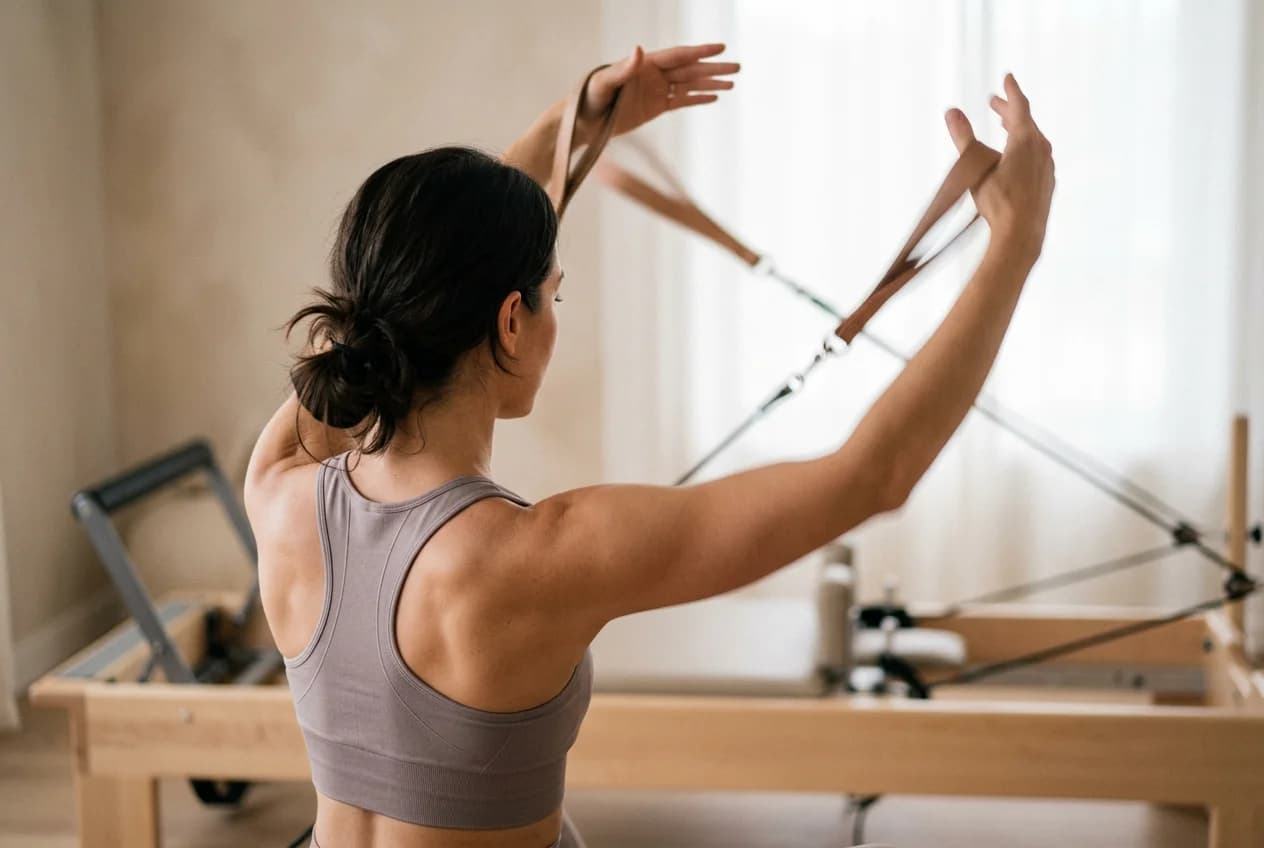
The shoulders and arms body area covers shoulder girdle organisation, upper-back endurance, and arm control against spring resistance on the reformer. Strap work, long-box pulling, arm circles, and seated rowing patterns all load this area. Clear scapular position — width across the collarbones without lifting the shoulders — is a recurring cue in exercises linked here. The reformer gives continuous feedback when tension shifts to the neck or lower back. Start with lighter springs and shorter sets if you fatigue quickly in pulling or reaching work; quality of shoulder organisation matters more than range.