Guide · Beginner reformer Pilates
Reformer Pilates for Beginners
If you are new to reformer Pilates, it can be difficult to know which exercises are suitable, what the equipment does, and how to choose a sensible starting point. This guide explains the basics, highlights beginner-f…
This guide is for educational discovery only. If you have pain, an injury, or a specific medical concern, speak to a qualified Pilates instructor or appropriate healthcare professional before trying new exercises.
Quick Answer
Reformer Pilates beginners should usually start with supported, controlled exercises that help them understand spring resistance, foot placement, breathing, and trunk control before moving into more complex or unstable movements. Exercises such as Footwork Series, Bridging on Reformer, Hundred Prep, and Frog in Straps can provide a useful starting point when taught with appropriate instructor guidance.
Who This Guide Is For
This guide may be useful if you:
- are new to reformer Pilates and want a simple starting point
- want to understand which exercises are commonly used with beginners
- are trying to connect exercises to goals such as core strength, posture support, or hip mobility
- want to understand basic equipment such as the reformer, footbar, and straps
- want better questions to ask a Pilates instructor before your first class or session
- are browsing the site and want help deciding which pages to explore first
It is not intended to replace instruction. Reformer Pilates uses moving equipment, springs, straps, and body-position changes, so an instructor can help you choose suitable settings and modifications.
What Reformer Pilates Means For Beginners
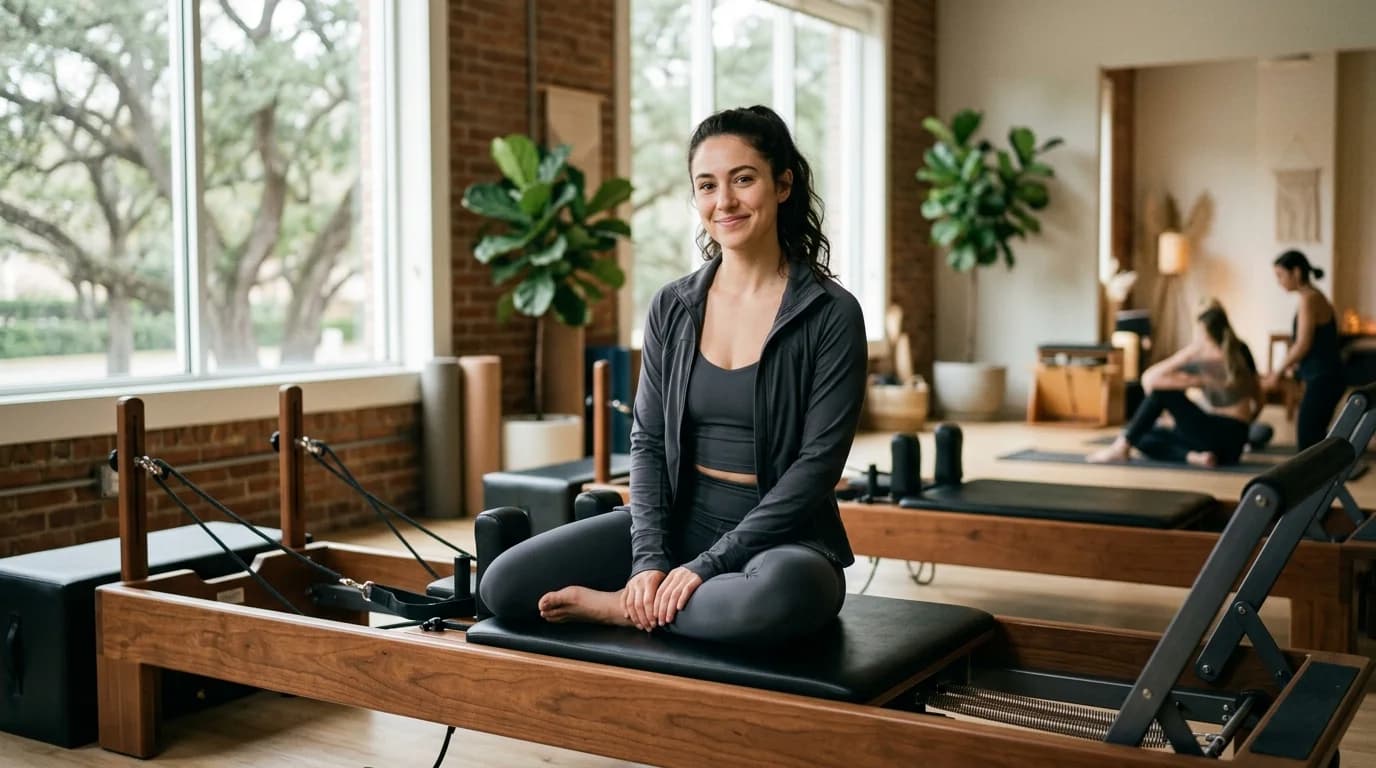
Reformer Pilates is a form of Pilates performed on a reformer machine. The reformer usually includes a moving carriage, springs, a footbar, straps, and a platform. These parts can support the body, add resistance, or create a controlled challenge depending on the exercise.
For beginners, the reformer can feel unfamiliar at first. The carriage moves, the springs change the resistance, and the same exercise can feel different depending on foot position, strap setup, or body alignment.
That is why beginner reformer Pilates is less about doing the hardest movements and more about learning control. A good starting point helps you understand:
- how the carriage moves
- how spring resistance changes the feel of an exercise
- where your feet, hands, or straps should be placed
- how breathing supports the movement
- how to keep your trunk, pelvis, and shoulders organised
- when to slow down, reduce range, or ask for a modification
On this site, beginner-friendly exercises are designed to connect into the wider entity library. That means you can move from an exercise into related goals, equipment, muscle groups, and guide pages instead of reading a one-off article and reaching a dead end.
Why The Reformer Can Be Useful For Beginners
The reformer can give beginners a clear sense of feedback. The springs, carriage, straps, and footbar all respond to how you move. That feedback can help you notice whether you are rushing, losing control, or relying too much on one area of the body.
For example, Footwork Series can help beginners explore lower-body alignment with the support of the footbar. Hundred Prep can introduce breath rhythm and trunk control in a more focused way. Frog in Straps can help beginners experience strap work while exploring hip movement and pelvic stability.
The important point is that beginner does not mean easy or unimportant. Beginner exercises often teach the foundations that make later progressions more useful:
- controlled movement
- breathing rhythm
- stable setup positions
- awareness of spring resistance
- coordination between the trunk, hips, shoulders, and legs
- confidence using the reformer equipment
A sensible beginner path should make the user feel more oriented, not overwhelmed.
Beginner Exercises To Explore
These exercises are useful starting points because they connect to common beginner goals and introduce the reformer in a controlled way. Use the exercise pages for setup, cues, variations, safety notes, and related links.
Footwork Series
- Level: Beginner
- Why it fits: A strong foundation exercise for lower-body alignment, footbar confidence, hamstrings, glutes, and controlled carriage movement.
- Equipment: Reformer, footbar
- Related goals: Beginner confidence, posture support, core strength
- View exercise: Footwork Series
Bridging On Reformer
- Level: Beginner
- Why it fits: Helps beginners explore glute strength, hamstring involvement, and posterior-chain control in a supported position.
- Equipment: Reformer
- Related goals: Core strength, hip control, lower-body awareness
- View exercise: Bridging on Reformer
Hundred Prep
- Level: Beginner
- Why it fits: Introduces core endurance, breath rhythm, and trunk control without jumping straight into more demanding versions of the Hundred.
- Equipment: Reformer
- Related goals: Core strength, breath coordination, trunk control
- View exercise: Hundred Prep
Frog In Straps
- Level: Beginner
- Why it fits: A beginner-friendly way to experience strap work while exploring hip mobility, pelvic stability, and controlled leg movement.
- Equipment: Reformer, straps
- Related goals: Hip mobility, core strength
- View exercise: Frog in Straps
Mermaid Stretch
- Level: Beginner
- Why it fits: Supports side-body mobility, breathing, and thoracic movement, which can be useful for beginners learning how movement and breath connect.
- Equipment: Reformer
- Related goals: Mobility, breath awareness, posture support
- View exercise: Mermaid Stretch
Kneeling Arm Press With Pilates Ring
- Level: Beginner
- Why it fits: Uses ring feedback to support shoulder organisation and kneeling trunk control. It can help beginners notice how the shoulders and core work together.
- Equipment: Reformer, Pilates ring
- Related goals: Posture support, core strength, shoulder control
- View exercise: Kneeling Arm Press with Pilates Ring
Equipment You Will See
Reformer
The reformer is the main apparatus used in these exercises. It usually includes a sliding carriage, springs, a footbar, shoulder blocks, and straps. For beginners, the most important thing is learning how the reformer responds to controlled movement.
Footbar
The footbar gives the feet or hands a stable point of contact in many exercises. Beginner exercises such as Footwork Series often use the footbar to introduce alignment, pressure, and controlled carriage movement.
Straps
Straps are used for leg and arm movements. They can make exercises feel supported, but they can also expose whether the user is moving too quickly or losing control. Frog in Straps is a useful beginner strap exercise because it introduces the idea of moving the legs while keeping the pelvis organised.
Pilates Ring
The Pilates ring is an accessory that can provide tactile feedback. In Kneeling Arm Press with Pilates Ring, it can help beginners notice shoulder organisation and trunk support.
Muscles And Body Areas Commonly Involved
Beginner reformer exercises can involve several muscle groups at once. The exact focus depends on the exercise, spring setup, body position, and instructor cues.
Common areas include:
- Core muscles, often involved in trunk control and breathing coordination
- Glutes, commonly used in bridging, footwork, and lower-body control
- Hamstrings, often involved in footwork, bridging, and posterior-chain exercises
- Upper back, commonly involved in posture-support and shoulder-control exercises
- Core, hips, lower body, and back as broader body areas to explore
Beginners should avoid thinking of each exercise as only working one muscle. Reformer Pilates often teaches coordination between areas rather than isolating a single muscle group.
Common Beginner Mistakes And Misconceptions
Starting with exercises that are too advanced
It can be tempting to jump straight to dramatic-looking reformer exercises, but beginners usually benefit from learning setup, breathing, spring feedback, and control first. A simple-looking exercise done well is often more useful than a harder exercise done without control.
Assuming stronger springs are always better
More resistance does not automatically mean a better exercise. In some movements, heavier springs may offer more support. In others, lighter springs may make the movement more challenging because the user needs more control. Ask an instructor which spring setting is appropriate for the exercise and your level.
Moving too quickly
Rushing can hide what the exercise is trying to teach. The reformer gives feedback through the carriage, straps, and springs. Slower movement often makes it easier to notice whether you are controlling the movement or being pulled through it.
Ignoring setup position
Small setup details matter. Foot placement, strap length, headrest position, carriage distance, and body alignment can all change how an exercise feels. Beginners should treat setup as part of the exercise, not something to rush through.
Treating guide content as instruction
This guide can help you decide what to explore, but it does not replace live instruction. A qualified instructor can adjust the setup, choose springs, offer modifications, and help you understand what is appropriate for your body and level.
What To Ask A Pilates Instructor
Before trying new reformer exercises, it can help to ask clear, practical questions.
Useful questions include:
- Which beginner exercises are suitable for my current level?
- Which spring setting should I start with for this exercise?
- What should I feel during the movement?
- What should I avoid if I feel unstable?
- How should I modify the exercise if the range feels too large?
- How do I know when I am ready to progress?
- Which exercises should I practise before trying more advanced movements?
- Are there any exercises I should avoid because of my personal circumstances?
These questions are especially important if you are new to the reformer, returning after time away, pregnant, postnatal, managing discomfort, or unsure whether an exercise is appropriate.
FAQs
Is reformer Pilates suitable for beginners?
Reformer Pilates can be suitable for beginners when exercises, spring settings, and modifications are chosen appropriately. Many beginner exercises are designed to teach control, breathing, alignment, and confidence with the equipment. A qualified instructor can help you understand how the reformer works and choose exercises that match your current level.
Which reformer Pilates exercises should beginners start with?
Useful beginner starting points include Footwork Series, Bridging on Reformer, Hundred Prep, Frog in Straps, and Mermaid Stretch. The best choice depends on your level, the equipment setup, and the guidance of your instructor.
What equipment do beginners need to understand first?
Beginners should first understand the reformer, footbar, and straps. These appear in many common exercises and affect how the movement feels. Some beginner exercises may also use accessories such as the Pilates ring for feedback and support.
Is reformer Pilates harder than mat Pilates?
It depends on the exercise, spring setting, and how the session is taught. The reformer can support the body in some movements, but it can also create more challenge through springs, straps, and carriage movement. Beginners should not assume reformer Pilates is automatically easier or harder than mat Pilates. It is better to focus on finding an appropriate starting point.
How often should beginners do reformer Pilates?
There is no single answer that works for everyone. Frequency depends on your goals, experience, recovery, and whether you are working with an instructor. Beginners often benefit from giving themselves enough time to learn the equipment and understand the exercises rather than rushing into too much too soon.
What should I ask before my first reformer Pilates class?
Ask which exercises are suitable for beginners, how the spring settings will be chosen, what you should do if something feels unstable, and whether any modifications are available. If you have pain, an injury, pregnancy, postnatal considerations, or a specific medical concern, mention this before the session and seek appropriate professional guidance.
Can I use this guide to create my own reformer Pilates plan?
This guide can help you explore relevant exercises and understand useful starting points, but it should not replace personalised instruction. Reformer Pilates uses moving equipment and adjustable resistance, so a qualified instructor is best placed to help you build a safe and appropriate plan for your level.
Where should I go next?
A good next step is to browse Beginner Reformer Pilates Exercises, explore the exercise library, or read the Reformer Pilates Equipment Guide. If you already know your goal, you can also explore core strength, posture support, or hip mobility.