Guide · Progression & safety
Reformer Pilates Exercise Progressions
Reformer Pilates exercise progressions are not simply a list of harder-looking movements. A useful progression helps you build control on the [reformer](/equipment/reformer), understand how the [footbar](/equipment/fo…
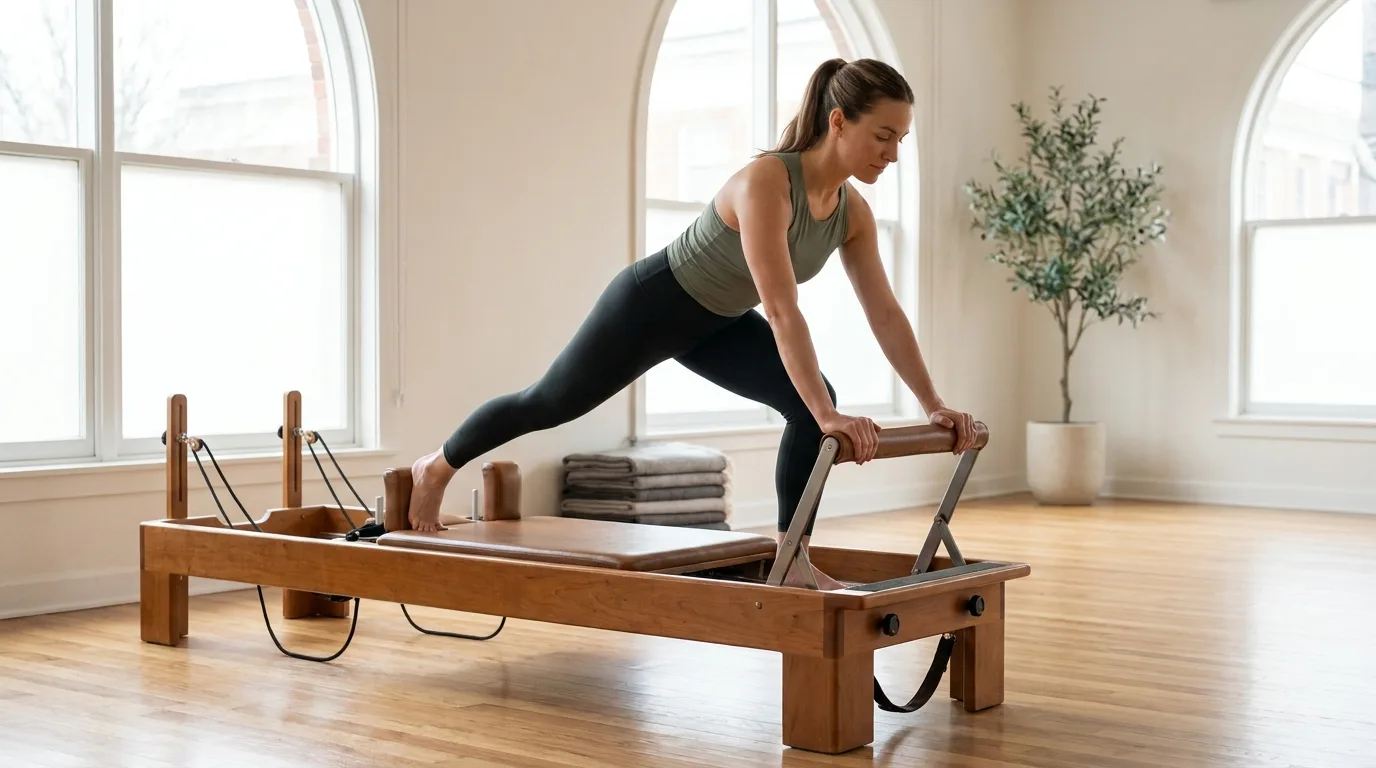
This guide is for educational discovery only. If you have pain, an injury, pregnancy, postnatal considerations, or a specific medical concern, speak to a qualified Pilates instructor or appropriate healthcare professional before trying new exercises or progressions.
Quick Answer
A sensible reformer Pilates progression usually moves from clear setup and supported positions toward less support, larger range, or more coordination—only when control is maintained. Common beginner foundations include Footwork Series, Bridging on Reformer, Hundred Prep, and Frog in Straps. Intermediate examples may include Elephant, Scooter, Side Splits, and Leg Circles in Straps. Progress when quality improves, not when an exercise simply looks harder.
What Progression Means On The Reformer
Progression on the reformer is about learning to move with control while the carriage, springs, and equipment give feedback. It is not about rushing toward advanced choreography or heavier spring settings before the basics are understood.
A good progression usually teaches one new idea at a time. That idea might be:
- a new equipment feature, such as moving from the footbar to straps
- a less supported body position, such as moving from lying to kneeling or standing
- a larger range of movement, such as from Frog in Straps toward Leg Circles in Straps
- more coordination, such as combining breath, trunk control, and leg movement
- a change in spring resistance that either supports or challenges control
The reformer makes progression visible. If the carriage bangs, the straps pull unevenly, or the pelvis shifts more than intended, the equipment is showing where control is being lost. That feedback is useful—it tells you whether to stay, modify, or regress.
For a deeper look at safe advancement, read How to Progress Safely in Reformer Pilates.
The Four Progression Levers
Instructors often adjust progressions using four main levers. Understanding these can help you make better choices between sessions.
1. Body position and support
More supported positions—lying on the carriage, seated with clear contact points—usually come before less supported positions such as kneeling or standing on the reformer.
Examples:
- Bridging on Reformer before Elephant
- Hundred Prep before more demanding core variations
- Footwork Series before Scooter
2. Range of movement
A smaller, controlled range is often more useful than a larger range done with momentum. Range can increase once the user can return the carriage smoothly and breathe without losing organisation.
Examples:
- smaller circles before full Leg Circles in Straps
- partial bridge before full bridge height in Bridging on Reformer
- narrower stance before wider Side Splits
3. Equipment complexity
The footbar gives a stable contact point. Straps introduce moving feedback through the arms or legs. Progressing from footbar work to strap work is a common and sensible pathway when footbar control is established.
Examples:
- Footwork Series before strap-heavy leg work
- Frog in Straps before Leg Circles in Straps
4. Spring resistance and challenge
Springs can support or challenge. More springs do not always mean harder, and fewer springs do not always mean easier. The right setting depends on the exercise, body position, and what the instructor is trying to teach.
Ask whether the spring is supporting control or challenging it. Progression is not simply “add more springs every week.”
Beginner Foundation Exercises
These exercises often form the base of sensible progressions. They teach control—not ease.
| Exercise | Role in progression | Equipment |
|---|---|---|
| Footwork Series | Carriage and footbar control | Reformer, footbar |
| Bridging on Reformer | Pelvic and posterior-chain organisation | Reformer |
| Hundred Prep | Breath-led trunk support | Reformer |
| Frog in Straps | First straps and hip control | Reformer, straps |
For a curated beginner list, see Beginner Reformer Pilates Exercises.
Intermediate Progression Examples
These often follow beginner foundations. Introduce with instructor guidance—not automatically for every user.
| Exercise | Often follows | Equipment |
|---|---|---|
| Elephant | Footwork, Bridging, Hundred Prep | Reformer, footbar |
| Scooter | Footwork with clear leg alignment | Reformer, footbar |
| Side Splits | Footwork, Bridging, Frog in Straps | Reformer, footbar |
| Leg Circles in Straps | Frog in Straps, Hundred Prep | Reformer, straps |
For exercise-by-exercise pathways, read Beginner to Intermediate Reformer Pilates Exercises.
Progression Pathways By Goal
Beginner confidence
Build equipment familiarity before complexity.
Suggested pathway:
1. Footwork Series 2. Bridging on Reformer 3. Hundred Prep 4. Frog in Straps
Related guides: Reformer Pilates for Beginners, What to Expect in Your First Reformer Pilates Class
Core strength
Progress from breath-led trunk support toward movements that challenge control while the carriage or legs move.
Suggested pathway:
1. Hundred Prep 2. Bridging on Reformer 3. Frog in Straps 4. Elephant
Related guides: Reformer Pilates for Core Strength, Core Stability vs Core Strength in Pilates, How Reformer Pilates Trains Core Control
Posture support
Progress from supported alignment work toward upright positions that require shoulder and trunk organisation.
Suggested pathway:
1. Footwork Series 2. Hundred Prep 3. Elephant 4. Scooter
Related goal: Posture support
Hip mobility
Progress from controlled hip movement in supported positions toward larger ranges and standing hip organisation.
Suggested pathway:
1. Frog in Straps 2. Bridging on Reformer 3. Leg Circles in Straps 4. Side Splits
Related goal: Hip mobility
Signs You Are Ready To Progress
You may be ready to progress when:
- the carriage returns smoothly and quietly
- breathing stays steady through the movement
- the setup feels understood without constant correction
- range can increase slightly without losing control
- spring settings make sense and feel purposeful
- the user can explain what the exercise is teaching
- an instructor confirms readiness for the next step
Progression should feel like improved quality, not like forcing through confusion.
Signs You Should Stay Or Regress
Stay at your current level—or ask for an easier version—when:
- the carriage bangs or moves unevenly
- straps pull unevenly or feel unpredictable
- the pelvis, ribs, or shoulders shift more than intended
- breathing becomes strained or held
- the user rushes to finish the movement
- setup feels confusing before movement begins
- pain, instability, or uncertainty appears
Regression is not failure. It is often the fastest route to better control.
Read How to Progress Safely in Reformer Pilates for a practical checklist.
What To Ask An Instructor
Useful questions include:
- What is this exercise preparing me for?
- Which exercise should I learn before trying this one?
- Should I progress by range, springs, or body position?
- Am I ready for strap work, or should I stay on the footbar?
- What should stay organised while I move?
- How will I know if I am losing control?
- What is an easier version if this feels too much today?
- Should I repeat this exercise for a few sessions before advancing?
Good progression is guided by quality, not by comparison with others in class.
FAQs
What is a reformer Pilates exercise progression?
A progression is a sensible order of learning that builds control on the reformer before adding complexity. It may involve changes in body position, range, equipment use, spring settings, or coordination—not simply choosing a harder-looking exercise.
Do I have to follow a fixed progression order?
No single order fits everyone. The examples in this guide are common pathways, but a qualified instructor should adapt progressions to your level, goals, and how you respond to the equipment on a given day.
When should I move from footbar to strap exercises?
Many users benefit from establishing footbar control first—especially through Footwork Series—before strap work such as Frog in Straps. Readiness usually includes smooth carriage return, steady breathing, and pelvis organisation while the legs move.
Is Elephant an intermediate exercise?
Elephant is often taught after beginner foundations because it requires trunk support and carriage control from a less supported position. Whether it is appropriate depends on individual control, setup, and instructor guidance—not on calendar time alone.
How do I know if Leg Circles in Straps is too soon?
If Frog in Straps still feels uneven, the pelvis shifts, or the straps pull unpredictably, a smaller range or more time on frog may be better than jumping to Leg Circles in Straps.
Does more spring always mean harder?
No. Spring settings change support and resistance depending on the exercise and body position. Ask your instructor whether the spring is supporting control or challenging it.
Where should I go next?
Read How to Progress Safely in Reformer Pilates for practical safety checks, or Beginner to Intermediate Reformer Pilates Exercises for exercise-by-exercise pathways.
Explore next
Related guides
- Beginner To Intermediate Reformer Pilates Exercises
- How To Progress Safely In Reformer Pilates
- How To Choose Beginner Friendly Reformer Exercises
- Beginner Reformer Pilates Exercises
- Reformer Pilates For Beginners
- Reformer Pilates Core Strength
- Core Stability Vs Core Strength In Pilates
- How Reformer Pilates Trains Core Control