Kit & apparatus
Reformer equipment and props
Browse reformer equipment and props, then jump to exercises and goals that use each piece in practice.
Equipment
Arc Barrel
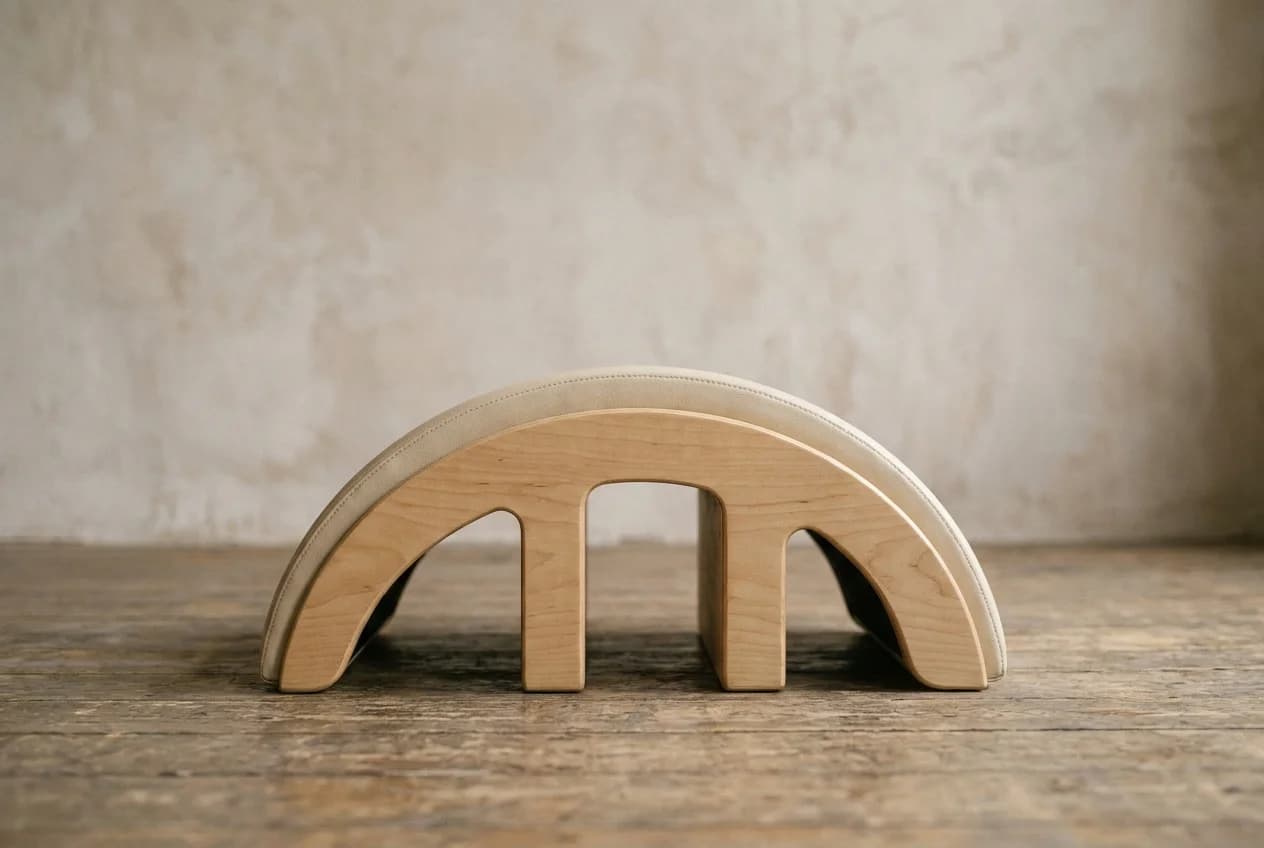
The arc barrel is a smaller semi-circular barrel used for chest opening, supported extension, and roll-back articulation. It offers a gentler curve than the spine corrector or ladder barrel for many bodies. Arc-barrel exercises on this site focus on thoracic mobility and controlled roll-backs with clear foot or hip anchors. It is a useful prop when you want spinal feedback with less height and leverage. Check that the arc does not slide on the floor before loading dynamic roll-backs.
Equipment
Arm Springs
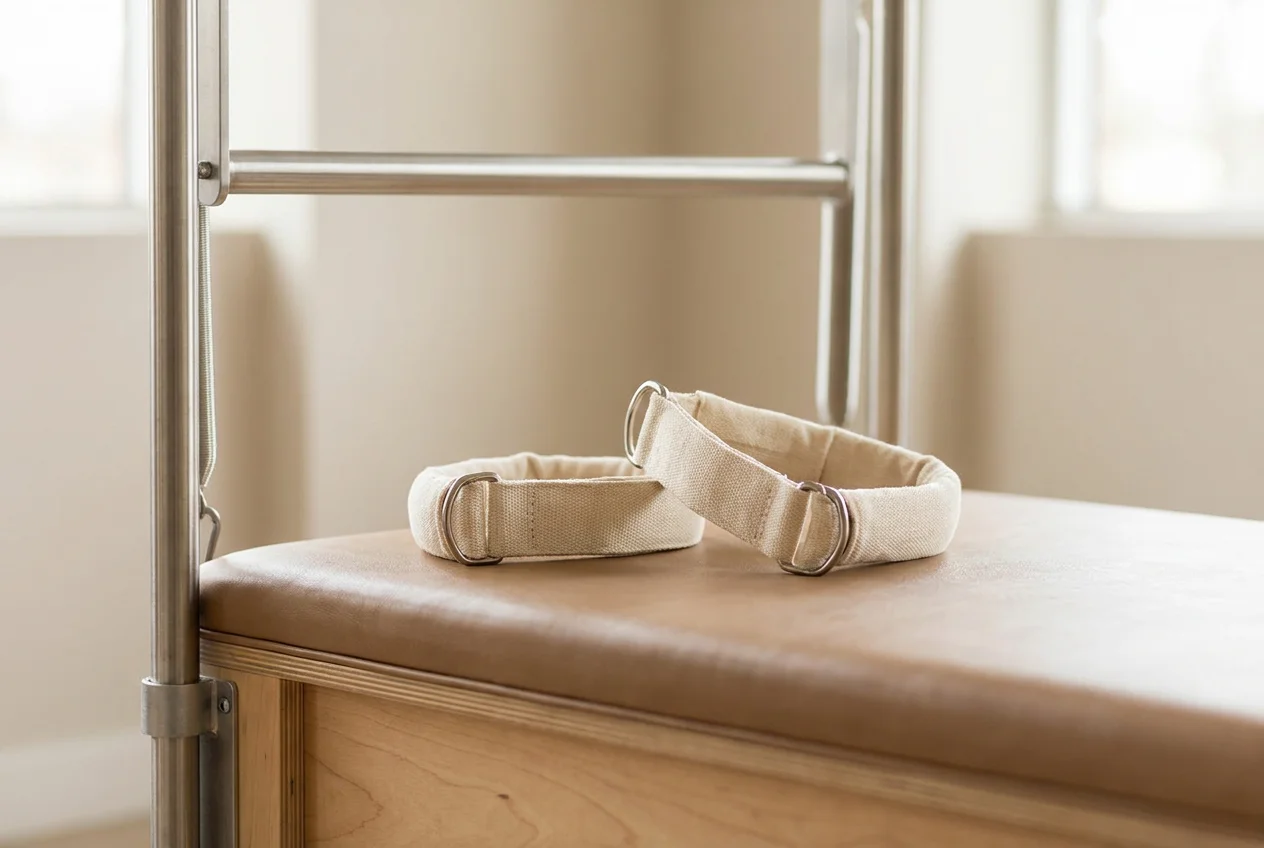
Arm springs are hand loops on the Cadillac that load pressing, pulling, and reaching patterns for the shoulders and upper back. They are useful for scapular control and postural endurance with spring feedback. Arm-spring work on this site ranges from open-chain presses to coordinated leg and arm patterns. Lighter springs suit motor learning; firmer springs increase strength demand. Keep ribs settled and avoid shrugging when fatigue appears in the upper trapezius.
Equipment
Cadillac
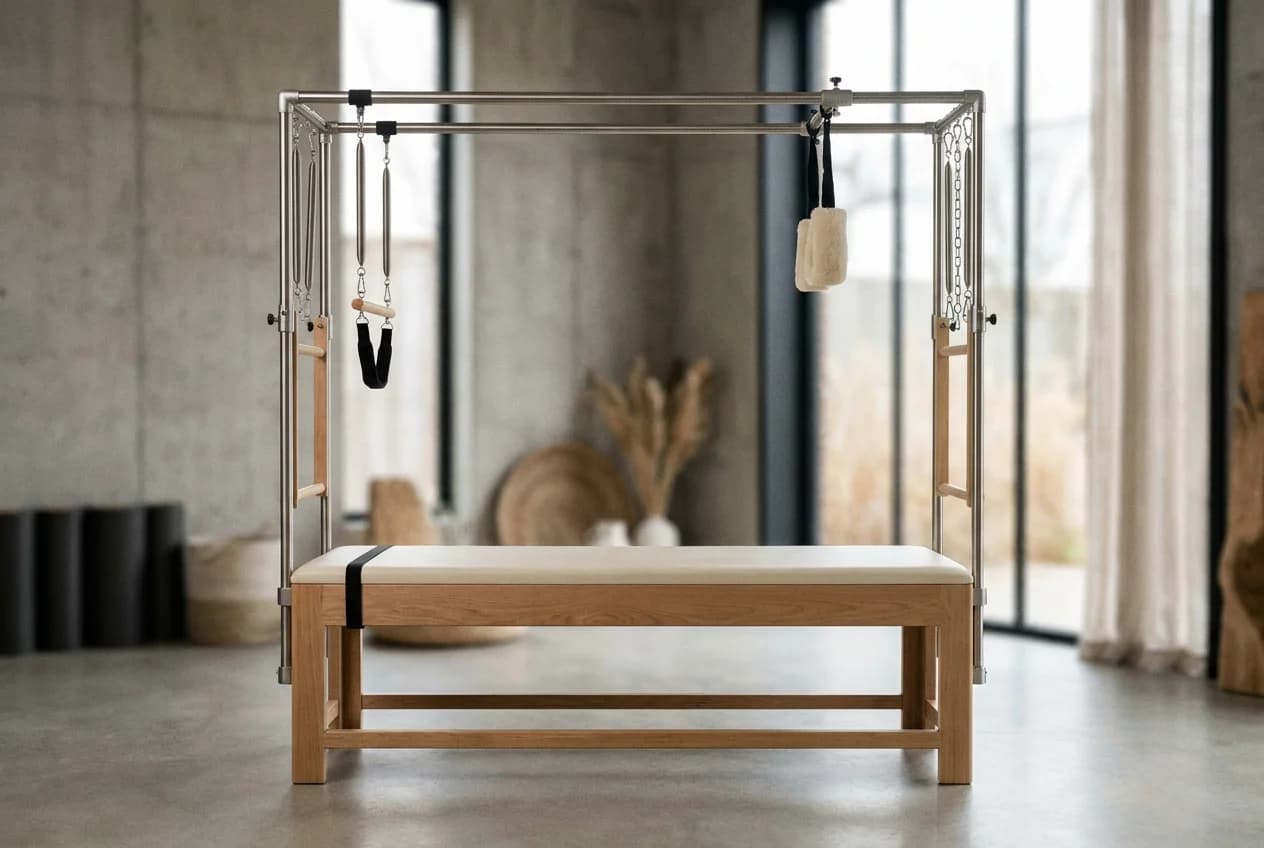
The Pilates Cadillac — also called the trapeze table — is a large frame with springs, bars, and a table surface for supported strength and mobility work. It allows vertical, horizontal, and hanging progressions not possible on a reformer alone. Cadillac exercises on this site cover leg springs, arm springs, roll-down bars, and supported stretching. Spring length and bar height should be set deliberately for each pattern. If you are new to the Cadillac, begin with supported supine and seated work before spring-assisted standing or advanced hanging variations.
Equipment
Foam Roller
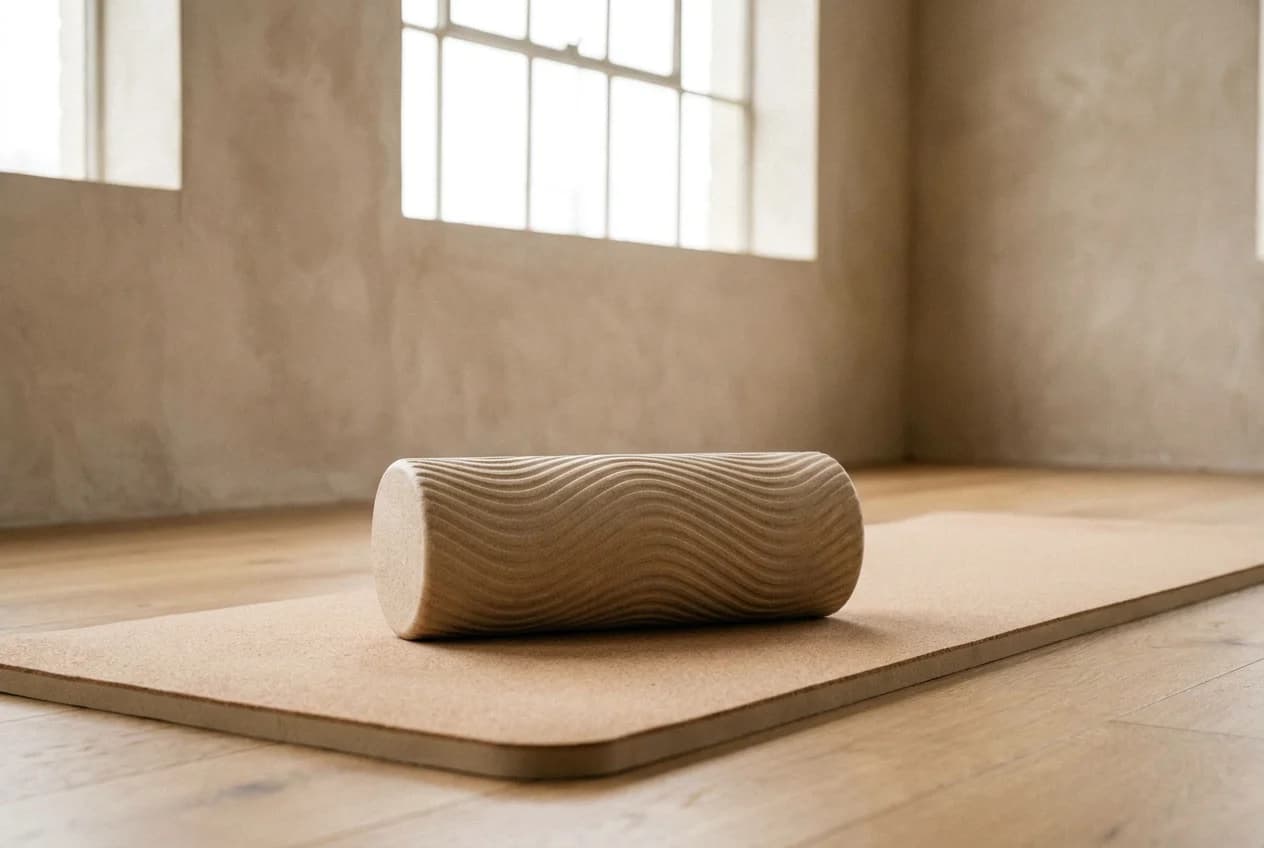
A foam roller is a cylindrical prop used for balance challenges, chest opening, and supported rolling patterns in Pilates. It can also be used for gentle myofascial release outside of formal choreography. Foam-roller exercises on this site include dead-bug style core work, extension prep, and balance progressions. Because the surface is unstable, start with supported setups before advanced rolling. Use a roller length that matches your spine and hip width for even contact.
Equipment
Footbar
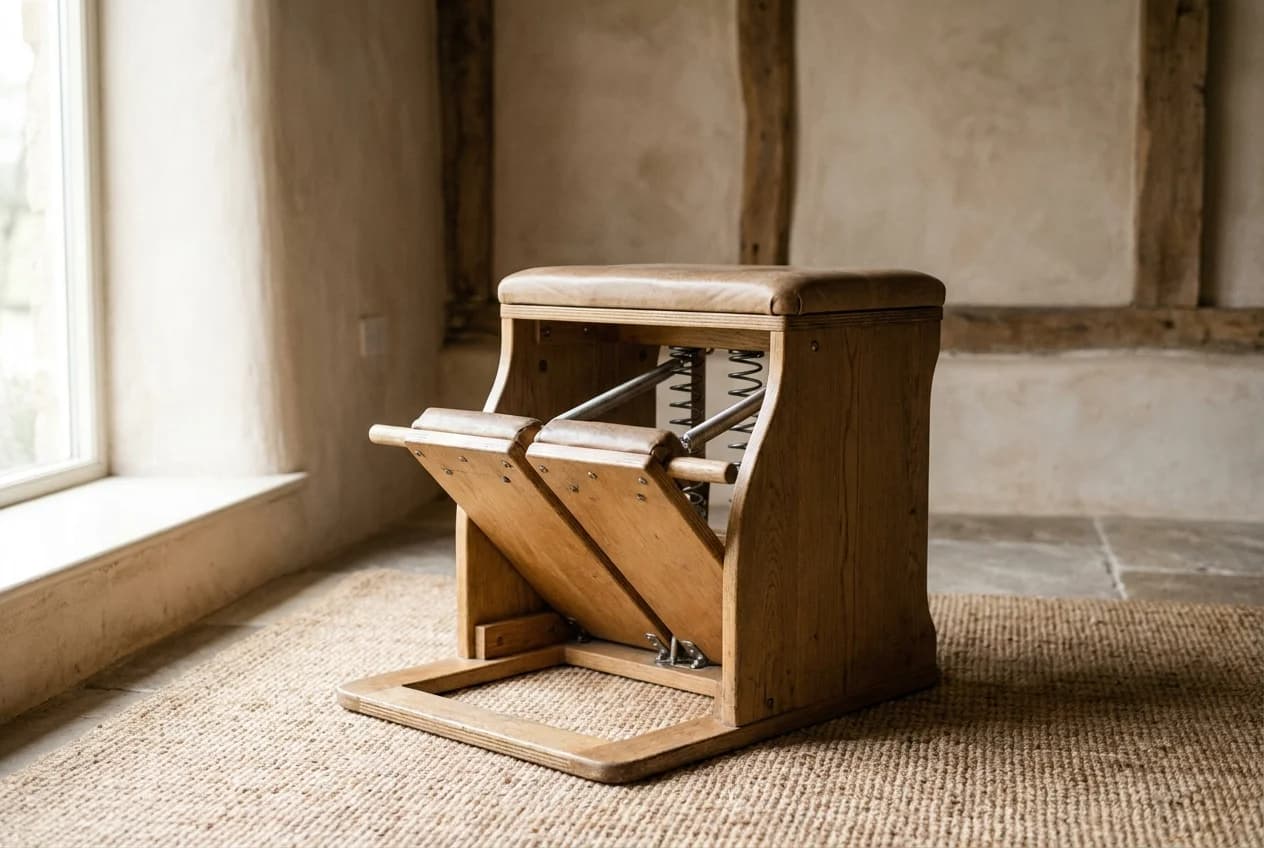
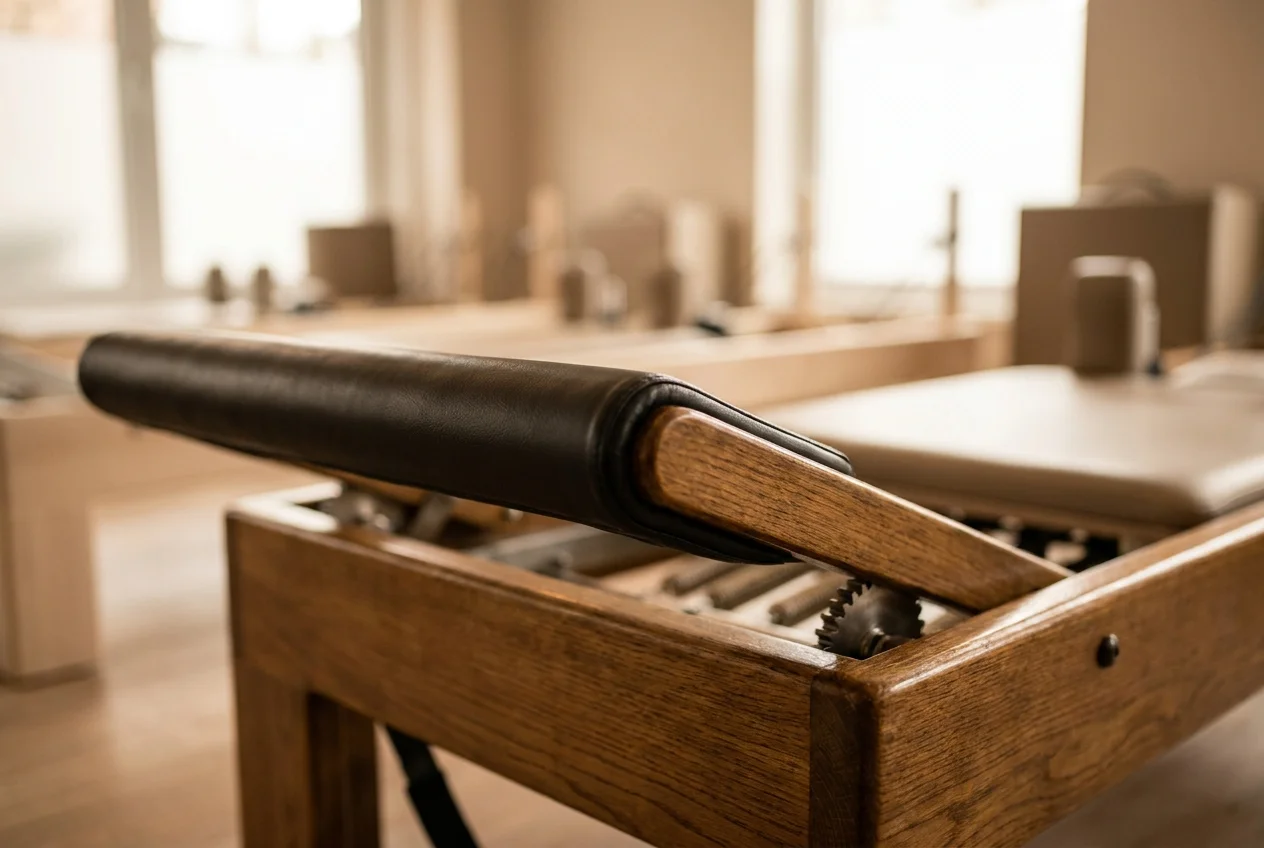
The footbar is the adjustable bar at one end of the reformer. It supports the feet in footwork, anchors the hands in plank-style exercises, and sets the contact point for patterns such as Elephant and Scooter. Footbar height changes how load travels through the legs and trunk. In foundational work it is often used for parallel foot placement; in advanced work it may support the hands while the carriage moves. Many exercises on this site pair the footbar with the reformer carriage and springs. Browse the linked exercises below to see footbar-specific setup notes in context.
Equipment
Ladder Barrel
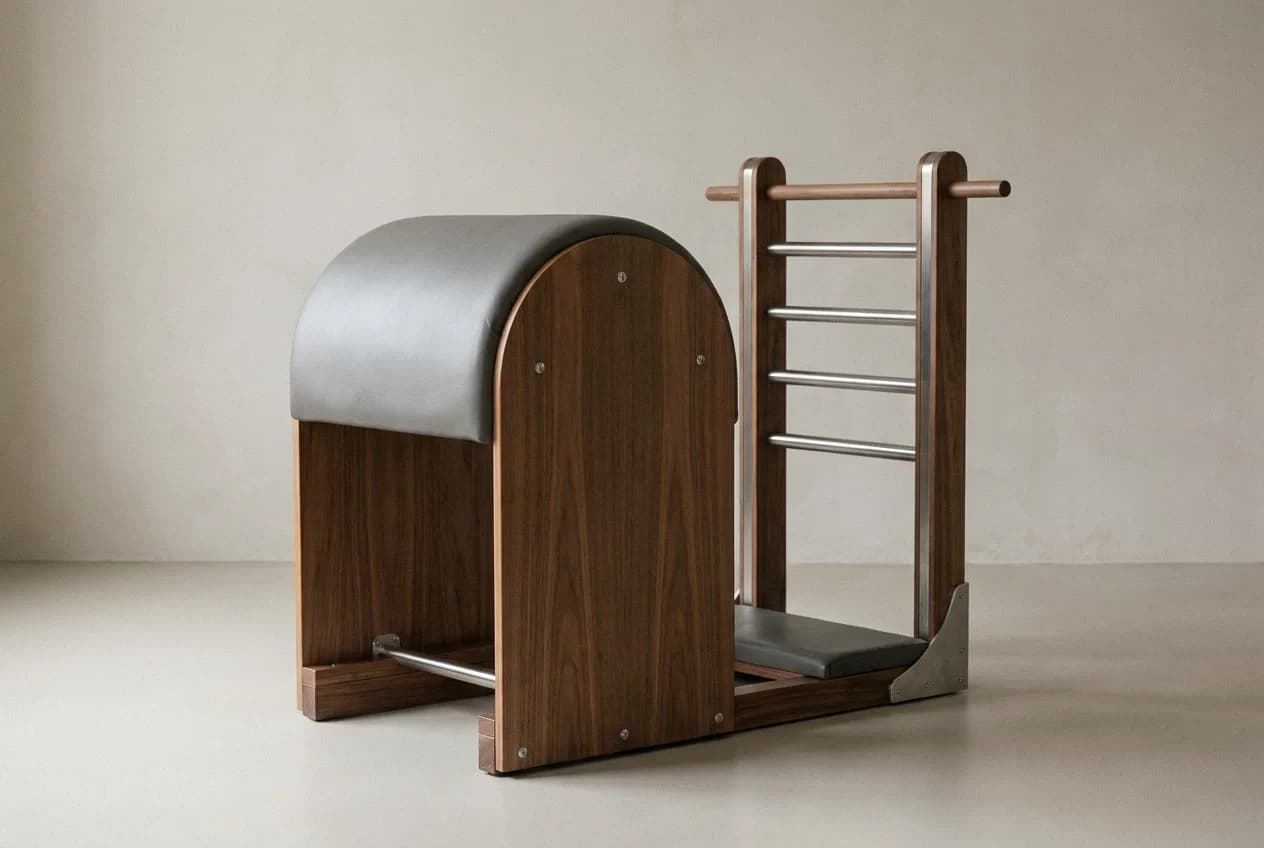
The ladder barrel combines a large curved barrel with a ladder for deep extension, side-lying, and ballet-inspired stretches. The ladder provides hand holds and height options for progressive range. On this site, ladder-barrel work emphasises spinal mobility, hip opening, and side-body length. Exercises often alternate between supported extension and active side-bending. Use the ladder rungs for balance rather than pulling with the neck, and progress range only when the pelvis stays stable.
Equipment
Leg Springs
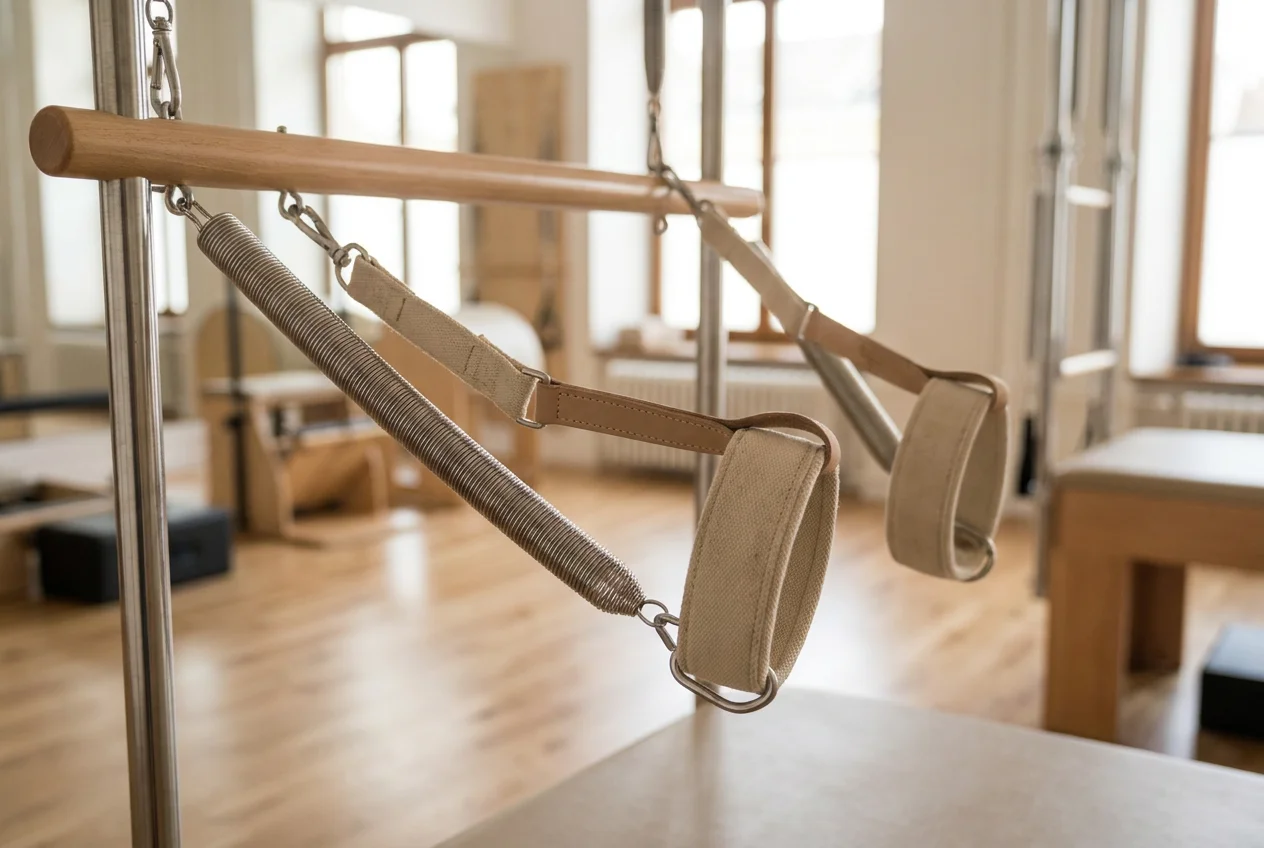
Leg springs are ankle loops attached to the Cadillac spring system for hip, leg, and core coordination work. They provide feedback for parallel, turned-out, and locomotion patterns such as walking and frogs. On this site, leg-spring exercises build hip control and lower-body endurance with clear spring tension. Begin with small range and symmetrical tension before adding circles or cross-body patterns. Confirm loop security and spring parity before loading single-leg work.
Equipment
Long Box
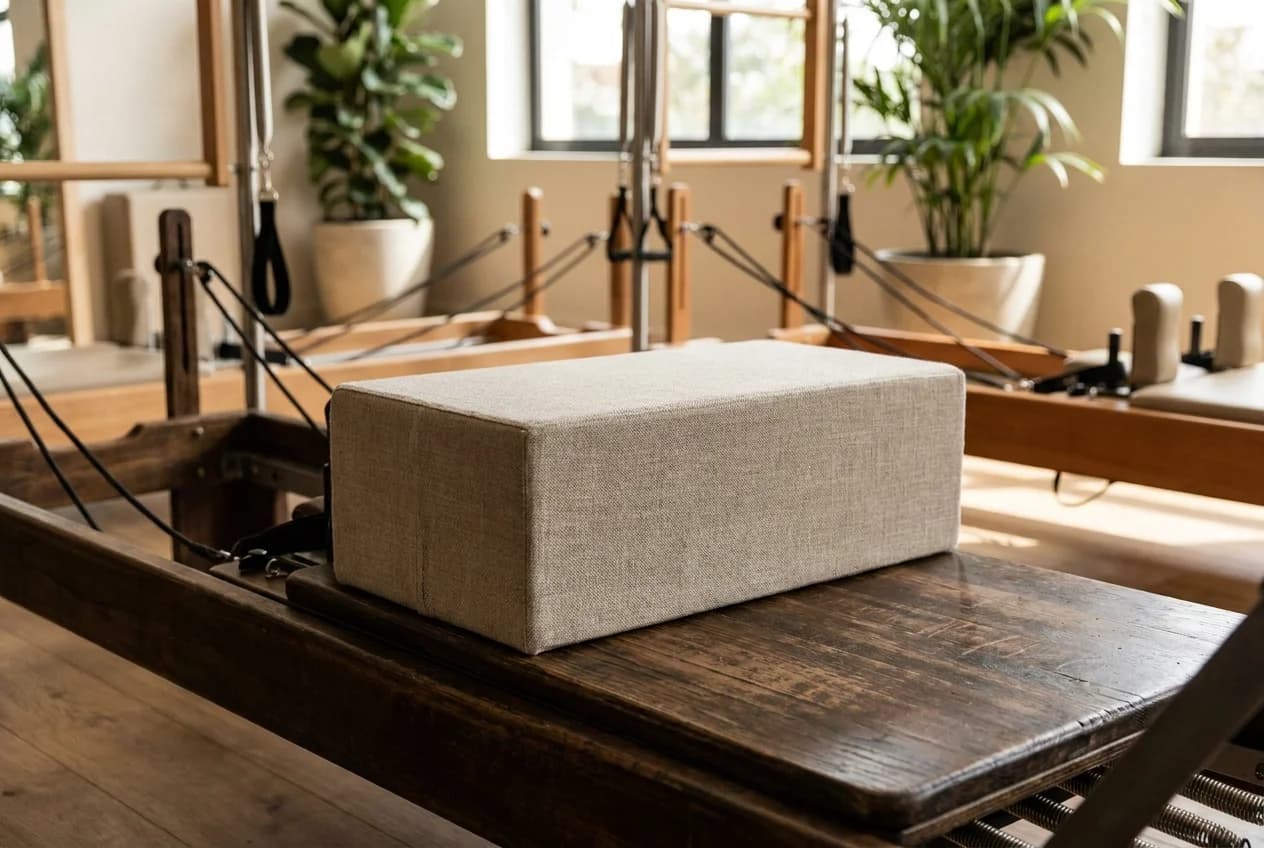
The long box is a padded platform placed on the reformer carriage for seated, prone, and side-lying exercises. It changes your relationship to the springs and creates a stable surface for trunk and shoulder work. Long-box exercises on this site include pulling straps, backstroke, teaser progressions, and breaststroke patterns. The box is usually paired with the reformer and often with straps. Setup matters: box position, spring choice, and headrest direction should be confirmed before loading the shoulders or spine.
Equipment
Mat
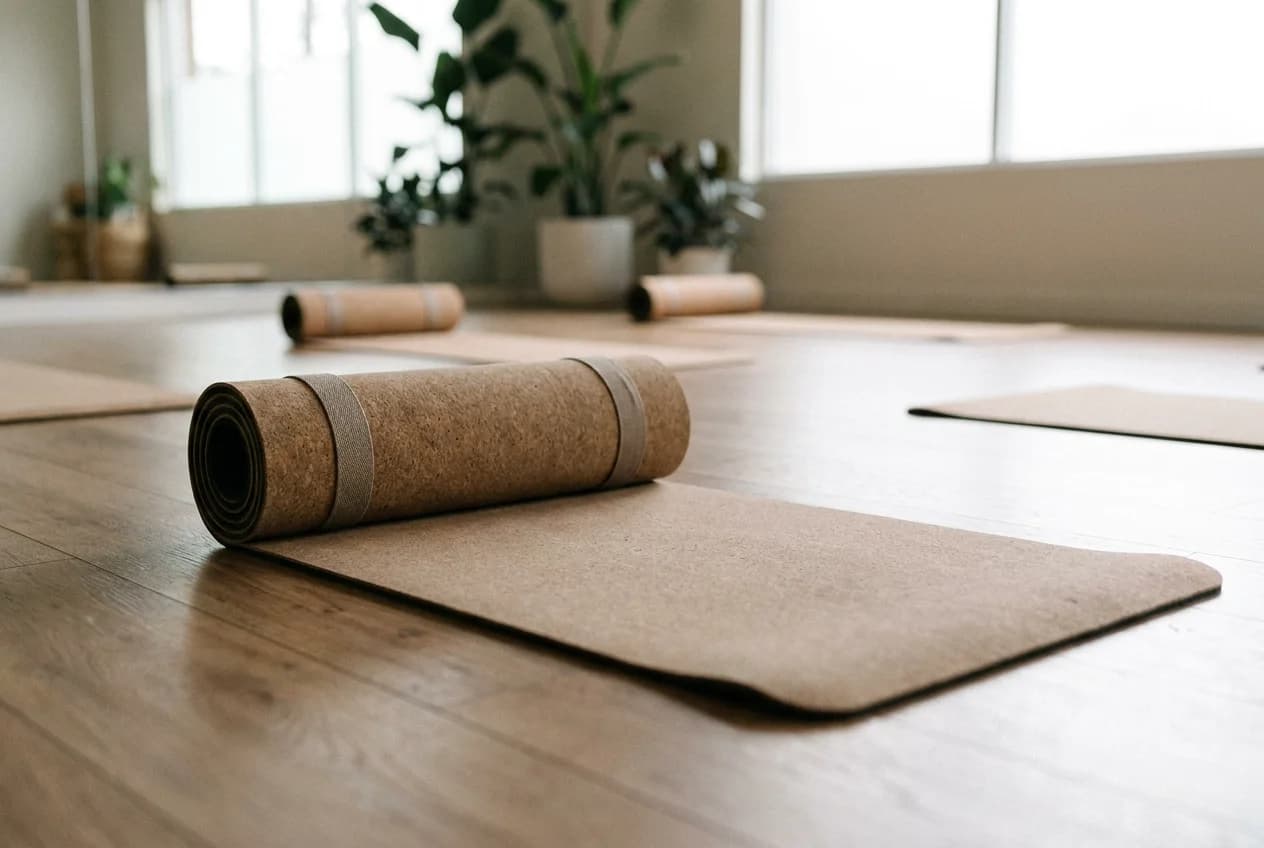
A Pilates mat is a padded surface for floor-based classical and contemporary mat work. It supports rolling, extension, and core exercises without springs or a carriage. On this site, mat exercises build trunk control, hip stability, and shoulder organisation using body weight and small props. Mat work is often the most accessible entry point before apparatus progressions. Choose a mat with enough length for your height and enough cushioning for spine comfort without losing connection to the floor.
Equipment
Pilates Ring
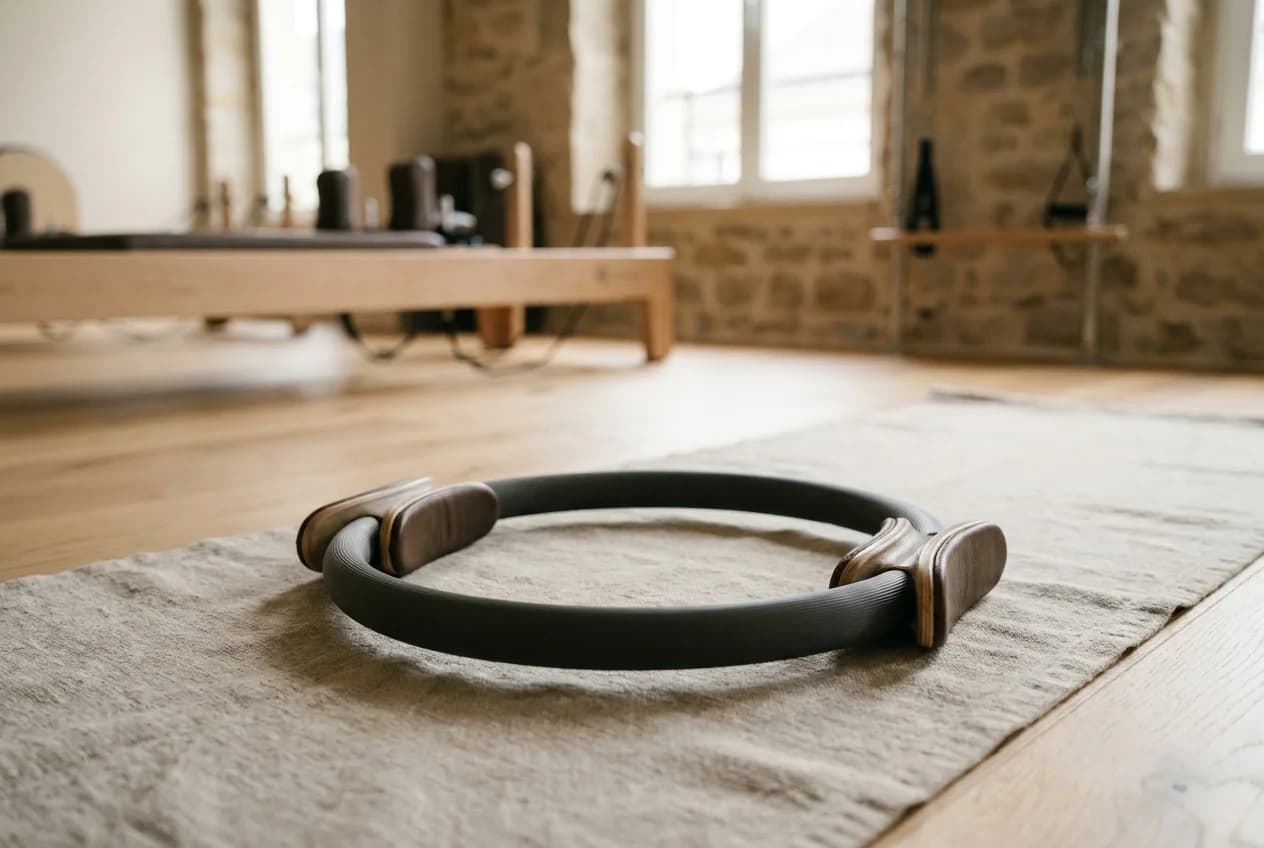
The Pilates ring — also called the magic circle — is a flexible ring held between the hands, thighs, or ankles. It adds light resistance and proprioceptive feedback for inner-thigh, chest, and arm work. On this site, ring exercises appear on the mat and reformer, including chest press, side-lying series, and kneeling arm patterns. The ring is portable and useful when you want focused adductor or upper-body engagement without heavy load. Choose a ring with moderate resistance; excessive stiffness can encourage gripping rather than controlled muscle work.
Equipment
Push Through Bar
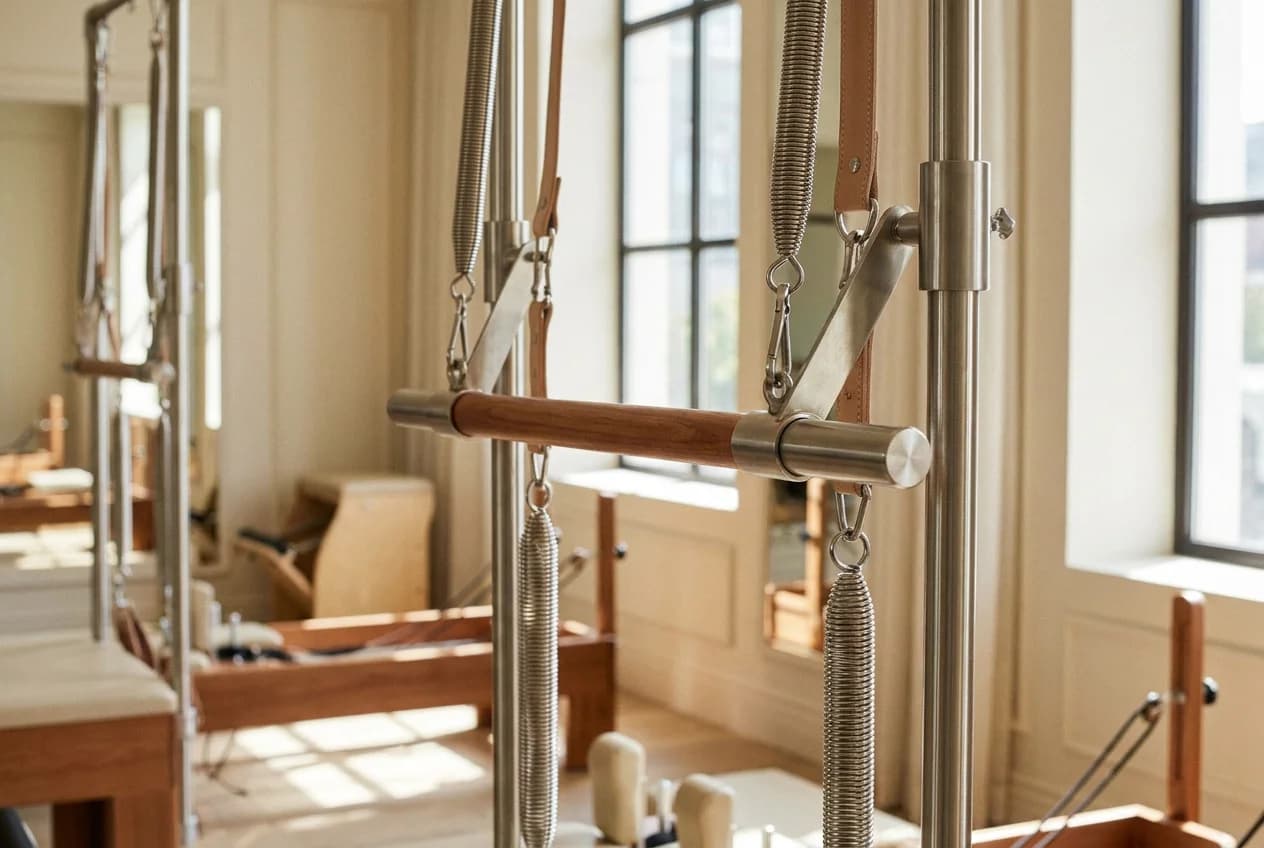
The push-through bar is a spring-loaded bar on the Cadillac used for roll-down, extension, and reaching patterns in seated and supine positions. It teaches spinal articulation with graded assistance or resistance. Exercises on this site use the bar for controlled mobility and upper-body organisation. Spring choice changes whether the bar assists flexion or challenges extension. Keep grip light and shoulders settled rather than lifting from the neck when pressing or pulling the bar.
Equipment
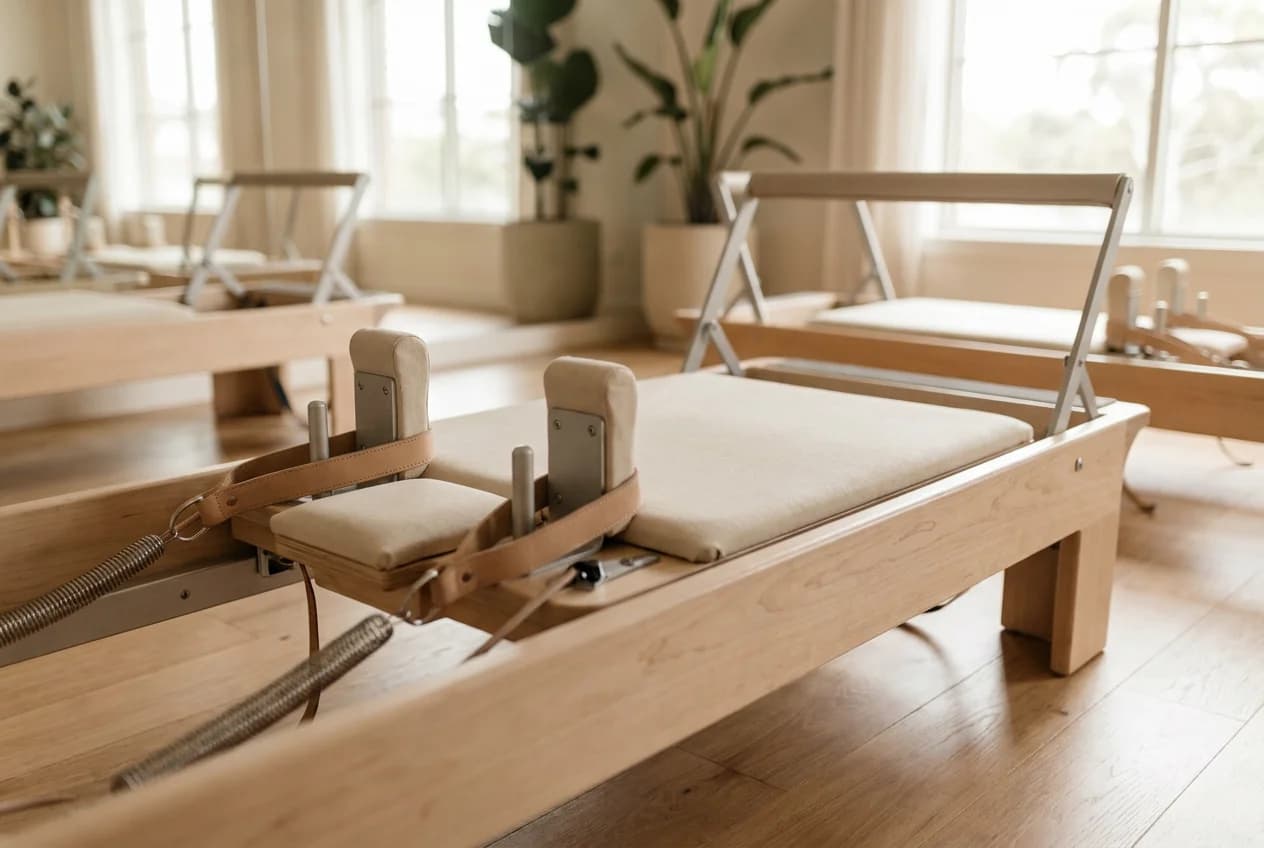
Reformer
The Pilates reformer is a sliding carriage on rails with adjustable springs, a footbar, and optional straps. It is the main apparatus for full-body strength, control, and mobility work in contemporary studio practice. On this site, reformer exercises span foundational footwork and bridging through long-box, stomach massage, and advanced choreography. The spring setting and carriage stopper should be checked before each exercise. If you are new to the reformer, start with clear footwork and hip-control patterns before progressions that load the shoulders or require standing balance on the carriage.
Equipment
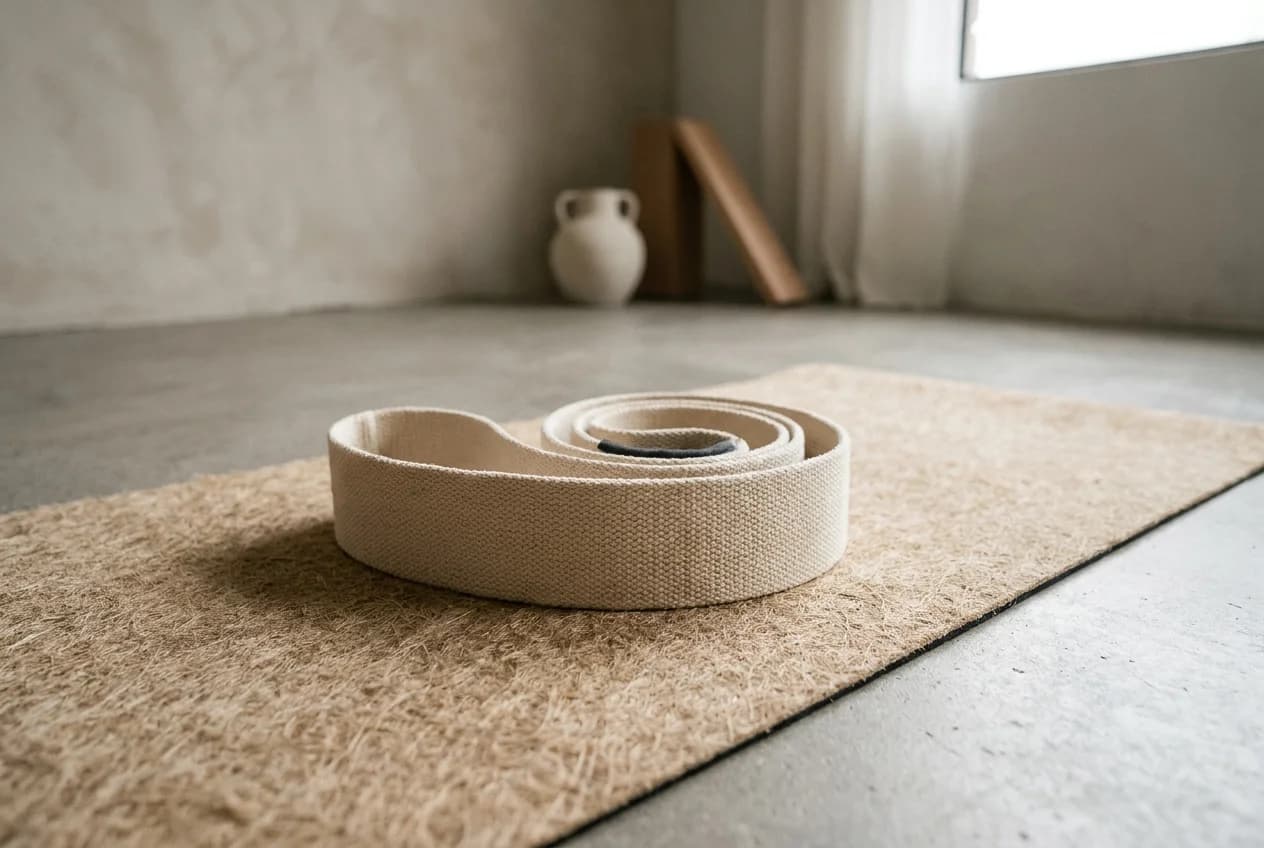
Resistance Band
A resistance band is an elastic strip used to add assistance or challenge to Pilates exercises. It can support range in stretching or increase load in pressing and pulling patterns. Band exercises on this site include mat and reformer variations for arms, legs, and trunk control. Band tension should match the goal: lighter for mobility and motor learning, firmer for strength emphasis. Inspect bands for wear before use and anchor them securely when an exercise requires a fixed hold.
Equipment
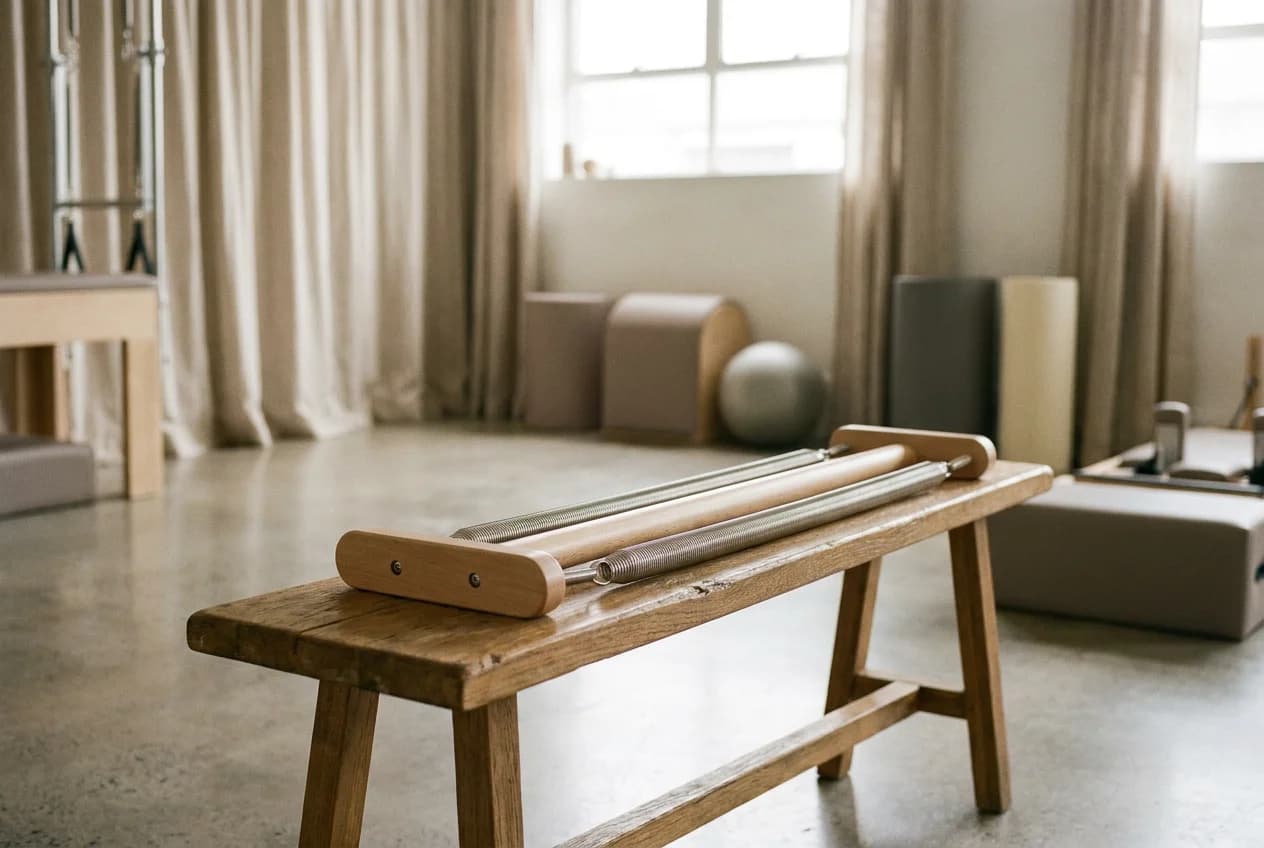
Roll Back Bar
The roll-back bar is a Cadillac or tower bar used for assisted roll-down, articulation, and arm-spring patterns. It helps organise the spine through flexion and extension with spring support. Linked exercises on this site include roll-down prep, arm-spring combinations, and mobility progressions. Bar height and spring length determine how much assistance you receive. Move slowly through the sticky points of spinal flexion rather than collapsing from the shoulders.
Equipment
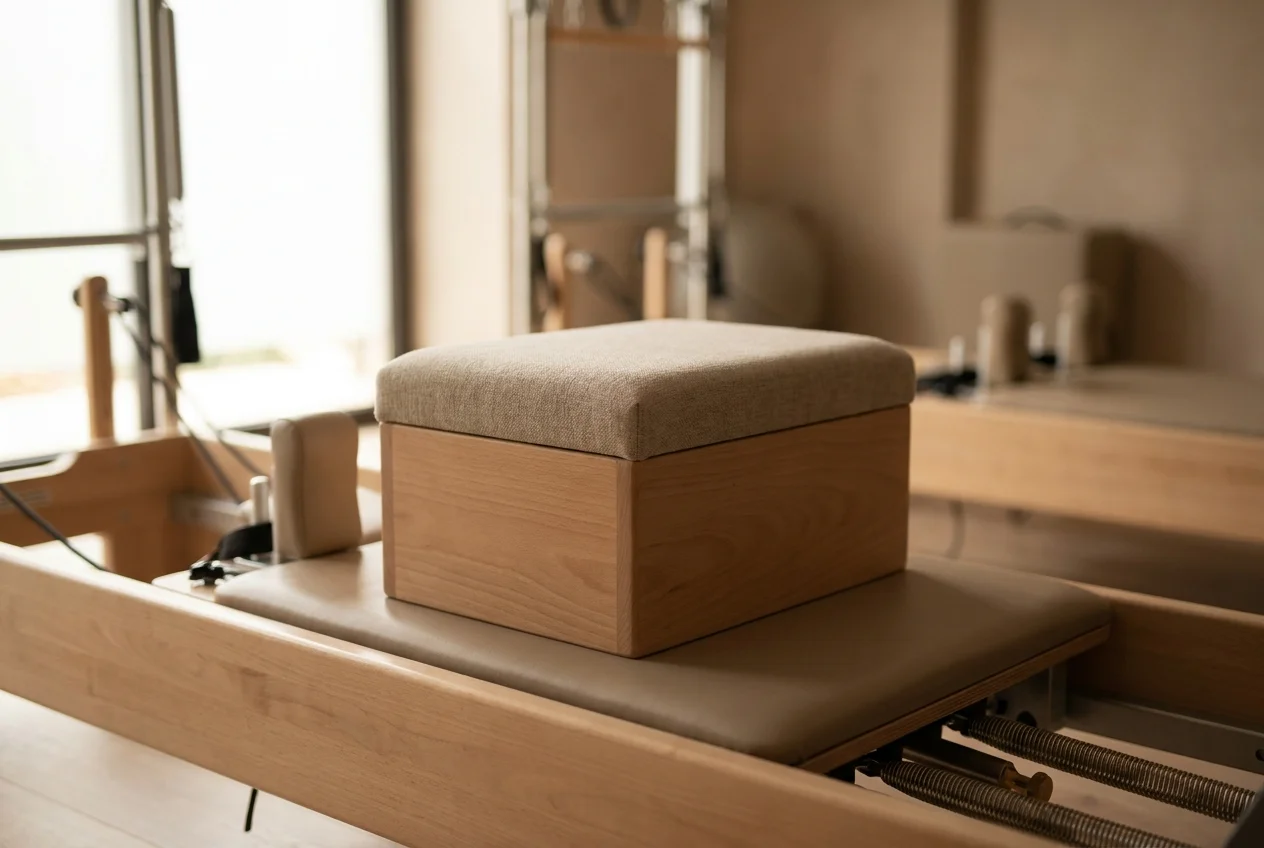
Short Box
The short box is a smaller reformer box used for seated, side-lying, and rotational trunk exercises, often with a foot strap for anchoring. It sits on the carriage and changes leverage for round-back, flat-back, and side-bend sequences. On this site, short-box work appears in stomach massage follow-ons and dedicated short-box series. It demands clear spinal organisation because the surface is narrow and the spring load is close to the trunk. Beginners usually learn round-back and flat-back shapes with lighter springs before twist, tree, or advanced reach patterns.
Equipment
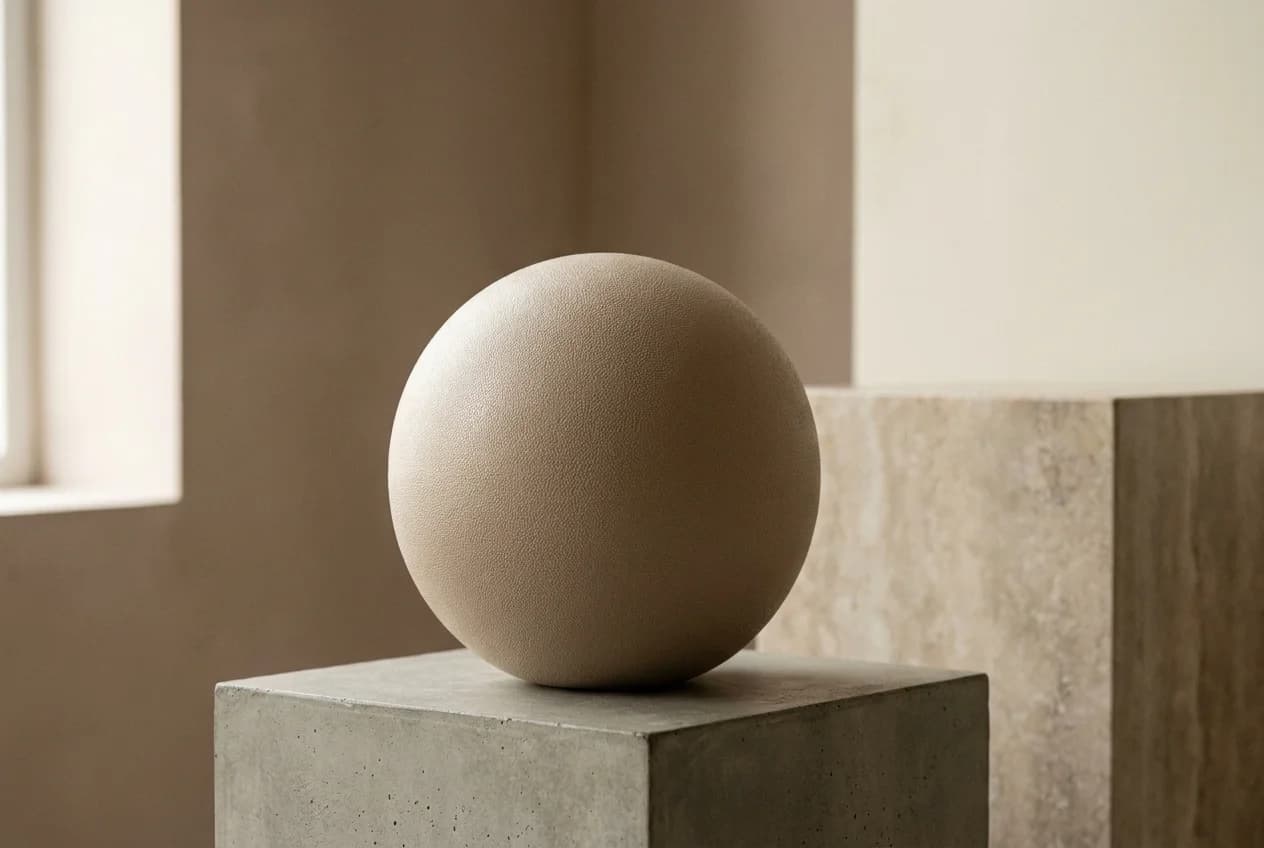
Small Ball
A small Pilates ball is a soft inflatable prop placed between the knees, ankles, or hands. It activates adductors, encourages neutral alignment, and gives tactile feedback during core and hip exercises. On this site, ball work supports inner-thigh engagement, bridge variations, and coordination drills. Inflation level changes feel: slightly soft for comfort, firmer for more feedback. Deflate slowly and store away from sharp surfaces to preserve the shell.
Equipment
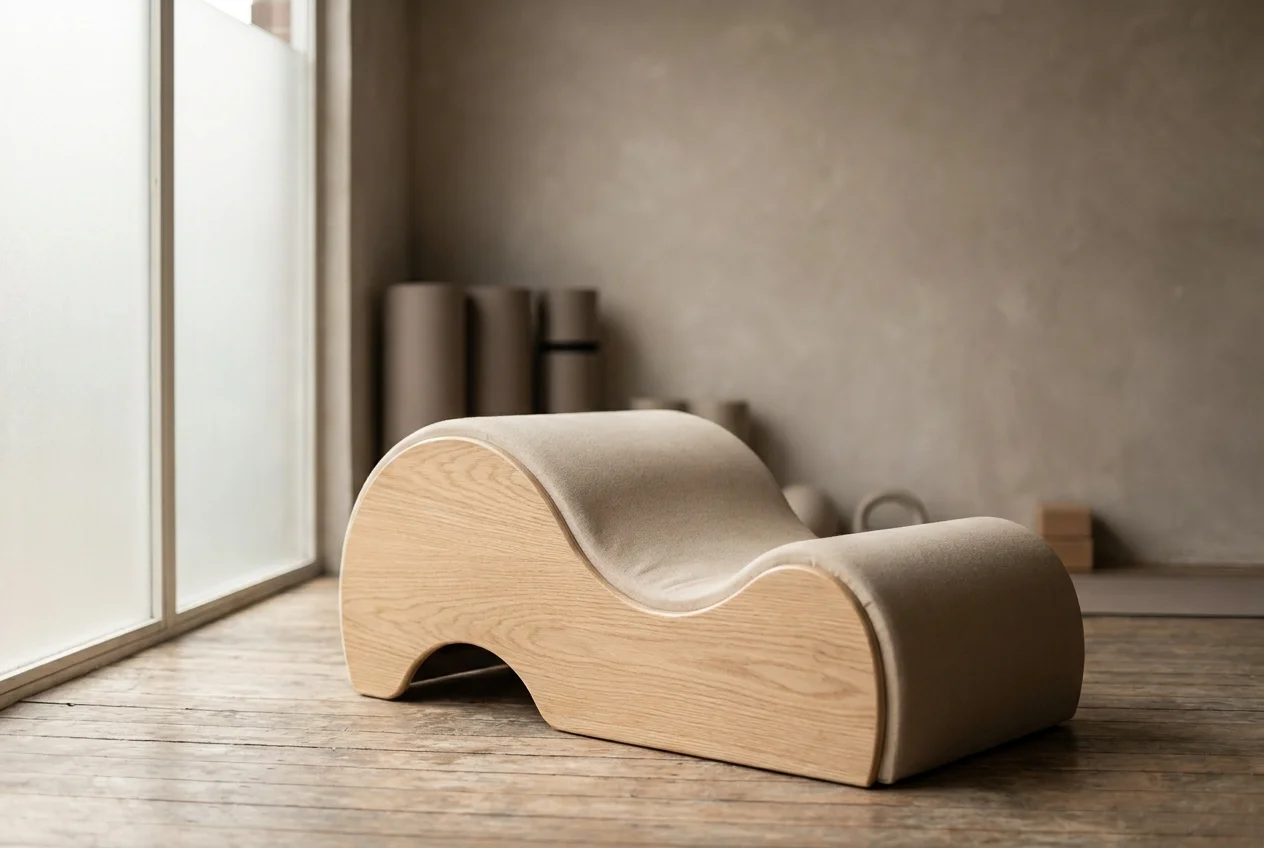
Spine Corrector
The spine corrector — often called the hump barrel — is a curved barrel that supports spinal extension, side-bending, and hip opening. The curve cradles the back ribs while the pelvis and legs anchor the position. Barrel exercises on this site use the spine corrector for breathing, extension prep, and controlled articulation. It is helpful when you want feedback through the mid-back without full ladder-barrel height. Place the barrel on a stable surface and step down carefully after inverted or high extension work.
Equipment
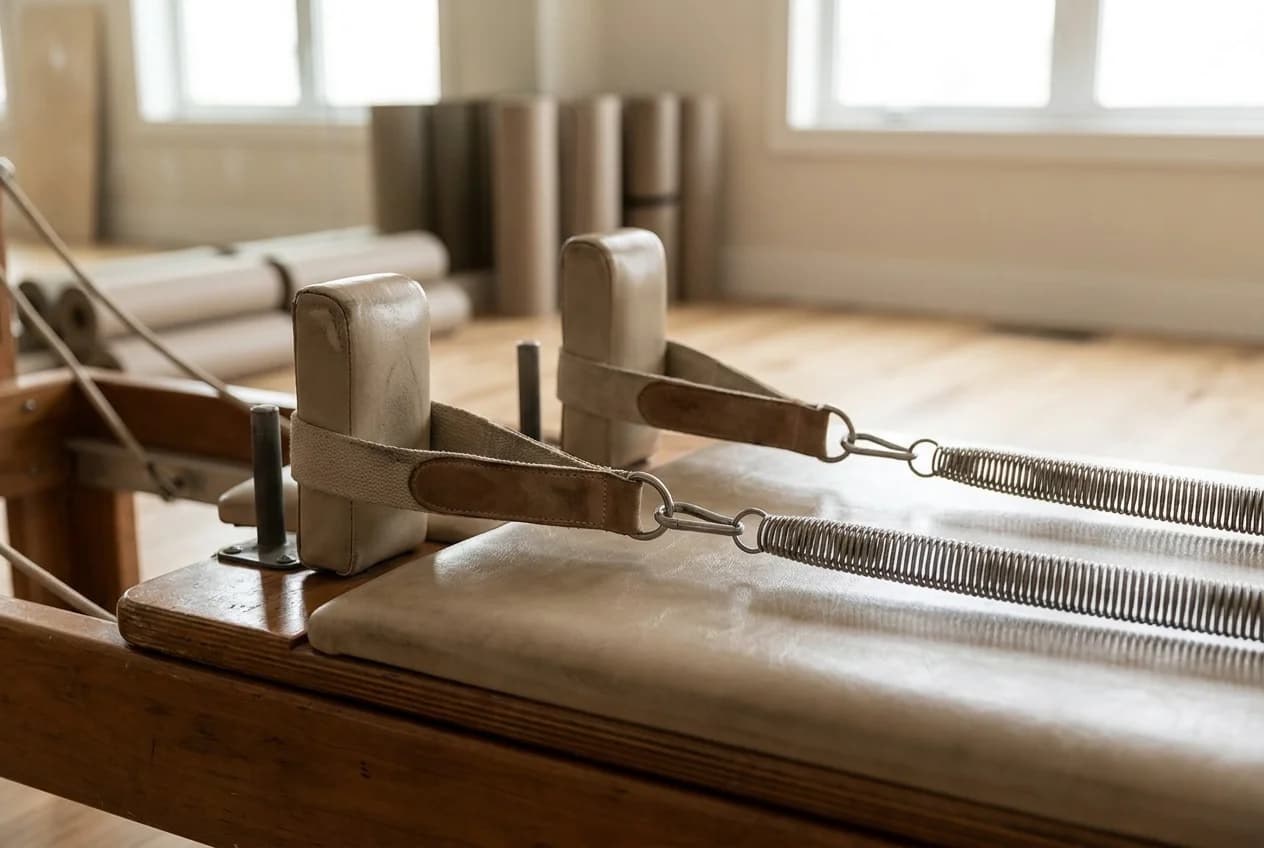
Straps
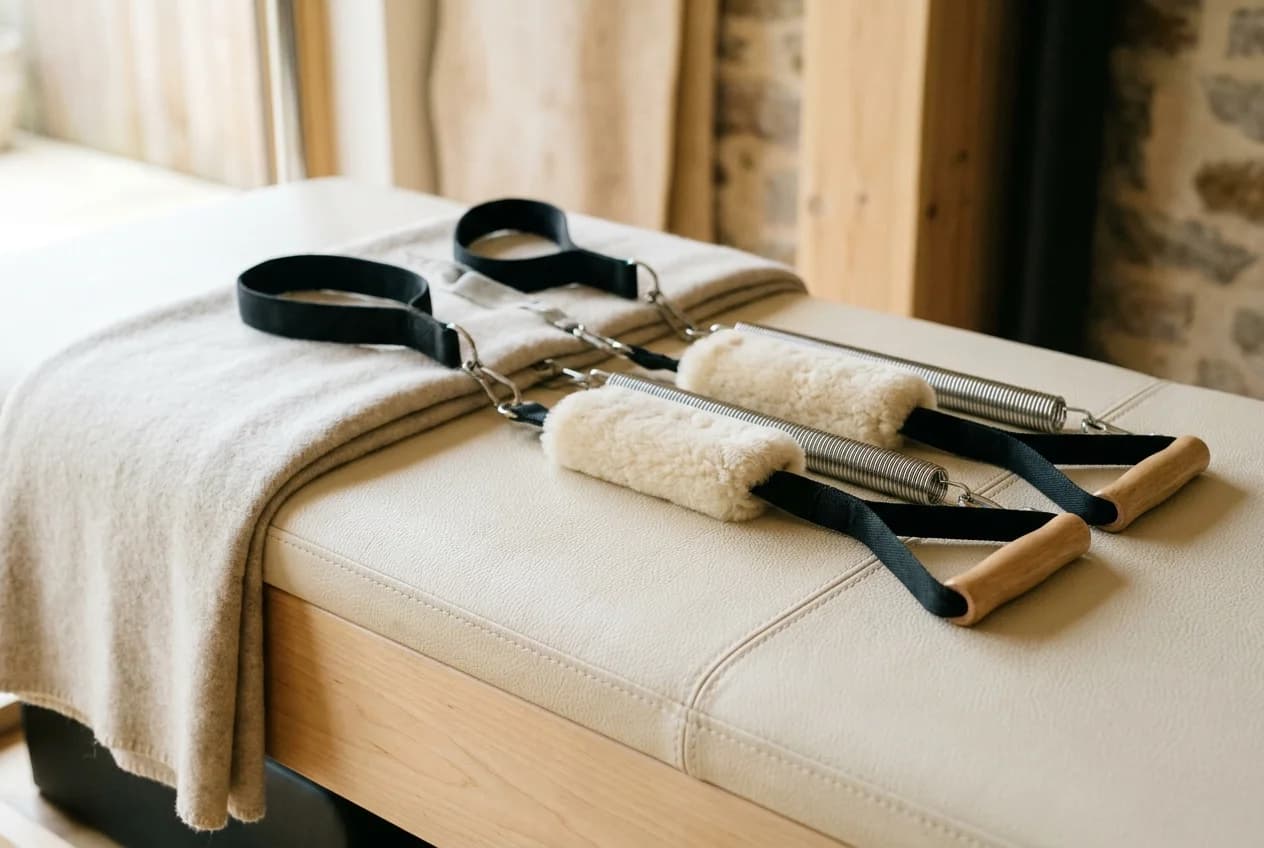
Reformer straps attach to the spring system and provide hand or foot loops for resisted movement. They add feedback for control, range, and coordination in upper- and lower-body exercises. Straps appear across beginner through advanced work on this site — from Hundred Prep and leg circles to long-box and spine massage sequences. Difficulty comes more from spring setting and range than from the straps themselves. Check that loops are secure, even, and appropriate for the exercise before loading the shoulders or hips.
Equipment
Trapeze Table
The trapeze table is the base platform of the Cadillac apparatus. It provides the stable surface for supine, seated, and standing work while springs and bars attach to the frame above and beside the body. On this site, trapeze-table context appears alongside Cadillac exercises where table position and safety rails matter for setup. Many patterns use the table for feedback while springs load the limbs. Clear padding condition and frame stability should be checked before dynamic spring work.
Equipment
Wall Unit
Studio wall or wall-mounted Pilates unit used for standing alignment work, squat patterns, scapular slides, and resistance-band anchor points.