Focus area
Desk Worker Posture
Reformer Pilates patterns that may help some people counter desk-related rounding through upper-back endurance, chest opening, and supported thoracic mobility.
What this focus area means
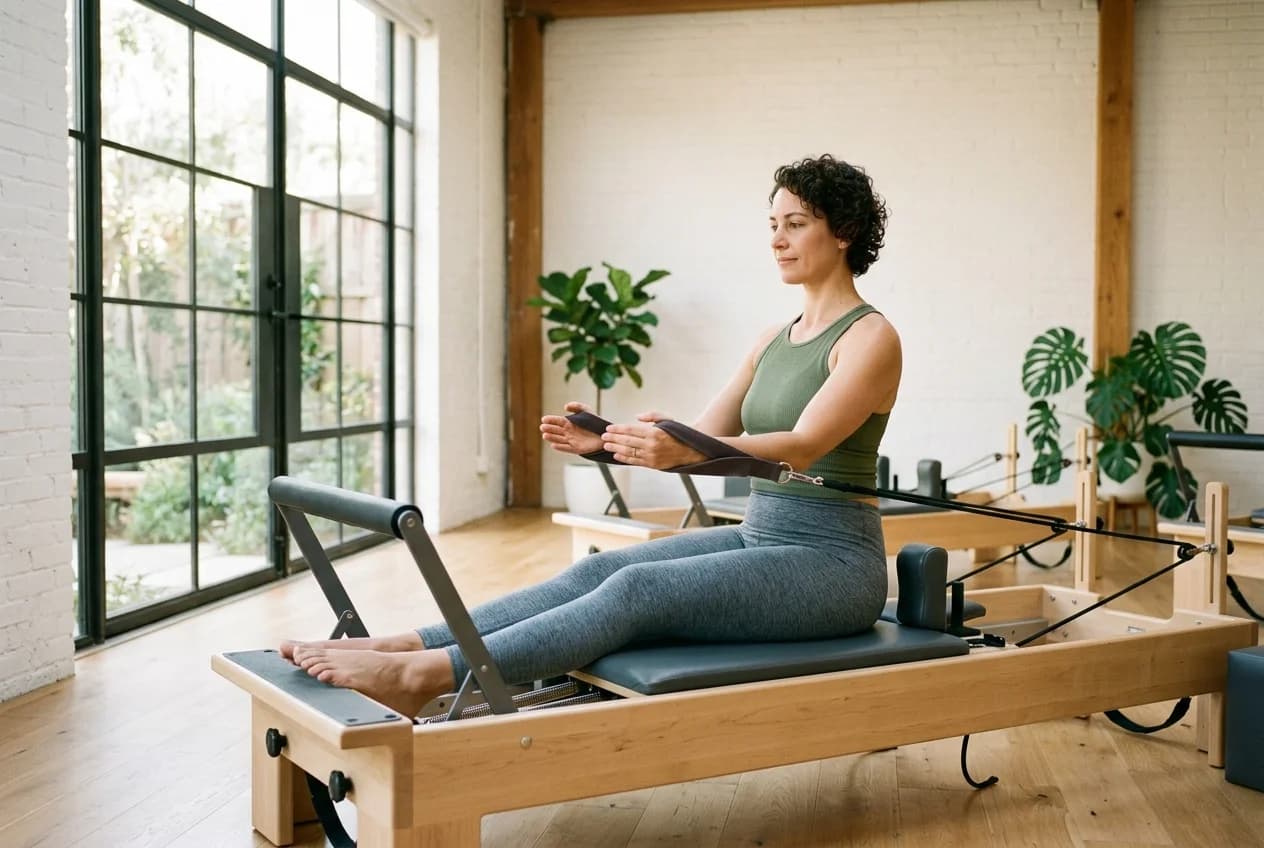
Hours at a desk, on a laptop, or looking down at a phone often leave the upper back feeling rounded and the shoulders set forward. This page offers educational reformer movement ideas — not a posture diagnosis or medical treatment. Supported rowing, chest-opening, and extension patterns on the reformer can help some people practise better scapular organisation and upright trunk control. Who may find this useful: desk workers exploring movement after long sitting, beginners learning seated alignment on the reformer, and anyone curious about upper-back endurance without heavy loading. Smaller ranges, lighter springs, and shorter sets often teach clearer mechanics than forcing a "perfect" posture. What reformer work may support: seated rowing for scapular control, Chest Expansion for posterior shoulder organisation, forward rowing reach for open-chest patterns, and Long Back Stretch for supported thoracic extension. The aim is balanced organisation — not rigidly pinning the shoulders back or gripping the neck. What to try next: explore linked exercises below with light springs and clear stopping points. Pair upper-back work with core support cues. Speak to a qualified instructor for modifications, and to a health professional if you have sharp pain, numbness, or a diagnosed condition.
Important safety note
This content is for general education only and is not medical advice. These exercises may help counteract postural habits for some people, but they are not a substitute for medical advice or physical therapy if you have pain, numbness, or a diagnosed condition. Stop if something causes sharp pain or unusual discomfort.
Reformer exercises for Desk Worker Posture
FAQs
Can reformer Pilates help desk-related posture habits?
For some people, supported upper-back and chest-opening work may help them feel more organised and less rounded through the upper body. This page lists reformer exercises with setup notes. It is educational only — not a substitute for medical advice or physical therapy.
Which reformer exercises are good for desk workers?
Rowing Back 1, Chest Expansion, Rowing Front 1, and Long Back Stretch are linked on this page. They combine seated alignment, upper-back endurance, chest opening, and supported extension.
How often should desk workers do posture-focused reformer work?
Consistency matters more than intensity. Many people benefit from shorter, regular sessions with light springs and clear form cues. An instructor can help you choose frequency and progressions based on your current control.
When should I avoid posture-focused reformer work?
Avoid or modify if you feel sharp pain, numbness, catching in the shoulders, or symptoms that worsen after class. Speak to a qualified health professional if you are recovering from injury or have a diagnosed spinal or shoulder condition.