Exercise
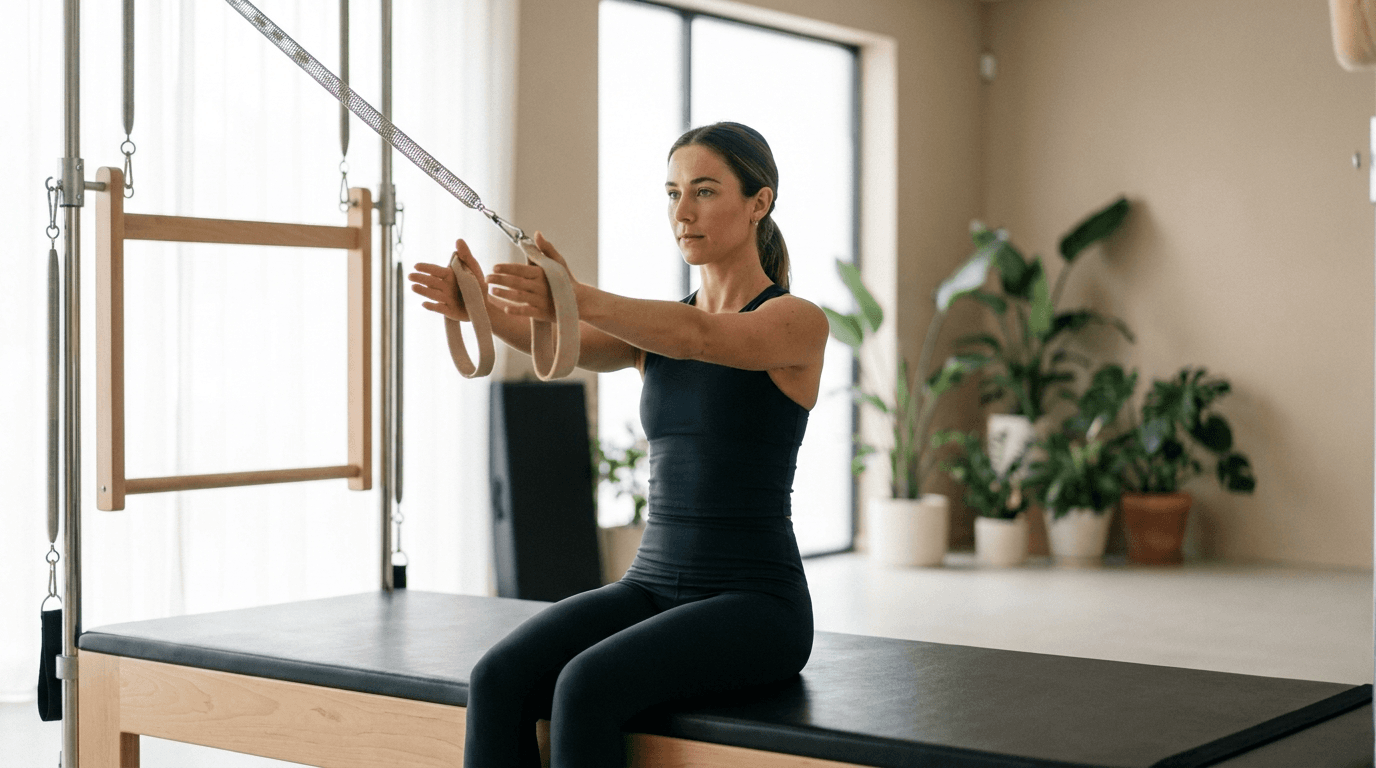
Seated Cadillac arm-spring exercise performing arm patterns for shoulder strength and postural control.
Setup instructions
Sit tall on the Cadillac facing the tower with legs either crossed or extended. Hold the arm spring loops with the springs providing light tension at shoulder height. Grow tall through the spine before starting.
Breathing cues
Exhale to press or extend. Inhale to return.
Movement steps
- 1Exhale to press one or both arms through a chosen pattern such as pressing down, pressing back, or circling.
- 2Maintain the upright trunk and settled shoulders throughout.
- 3Inhale to return to the starting position with control.
- 4Keep the movement smooth and the pelvis neutral.
- 5Repeat on both sides as applicable.
Common mistakes
Leaning back on the press; shrugging the shoulders; losing the tall trunk; moving too fast; gripping the spring loops tightly.
Safety notes
Keep spring tension light for beginners. Stop if shoulder discomfort or loss of trunk stability appears.
Connections
Muscles worked
Goals supported
Equipment needed
FAQs
Is Arm Springs Seated suitable for beginners?
Yes. The seated position makes it accessible because the trunk is supported and the arm patterns are straightforward. Light spring tension makes it easy to learn good form before adding challenge.
What muscles does Arm Springs Seated work?
The shoulder stabilisers and upper back guide the arm patterns. The core engages throughout to maintain the upright seated trunk, and the hip flexors support the seated position.
What is Arm Springs Seated good for?
It builds shoulder strength in a postural context and reinforces the connection between upper-body movement and a stable, upright trunk — a key theme in Pilates practice.
Plan your class
Turn saved exercises into a class plan
Save exercises from the library, then build a reformer class plan with cues, timings, reps, and teaching notes.