Exercise
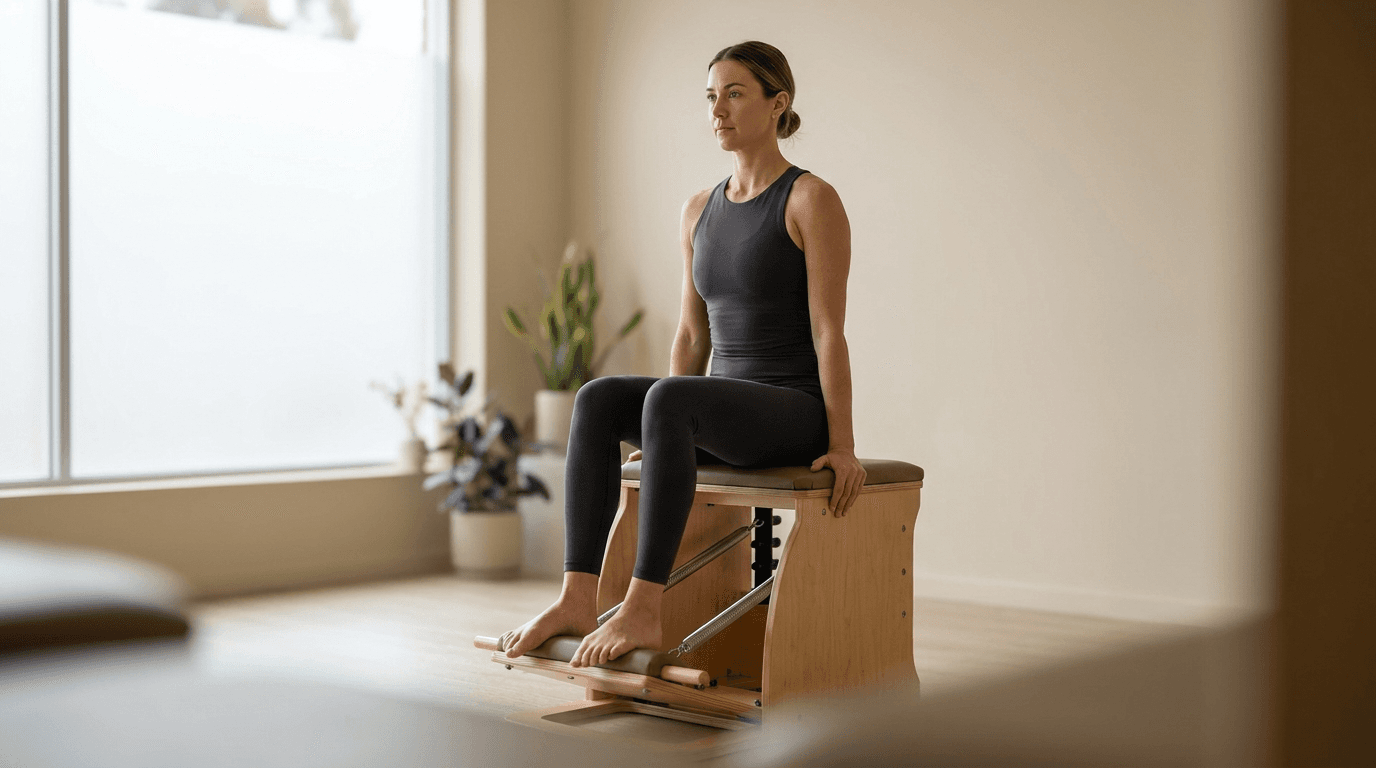
Seated Wunda Chair exercise pressing the spring pedal in footwork patterns to build lower-body strength and beginner chair confidence.
Setup instructions
Sit tall on the Wunda Chair with both feet placed on the pedal hip-width apart. Heels press evenly and the spine is long. Settle the shoulders and grow tall before beginning.
Breathing cues
Exhale to press. Inhale to return.
Movement steps
- 1Exhale to press the pedal down through the balls of the feet.
- 2Inhale to control the pedal rising back up without letting it bounce.
- 3Maintain the upright trunk and keep the pelvis neutral throughout.
- 4Repeat in a steady, even rhythm.
Common mistakes
Leaning back on the press; letting the pedal bounce; pushing through only one foot; losing the upright spine; holding the breath.
Safety notes
Start with a lighter spring until pedal control is reliable. Ensure the chair is stable and the feet are fully supported on the pedal.
Connections
Muscles worked
Goals supported
Equipment needed
Related exercises
FAQs
Is Footwork on Chair suitable for beginners?
Yes. It is the most fundamental chair exercise. Seated with both feet on the pedal, the movement is safe and easy to scale by adjusting the spring resistance.
What muscles does Footwork on Chair work?
The glutes and quadriceps do most of the pedal press, with the hamstrings assisting the return. The core engages to maintain the upright seated trunk throughout.
What is Footwork on Chair good for?
It builds lower-body strength, introduces the feel of the chair's spring resistance, and teaches pedal control — all essential foundations for more complex chair exercises.
How does Footwork on Chair compare to reformer footwork?
Reformer footwork is supine, so gravity loads the legs differently. Chair footwork is upright and seated, which means the glutes, trunk, and balance systems are more actively involved throughout.
Plan your class
Turn saved exercises into a class plan
Save exercises from the library, then build a reformer class plan with cues, timings, reps, and teaching notes.