Exercise
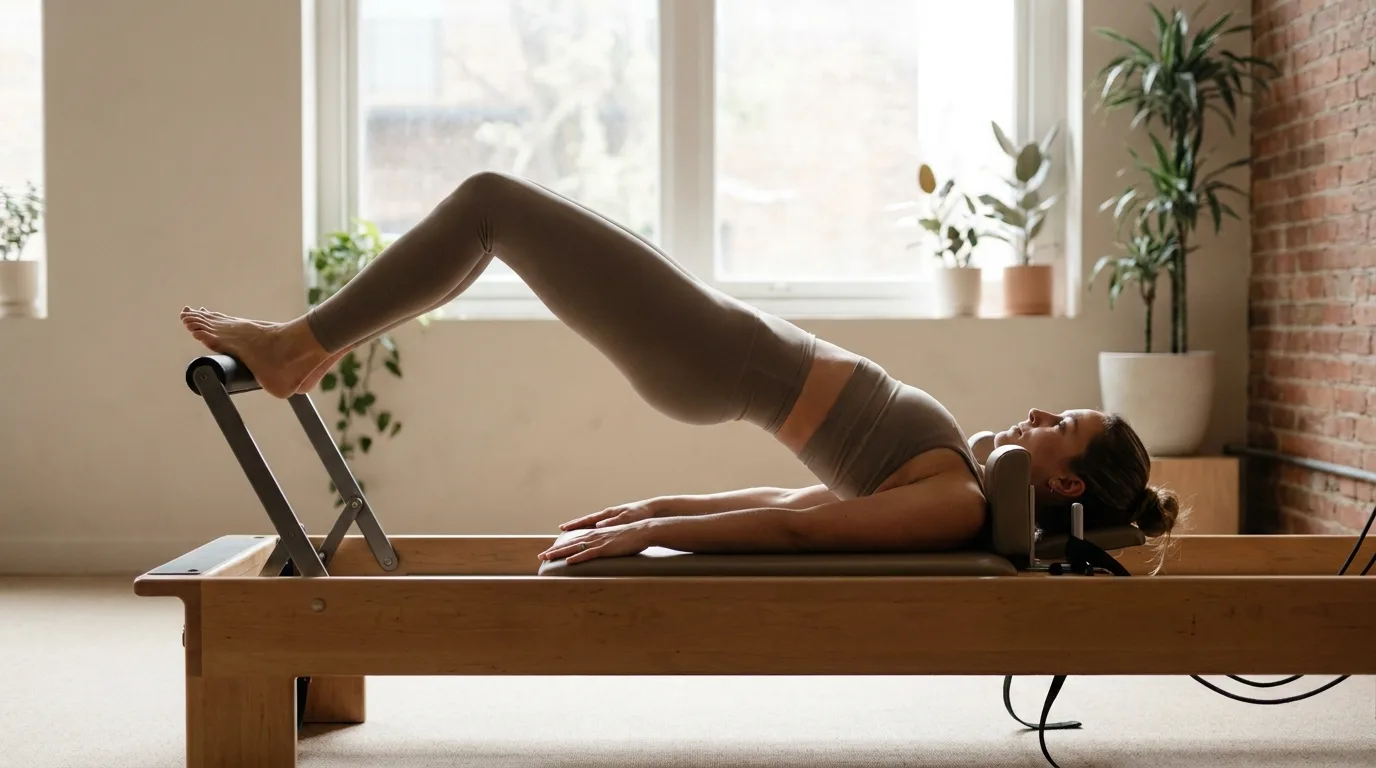
Posterior-chain bridge pattern for glutes, hamstrings, and spinal articulation.
Setup instructions
Supine with feet on footbar, knees bent, arms long by sides.
Breathing cues
Exhale to lift. Inhale at the top. Exhale to roll down.
Movement steps
- 1Peel pelvis up one segment at a time.
- 2Pause in bridge, then lower with control through each spinal segment.
Common mistakes
Pushing from lower back; flaring ribs; knees collapsing inward.
Safety notes
Move within a comfortable range and avoid forcing spinal extension.
Focus Areas & Conditions
Tight Hips
Suitability: Bridging can help balance hip flexor work with glute and hamstring engagement, which may support more comfortable hip mechanics for some people.
Caution: Articulate through the spine without tucking aggressively. If bridging increases front-of-hip pulling, reduce range or spring tension.
Lower Back Discomfort
Suitability: Bridging may help some people build glute and hamstring support while articulating the spine with spring feedback.
Caution: Avoid over-tucking the pelvis or pushing through the lower back at the top. Use lighter springs and smaller ranges when learning.
Weak Glutes
Suitability: Bridging is a primary glute and posterior-chain pattern for building hip extension control on the reformer.
Caution: Articulate through the spine without forcing extension from the lower back. Reduce range if bridging increases discomfort.
Variations
- harder: Scooter - Move from bilateral bridge to single-leg glute load on the footbar.
- alternative: Shoulder Bridge - Mat shoulder bridge when reformer setup is unavailable.
Connections
Related exercises
FAQs
FAQs for this exercise will appear as the content graph expands.
Plan your class
Turn saved exercises into a class plan
Save exercises from the library, then build a reformer class plan with cues, timings, reps, and teaching notes.