Exercise
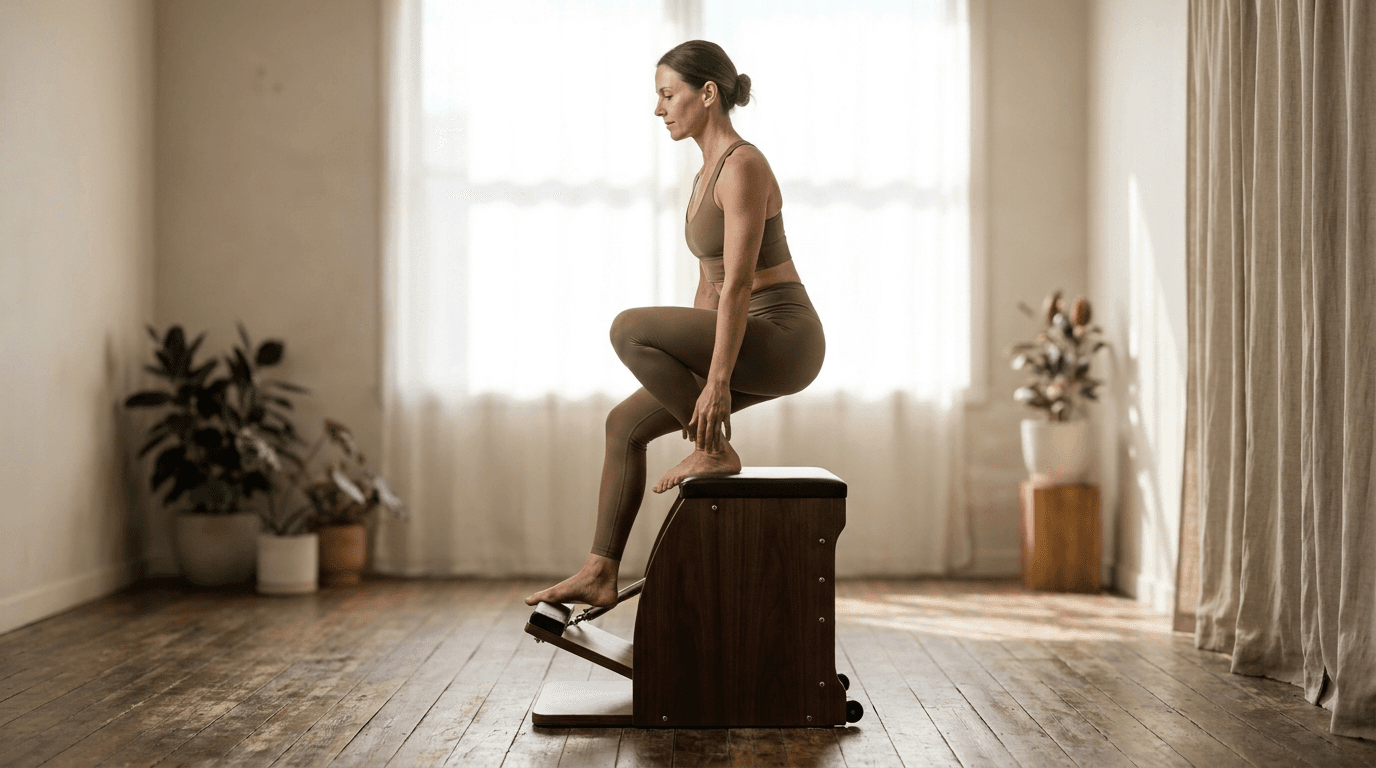
Standing Wunda Chair exercise stepping one foot onto the pedal and pressing up to a full stand for single-leg glute and hamstring strength.
Setup instructions
Stand facing the Wunda Chair with feet hip-width apart. Place one foot flat on the pedal with the heel aligned under the hip. Rest both hands lightly on the chair top for balance support.
Breathing cues
Exhale to press up. Inhale to lower.
Movement steps
- 1Inhale to prepare.
- 2Exhale to press through the heel on the pedal, straightening the leg and rising to standing.
- 3At the top, stand tall with both feet on the chair surface.
- 4Inhale to reverse, bending the working leg and slowly returning the pedal foot to the start.
- 5Repeat, then switch sides.
Common mistakes
Pushing through the toes rather than the heel; letting the knee dive inward; leaning heavily on the hands; losing trunk height; rushing the descent.
Safety notes
Use hand support freely. Keep the working knee tracking over the second toe. Avoid if knee or hip discomfort appears on the press-up.
Connections
Muscles worked
Goals supported
Equipment needed
Related exercises
FAQs
Is Going Up Front suitable for beginners?
It is better for intermediate movers because the single-leg press demands significant glute strength and balance. Beginners should first build confidence with standing footwork and basic leg strength.
What muscles does Going Up Front work?
The glute of the pressing leg does most of the work on the ascent. The hamstrings assist the hip extension, and the core works throughout to keep the trunk upright and the pelvis level.
What is Going Up Front good for?
It builds functional single-leg strength, hip stability, and the balance control needed for day-to-day activities like stair climbing. It is one of the most practically applied exercises in the Pilates chair repertoire.
How does Going Up Front differ from Going Up Side?
Going Up Front is approached facing the chair, which emphasises the glutes and hamstrings in a sagittal plane. Going Up Side is approached from beside the chair, adding a lateral hip component and abductor challenge.
Plan your class
Turn saved exercises into a class plan
Save exercises from the library, then build a reformer class plan with cues, timings, reps, and teaching notes.