Exercise
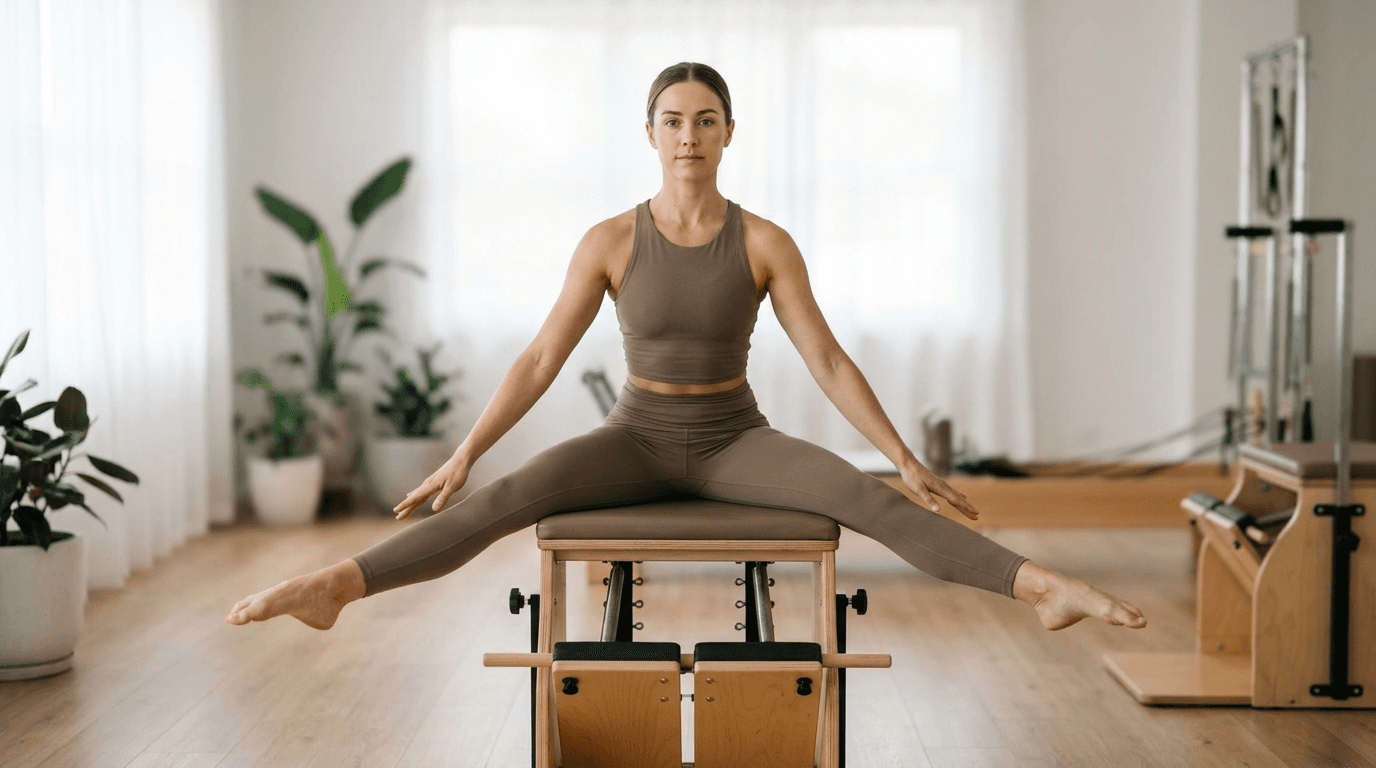
Advanced Wunda Chair balance exercise sitting with legs wide in a horseback position to challenge deep core control and upright stability.
Setup instructions
Sit on the Wunda Chair seat with the legs either wide in a straddle or crossed at the ankles. Rest the hands lightly on the sides and find an upright spine. Release the hand support as balance improves.
Breathing cues
Inhale to grow. Exhale to hover.
Movement steps
- 1Inhale to grow tall.
- 2Exhale to lift slightly off the seat into a supported hover if working toward the full exercise.
- 3Hold with the core engaged and the inner thighs active.
- 4Inhale to maintain the position.
- 5Exhale to lower back to the seat with control.
Common mistakes
Gripping the sides for the full duration; collapsing the spine; allowing the legs to swing; holding the breath; losing the upright trunk position.
Safety notes
Build core strength progressively before attempting the unsupported version. Have a spotter available when working toward the balance. Avoid with balance concerns or insufficient core control.
Connections
Related exercises
FAQs
Is Horseback on Chair suitable for beginners?
No. Horseback requires advanced balance and core control. Building a strong seated posture and confident chair balance must come first.
What muscles does Horseback on Chair work?
The deep abdominals and hip flexors hold the balance. The inner thighs assist in the straddle position and the shoulder stabilisers support any arm work added to the exercise.
What is Horseback on Chair good for?
It is exceptional for core endurance, seated balance, and the body awareness needed to maintain upright control without external support — one of the most concentrated core challenges on the chair.
Plan your class
Turn saved exercises into a class plan
Save exercises from the library, then build a reformer class plan with cues, timings, reps, and teaching notes.