Exercise
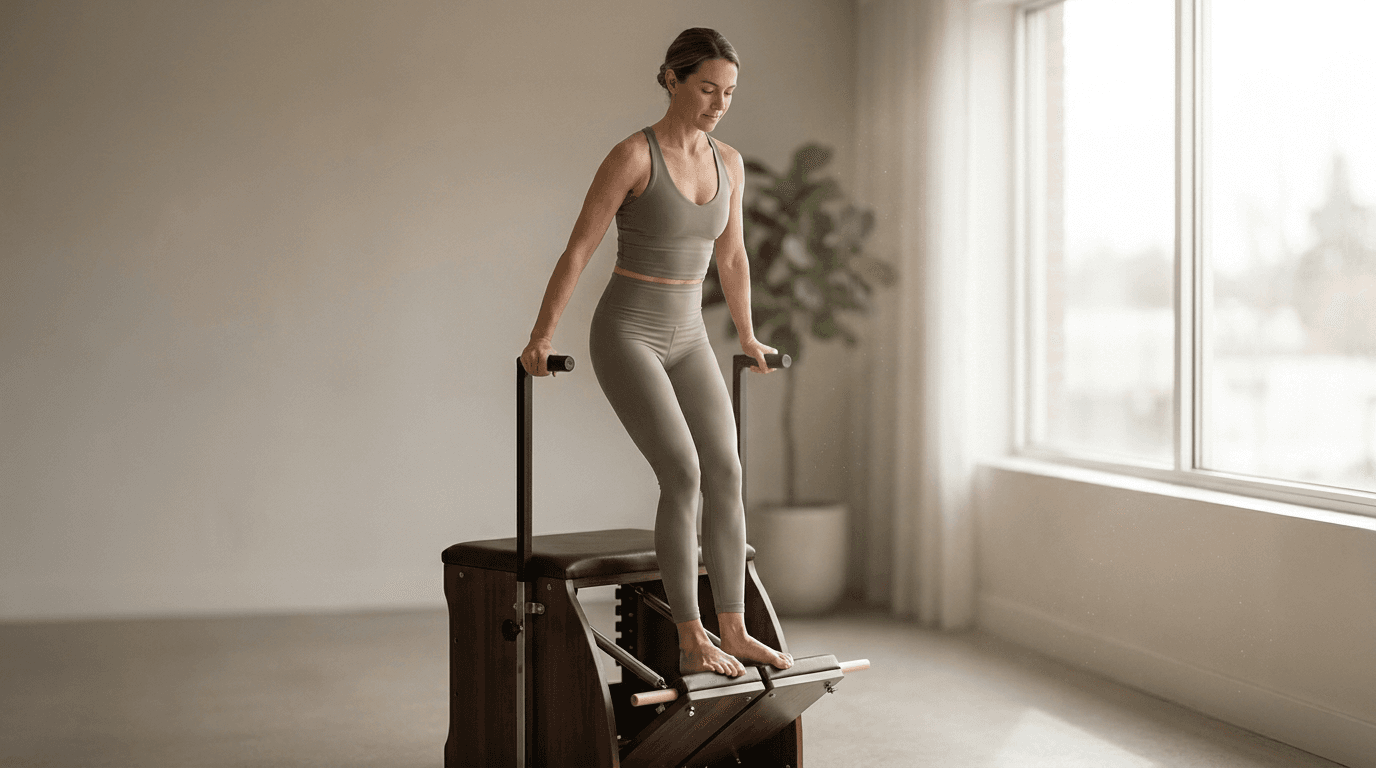
Standing Wunda Chair exercise pressing the pedal with both feet for lower-body strength and upright balance control.
Setup instructions
Stand on the Wunda Chair platform with both feet on the pedal. Rest the hands lightly on the top of the chair for balance support. Stand upright with the spine tall before beginning.
Breathing cues
Exhale to press. Inhale to return.
Movement steps
- 1Inhale to prepare.
- 2Exhale to press the pedal down through the feet.
- 3Inhale to control the pedal back up with the leg muscles.
- 4Keep the trunk upright and weight evenly distributed.
- 5Repeat with an even rhythm.
Common mistakes
Gripping the chair too hard; leaning forward; locking the knees; pressing asymmetrically; losing balance on the return.
Safety notes
Use a stable chair on a non-slip surface. Use hand support freely until balance is reliable. Avoid if balance concerns make standing on the chair unsafe.
Connections
Muscles worked
Goals supported
Equipment needed
Related exercises
FAQs
Is Standing Pumping suitable for beginners?
Yes, with care. The hand support on the chair top makes it accessible, though the standing position adds a balance challenge compared to seated footwork. Use hand support freely.
What muscles does Standing Pumping work?
The glutes, quadriceps, and calf muscles work to press and return the pedal. The core and lower-leg muscles coordinate for balance, making this a whole lower-body exercise.
What is Standing Pumping good for?
It builds functional lower-body strength in a standing position, develops calf and quadricep endurance, and trains balance on the chair in preparation for more demanding standing exercises.
How is Standing Pumping different from Footwork on Chair?
Footwork on Chair is seated, which reduces balance demands and isolates leg strength more directly. Standing Pumping requires the whole body to stabilise in a weight-bearing upright position, adding a coordination and balance challenge.
Plan your class
Turn saved exercises into a class plan
Save exercises from the library, then build a reformer class plan with cues, timings, reps, and teaching notes.