Exercise
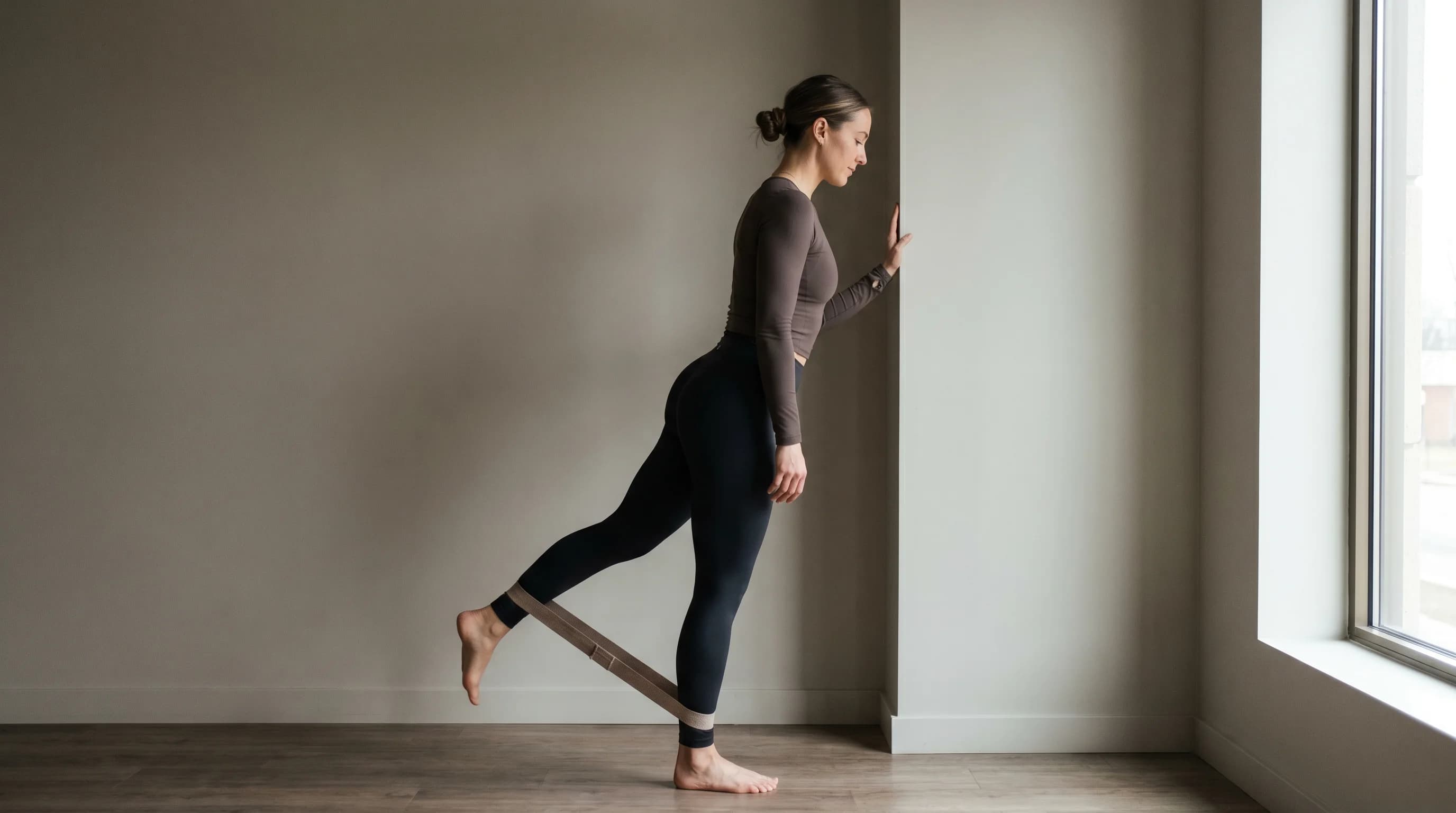
Wall Resistance Band Standing Back Kick
BeginnerSaveSign in to save Wall Resistance Band Standing Back KickStanding back kick with wall support and a resistance band for glute engagement and hip extension control.
Setup instructions
Stand facing a studio wall within easy reach. Place both hands lightly on the wall at shoulder height for balance. Loop a resistance band around the ankles or attach one end to a low wall anchor and the other around the working ankle. Stand tall with feet hip-width apart and the core gently engaged.
Breathing cues
Exhale to kick. Inhale to hold. Exhale to lower.
Movement steps
- 1Inhale to prepare in standing.
- 2Exhale to extend one leg behind the body against band tension without arching the low back.
- 3Pause briefly with the glute engaged and the hips square.
- 4Inhale to hold with light fingertip support.
- 5Exhale to lower the leg with control and switch sides.
Common mistakes
Arching the low back to lift the leg higher; leaning forward into the wall; letting the standing hip rotate open; kicking with momentum; holding the breath.
Safety notes
Keep the kick range modest and the trunk stable. Stop if sharp low-back discomfort or hip pinching appears.
Connections
Muscles worked
Goals supported
Equipment needed
Related exercises
FAQs
Is Wall Resistance Band Standing Back Kick suitable for beginners?
Yes. The wall supports upright posture and the kick range can stay modest. Avoid arching the low back to lift higher.
What muscles does Wall Resistance Band Standing Back Kick work?
The glutes and hamstrings drive hip extension against band tension while the deep core keeps the trunk stable against the wall.
What is Wall Resistance Band Standing Back Kick good for?
It builds glute engagement and hip extension control before mat glute kick series and reformer standing back work.
Plan your class
Turn saved exercises into a class plan
Save exercises from the library, then build a reformer class plan with cues, timings, reps, and teaching notes.