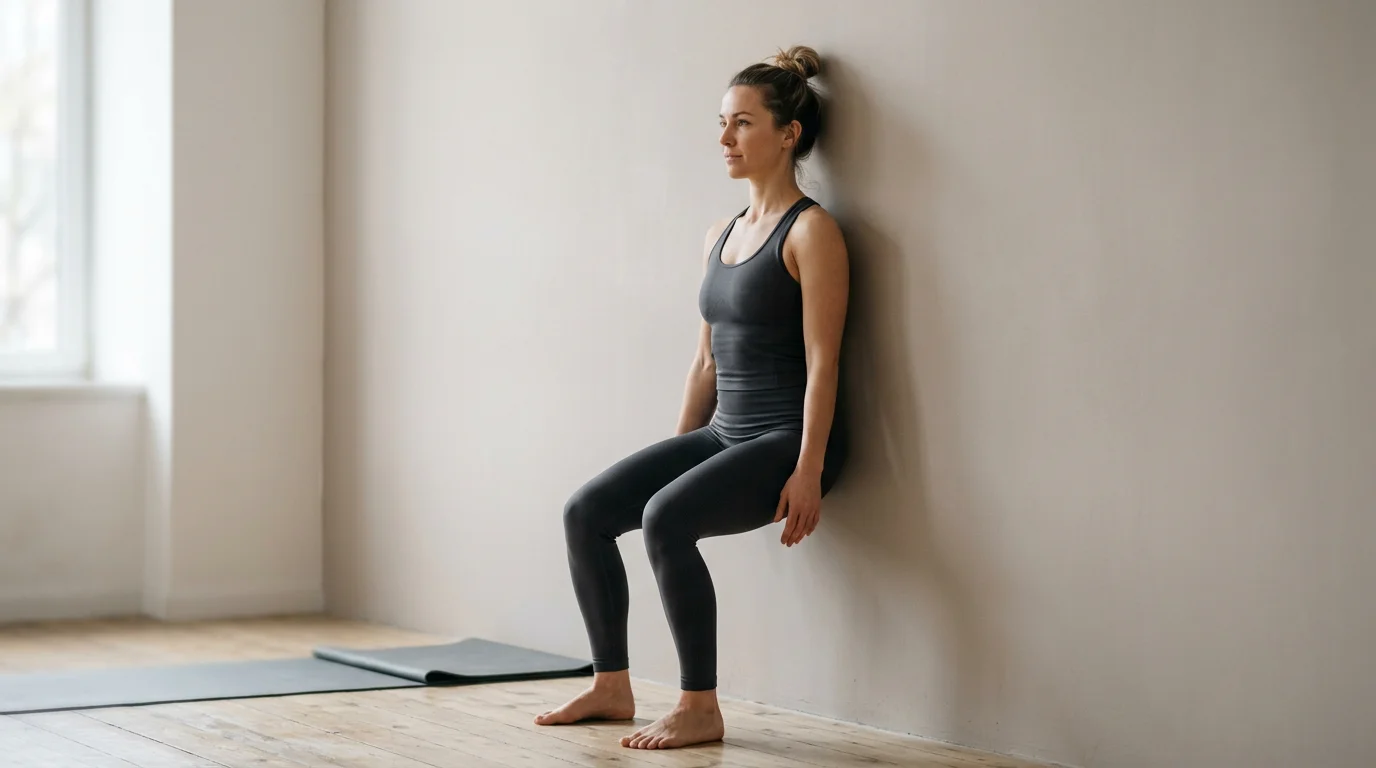
Exercise
Standing squat with the back supported on a wall to build lower-body alignment and glute control.
Setup instructions
Stand with your back against the wall. Walk the feet forward so the knees can bend comfortably. Keep the feet hip-width apart and parallel. Rest the arms by the sides or reach them forward for balance.
Breathing cues
Exhale to lower. Inhale to hold. Exhale to rise.
Movement steps
- 1Inhale to prepare and grow tall against the wall.
- 2Exhale to slide down the wall, bending the knees to a comfortable depth.
- 3Keep the knees aligned over the ankles and the low back supported.
- 4Inhale to hold briefly at the bottom.
- 5Exhale to press through the feet and slide back up the wall.
Common mistakes
Letting the knees collapse inward; lifting the heels; tucking the pelvis aggressively; sliding too low too soon; holding the breath.
Safety notes
Keep the depth modest until knee tracking feels clear. Stop if knee pain, dizziness, or sharp hip discomfort appears.
Connections
Muscles worked
Goals supported
Equipment needed
Related exercises
FAQs
Is Wall Squat suitable for beginners?
Yes. The wall supports the trunk and makes it easier to keep the knees aligned while learning squat mechanics. Depth can stay shallow until control improves.
What muscles does Wall Squat work?
The quadriceps and glutes do most of the work during the slide. The core engages to keep the trunk upright and the pelvis steady against the wall.
What is Wall Squat good for?
It builds lower-body strength, knee tracking awareness, and confidence in squat patterns before progressing to chair, reformer, or unsupported standing leg work.
Plan your class
Turn saved exercises into a class plan
Save exercises from the library, then build a reformer class plan with cues, timings, reps, and teaching notes.