Exercise
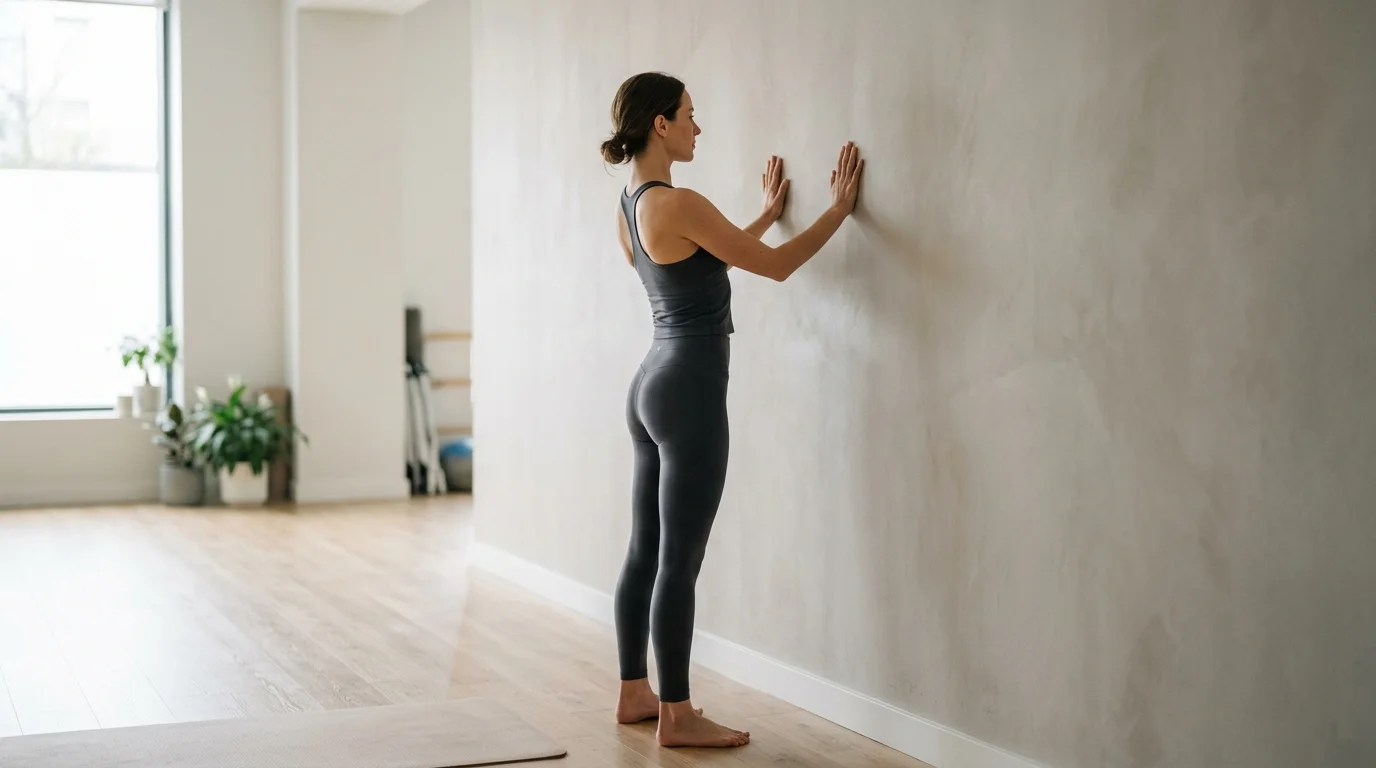
Standing thoracic extension at a studio wall to encourage upper-back mobility and upright posture.
Setup instructions
Stand facing a studio wall at arm's length. Place the hands on the wall at shoulder height with the arms extended. Walk the feet back slightly and soften the knees. Engage the core to keep the low back from overarching.
Breathing cues
Exhale to extend. Inhale to hold. Exhale to return.
Movement steps
- 1Inhale to prepare in the incline standing position.
- 2Exhale to gently press the chest toward the floor, extending through the upper back.
- 3Keep the hips over the feet and the gaze slightly forward.
- 4Inhale to hold briefly at a comfortable range.
- 5Exhale to return to upright with control.
Common mistakes
Over-arching the low back instead of extending the thorax; locking the elbows; collapsing the shoulders toward the ears; forcing painful range; holding the breath.
Safety notes
Keep the extension mild and upper-back focused. Stop if sharp back pinching or dizziness appears.
Connections
Muscles worked
Goals supported
Equipment needed
Related exercises
FAQs
Is Wall Thoracic Extension suitable for beginners?
Yes. The wall supports the upper body and the extension can stay mild. Focus on the upper back rather than the low back.
What muscles does Wall Thoracic Extension work?
The upper-back extensors guide thoracic opening while the core prevents excessive lumbar arch and the shoulders stay organised.
What is Wall Thoracic Extension good for?
It improves upper-back mobility and upright posture, useful for desk-related stiffness and before reformer extension work.
Plan your class
Turn saved exercises into a class plan
Save exercises from the library, then build a reformer class plan with cues, timings, reps, and teaching notes.