Exercise
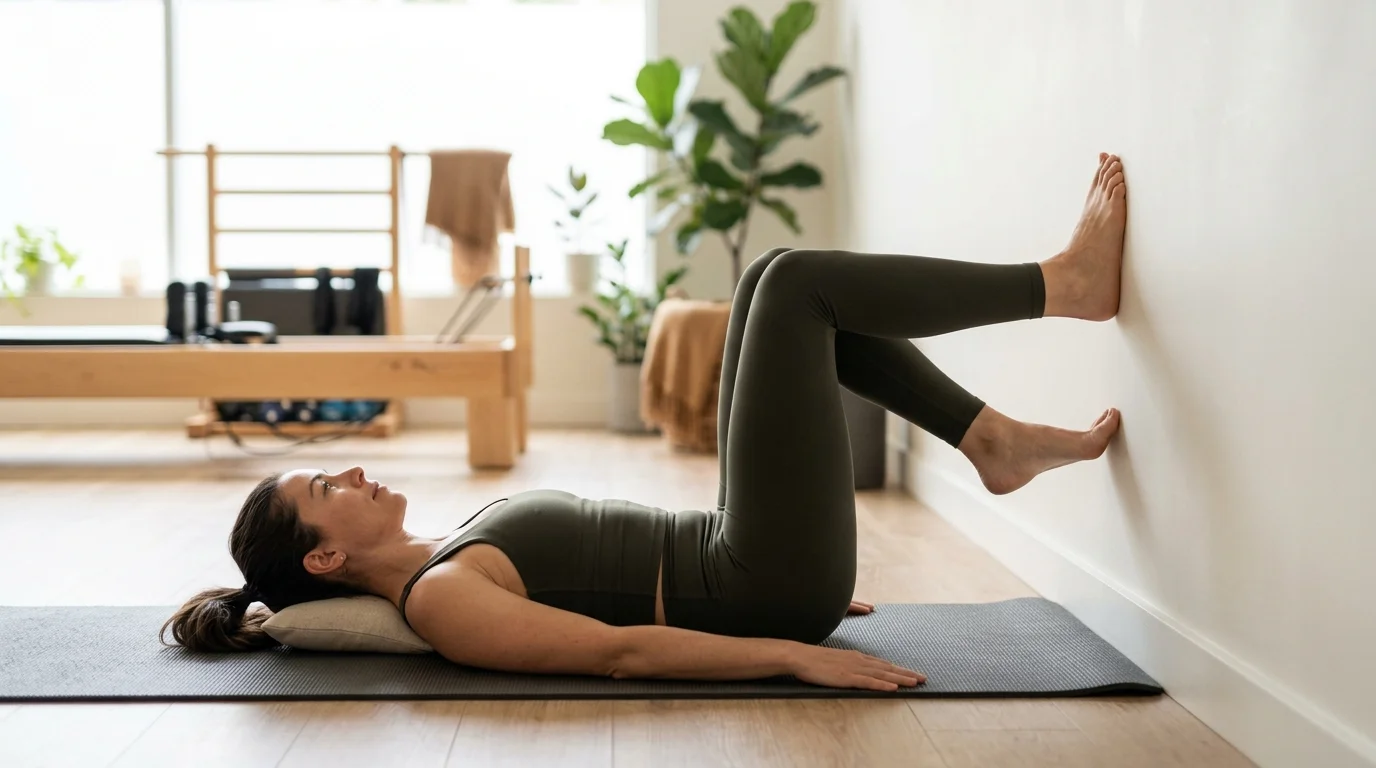
Supine tabletop toe taps with one foot on a studio wall for pelvic control and core stability.
Setup instructions
Lie supine on the mat with the hips close enough to the wall to place one foot flat on it. Lift the opposite leg to tabletop with the knee bent. Rest the arms by the sides or reach them toward the ceiling. Engage the core to keep the low back supported on the mat.
Breathing cues
Exhale to tap. Inhale to return.
Movement steps
- 1Inhale to prepare in the start position.
- 2Exhale to tap the toe toward the floor without shifting the pelvis.
- 3Inhale to return the leg to tabletop.
- 4Exhale to switch legs, placing the opposite foot on the wall.
- 5Continue alternating with smooth, even tempo.
Common mistakes
Letting the low back arch when tapping the toe; tapping lower than trunk control allows; rocking the pelvis side to side; holding the breath; rushing the taps.
Safety notes
Keep the tap range modest until pelvic stability feels clear. Stop if sharp back discomfort appears.
Connections
Muscles worked
Goals supported
Related exercises
FAQs
Is Wall Toe Taps suitable for beginners?
Yes. The wall supports one foot while the opposite leg taps from tabletop, giving clear pelvic feedback. Keep the tap range modest at first.
What muscles does Wall Toe Taps work?
The deep abdominals keep the pelvis steady while the hip flexors control the tapping leg and the glutes help maintain hip alignment.
What is Wall Toe Taps good for?
It develops pelvic stability during alternating leg movement before mat toe taps, dead bug, and reformer coordination work.
How is Wall Toe Taps different from Wall Marching?
Wall Toe Taps lower the working leg toward the floor from tabletop, while Wall Marching lifts the foot off the wall into tabletop. Both train pelvic stability with wall support.
Plan your class
Turn saved exercises into a class plan
Save exercises from the library, then build a reformer class plan with cues, timings, reps, and teaching notes.