Focus area
Lower Back Discomfort
Careful reformer Pilates patterns that may help some people build supportive core endurance and spinal mobility when managing mild, non-acute lower back stiffness.
What this focus area means
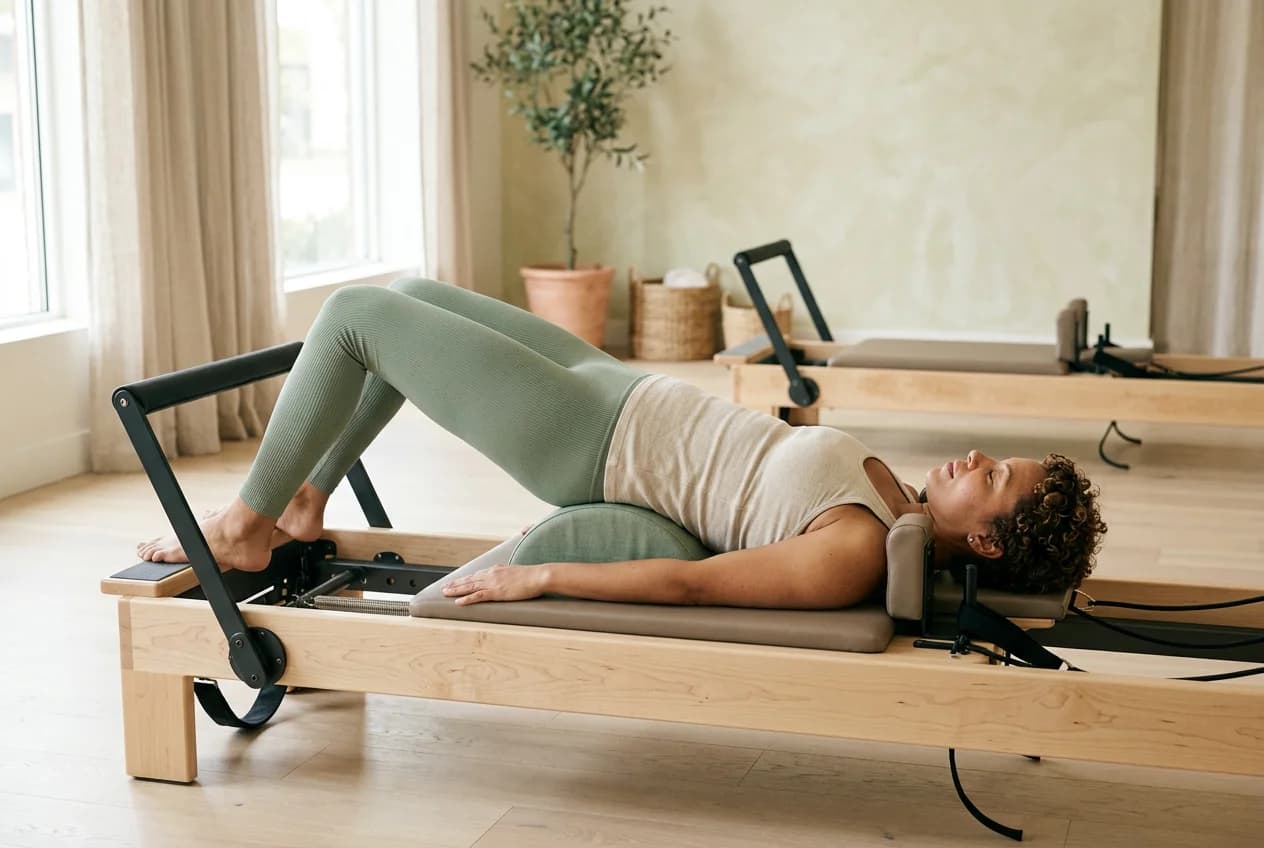
A sense of stiffness or fatigue in the lower back is common — especially after long sitting, repetitive bending, or periods of lower activity. This page is for educational movement ideas, not diagnosis or treatment. Reformer Pilates can offer supported ways to build trunk endurance, improve pelvic control, and gently mobilise the spine with spring feedback. Who may find this useful: people exploring core support and hip–spine organisation on the reformer, beginners learning bracing cues, and desk workers easing back into movement. Progress should stay in a comfortable range — mild muscular effort is expected; sharp or shooting sensations are not. What reformer work may support: bilateral footwork for alignment foundations, bridging for posterior-chain control, Hundred Prep for introductory core endurance, and Elephant for a supported hip-hinge pattern. Pair mobility with stability rather than forcing large ranges early on. What to try next: explore linked exercises below with lighter springs and clear stopping points. Speak to a qualified instructor for modifications, and to a health professional if symptoms are acute, radiating, or worsening.
Important safety note
This content is for general education only and is not medical advice. Do not use these exercises if you have acute, sharp, or shooting back pain, sciatica symptoms, or a diagnosed spinal condition without clearance from a qualified health professional. Stop if something causes sharp pain or unusual discomfort.
Reformer exercises for Lower Back Discomfort
Related goals
FAQs
Is reformer Pilates safe if my lower back feels stiff?
For many people, yes — when exercises stay in a comfortable range and spring settings match current control. This page lists approachable patterns with cautions. Do not continue through sharp, shooting, or worsening pain. Speak to a health professional if unsure.
Which reformer exercises may support mild lower back stiffness?
Hundred Prep, Bridging on Reformer, Elephant, and Footwork Series are linked on this page. They combine core support, hip organisation, and foundational alignment. Start with the simplest setup and lighter springs.
Should I stretch or strengthen my lower back?
Many people benefit from a mix of supportive strength and controlled mobility. Reformer work often combines both with spring feedback. An instructor can help you choose spring settings; a health professional can advise if you have an injury or diagnosed condition.
When should I avoid lower-back-focused reformer work?
Avoid or modify if you have acute pain, radiating leg symptoms, numbness, or pain that worsens after class. This content is educational only — get professional guidance when managing injury or a medical condition.