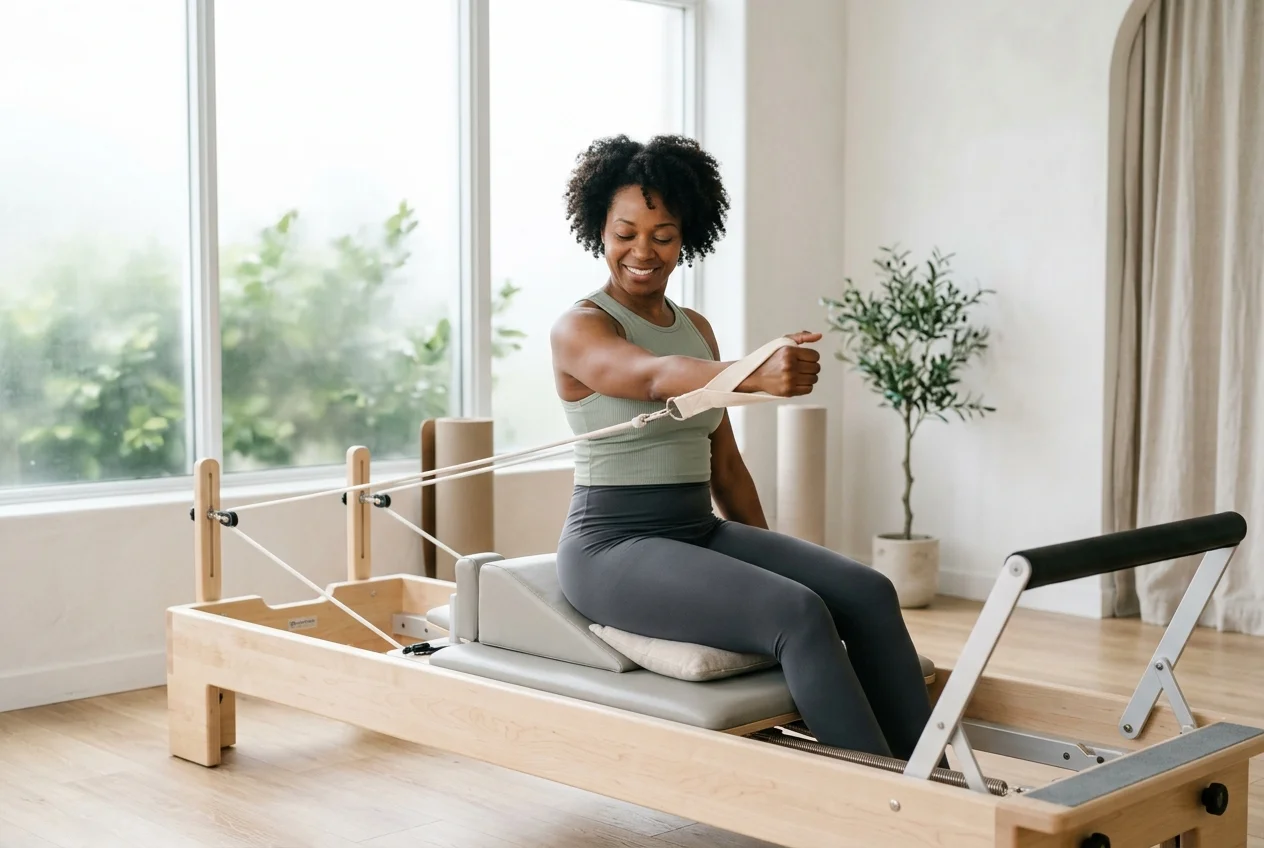
Focus area
Tight Shoulders
Reformer Pilates patterns that may help some people ease upper-back and shoulder-girdle tension through scapular control, endurance, and supported mobility.
What this focus area means
Tension around the shoulders and upper back is common — especially with desk work, phone use, or carrying stress in the neck and chest. This focus area describes educational reformer options, not a medical shoulder diagnosis. Supported pulling, reaching, and mobility patterns on the reformer can help some people practise better scapular organisation and upper-back endurance. Who may find this useful: beginners learning shoulder width and rib position on the reformer, desk workers exploring postural awareness, and anyone curious about upper-body control without heavy loading. Smaller ranges and lighter springs often teach clearer mechanics than forcing large arm arcs. What reformer work may support: Long Box Pulling Straps and Chest Expansion for scapular stability, Arm Circles for controlled shoulder range, and Mermaid Stretch for side-body and thoracic opening. The goal is steady organisation — not forcing the shoulders down or gripping the neck. What to try next: start with lighter spring settings and shorter sets. Explore related posture and upper-back pages through the linked goals below. Speak to a health professional if you have sharp shoulder pain, instability, or a recent injury.
Important safety note
This content is for general education only and is not medical advice. If you have sharp shoulder pain, joint instability, a recent injury, or a diagnosed shoulder condition, speak to a qualified health professional before starting a new exercise routine. Stop if something causes pinching, catching, or unusual discomfort.
Reformer exercises for Tight Shoulders
FAQs
Can reformer Pilates help tight shoulders?
For some people, supported upper-back and shoulder-girdle work may help them feel more organised and less tense through the upper body. This page lists reformer exercises with setup notes. It is not a substitute for medical advice or physical therapy.
Which reformer exercises are good for shoulder tension?
Long Box Pulling Straps, Chest Expansion, Reformer Arm Circles, and Mermaid Stretch are linked on this page. They combine stability, endurance, and supported mobility for the upper body.
Should I use heavy springs for shoulder exercises?
Usually not when learning. Lighter springs often make it easier to keep the shoulders wide, ribs steady, and neck relaxed. Increase load only when control stays clear through the full range.
When should I avoid shoulder-focused reformer work?
Avoid or modify if you feel sharp shoulder pain, catching, instability, or symptoms that worsen after class. Speak to a qualified health professional if you are recovering from a shoulder injury or have a diagnosed condition.