Exercise
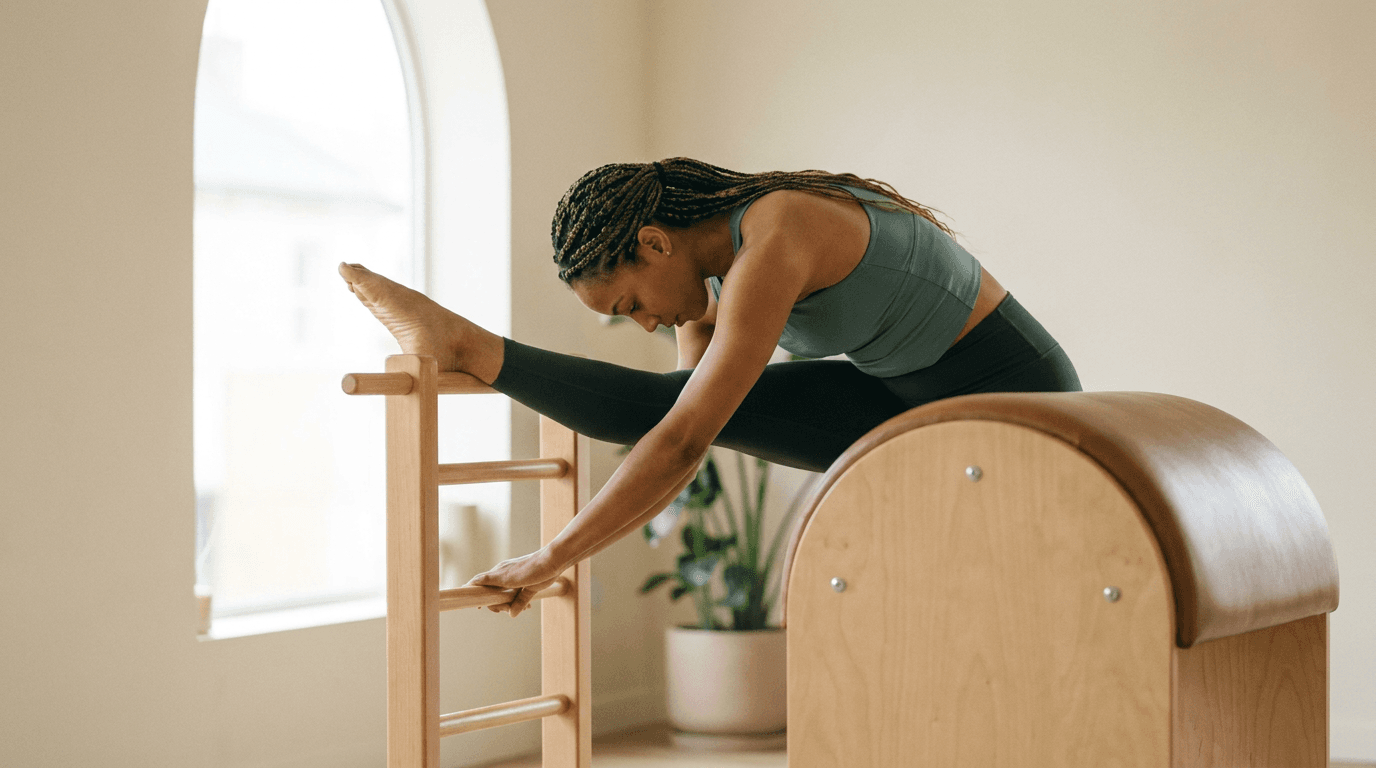
Standing Ladder Barrel exercise with one leg on a rung performing ballet-inspired hip and hamstring stretches.
Setup instructions
Stand beside the Ladder Barrel and place one foot on a comfortable rung. Hold the ladder frame lightly for balance support. Stand tall with the supporting leg soft.
Breathing cues
Inhale tall. Exhale to reach. Inhale to hold. Exhale to return.
Movement steps
- 1Inhale to grow tall.
- 2Exhale to hinge forward from the hip over the raised leg, keeping the spine long.
- 3Feel the hamstring of the raised leg lengthen gradually.
- 4To vary, reach the arm overhead to the side for an adductor and hip flexor stretch.
- 5Inhale to hold.
- 6Exhale to return upright.
- 7Repeat, then switch sides.
Common mistakes
Rounding the spine to reach further; locking the standing knee; forcing the range; losing trunk height; leaning on the ladder for all support.
Safety notes
Use the ladder frame for balance, not as a crutch. Keep the range comfortable and the spine long. Stop if hip or knee discomfort appears.
Connections
Muscles worked
Goals supported
Equipment needed
Related exercises
FAQs
Is Ladder Barrel Ballet Stretches suitable for beginners?
Yes. The adjustable rung height means the stretch can be scaled precisely to the individual's flexibility. It is welcoming and highly adaptable for all levels.
What muscles does Ladder Barrel Ballet Stretches work?
The hamstrings are the primary target in the forward fold. The hip flexors and adductors are stretched in the side-reach variation, and the standing-leg glutes work for balance throughout.
What is Ladder Barrel Ballet Stretches good for?
It develops hip and hamstring flexibility in a structured, adjustable way. The ladder rungs allow precise progression as flexibility improves, making it one of the most useful stretching tools in Pilates.
Plan your class
Turn saved exercises into a class plan
Save exercises from the library, then build a reformer class plan with cues, timings, reps, and teaching notes.