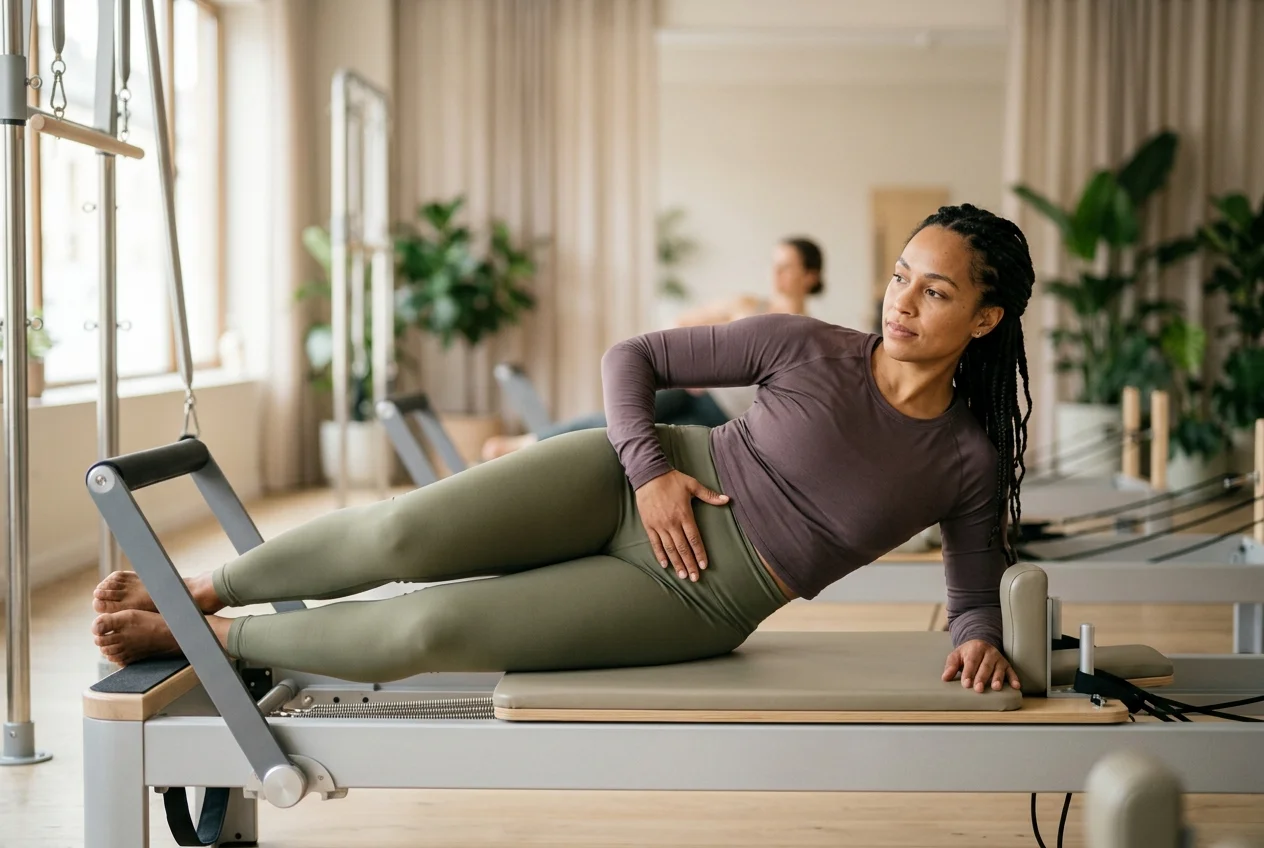
Focus area
Weak Glutes
Supported reformer Pilates patterns that may help some people build glute awareness, hip stability, and posterior-chain control.
What this focus area means
A sense of weak or under-responsive glutes is common — especially after long sitting, postpartum return to movement, or when the lower back or hip flexors compensate during leg work. On the reformer, springs and carriage feedback can help you feel hip extension and pelvic stability without maximal load. This focus area is educational, not a diagnosis. Reformer Pilates often pairs glute work with hamstring and core support so the pelvis stays organised during footwork, bridging, and single-leg patterns. That integration may help some people feel more confident loading the hips in daily movement. Who may find this useful: beginners learning foot placement, people rebuilding hip drive after time away from exercise, and anyone exploring glute strength with clear setup cues. Progress gradually — bilateral footwork and bridging usually precede single-leg or high-spring challenges. What to try next: start with Footwork Series and Bridging on Reformer, then explore Scooter or side-lying hip work as control improves. Speak to a qualified instructor for spring settings, and to a health professional if symptoms are sharp, sudden, or persistent.
Important safety note
This content is for general education only and is not medical advice. If you have sharp hip or back pain, a diagnosed condition, recent surgery, or an injury, speak to a qualified health professional before starting a new exercise routine. Stop if something causes sharp pain or unusual discomfort.
Reformer exercises for Weak Glutes
Related goals
FAQs
What does weak glutes mean in reformer Pilates?
It usually means the glutes feel slow to respond during hip extension or pelvic stability work — not a medical diagnosis. Reformer exercises can help you practise hip drive with spring feedback.
Which reformer exercises may help glute awareness?
Footwork Series, Bridging on Reformer, and Scooter are linked on this page. Side-lying patterns such as Side Kick Front and Back and Clam offer lower-load options on the mat.
Should I strengthen or stretch if my glutes feel weak?
Many people benefit from controlled strength and stability work first — especially bilateral footwork and bridging — before advanced single-leg load. An instructor can help with spring settings; a health professional can advise if you have pain or a diagnosed condition.
When should I avoid glute-focused reformer work?
Avoid or modify if you feel sharp hip or back pain, sudden weakness, or symptoms that worsen after class. This content is educational only — seek professional guidance when managing injury or a medical condition.