Exercise
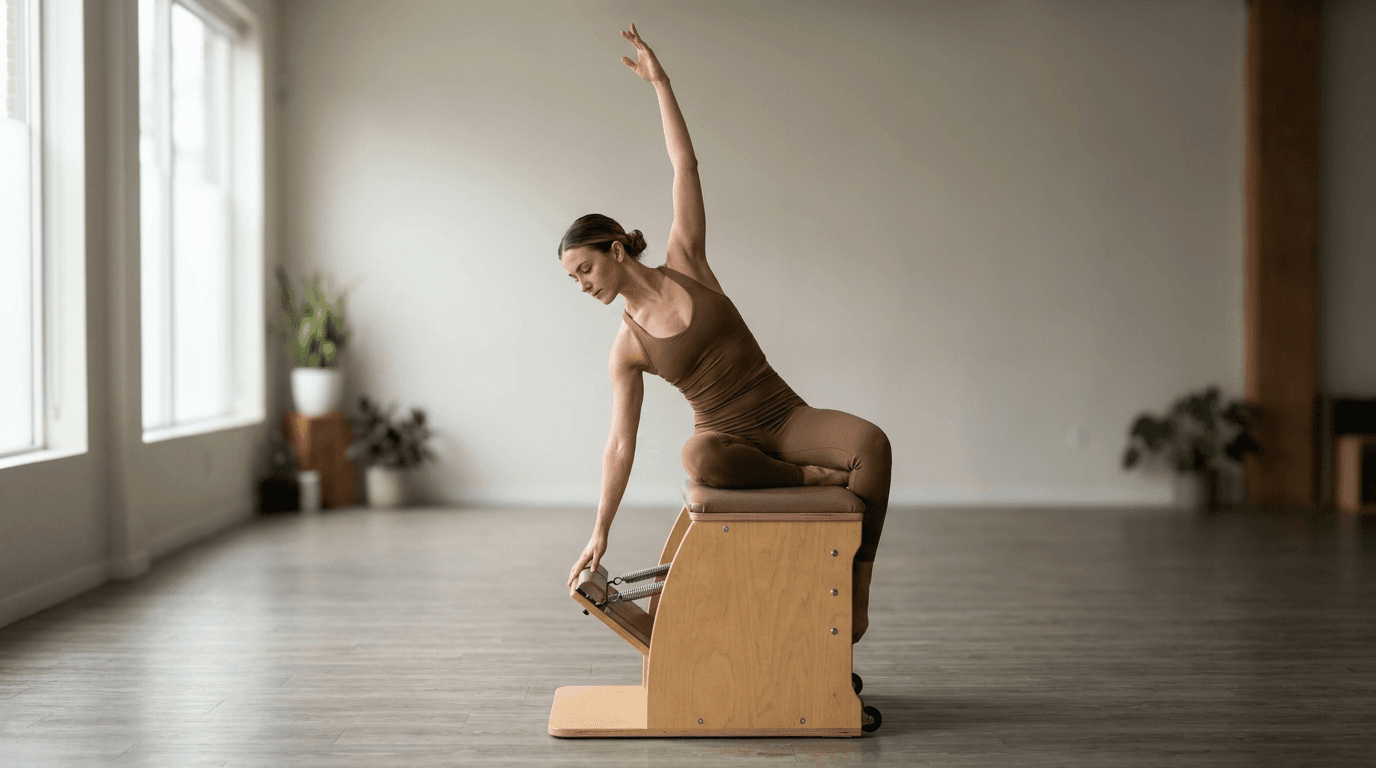
Seated Wunda Chair rotation exercise twisting through the spine with arm extension for oblique strength and thoracic mobility.
Setup instructions
Sit tall on the Wunda Chair with feet flat on the floor and the spine upright. Place one hand lightly on the pedal and extend the other arm to the side or overhead. Find a long spine before beginning the rotation.
Breathing cues
Inhale to grow. Exhale to rotate. Exhale to return.
Movement steps
- 1Inhale to grow tall.
- 2Exhale to rotate the trunk toward the pedal side, pressing lightly through the pedal hand.
- 3Keep the hips anchored and the rotation coming from the thoracic spine.
- 4Inhale to hold.
- 5Exhale to unwind and return to centre.
- 6Repeat on the other side.
Common mistakes
Rotating from the hips rather than the thoracic spine; shrugging the pressing shoulder; losing the upright pelvis; twisting too aggressively; holding the breath.
Safety notes
Keep the rotation slow and controlled. Stop if back or shoulder discomfort appears. Avoid forcing range.
Connections
Muscles worked
Goals supported
Equipment needed
Related exercises
FAQs
Is Side Body Twist suitable for beginners?
Side Body Twist is intermediate. Good seated posture and basic rotational awareness should be established before using the chair pedal for added resistance and feedback.
What muscles does Side Body Twist work?
The obliques and thoracic rotators create the twist. The shoulder stabilisers manage the pressing arm, and the core works throughout to keep the pelvis anchored and the rotation clean.
What is Side Body Twist good for?
It develops thoracic rotation, oblique strength, and the seated trunk control that carries into more demanding rotational exercises across all apparatus.
Plan your class
Turn saved exercises into a class plan
Save exercises from the library, then build a reformer class plan with cues, timings, reps, and teaching notes.