Exercise
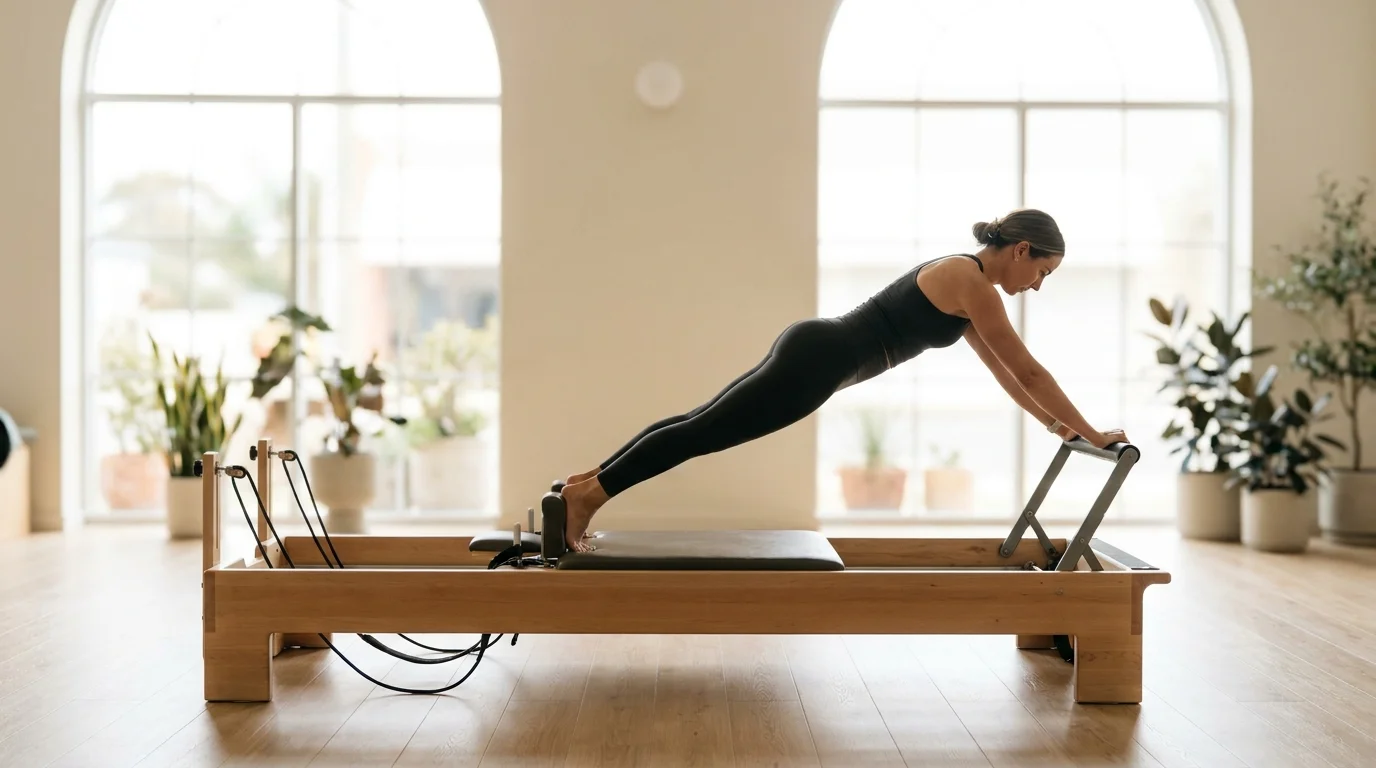
Reformer plank push-pull series that builds core stability and arm strength through dynamic carriage travel.
Setup instructions
Place hands on the footbar at shoulder width with arms straight. Step the feet one at a time to the shoulder blocks, forming a strong plank line. Press the heels back and engage the abdominals and glutes.
Breathing cues
Inhale to push back. Exhale to pull in.
Movement steps
- 1Inhale to push the carriage back by sending the body forward through the arms.
- 2Exhale to pull the carriage in by drawing the body back without bending the elbows.
- 3Keep the plank line rigid and the hips level throughout.
- 4Repeat with steady breath and controlled pace.
Common mistakes
Piking the hips on the push; bending the elbows to move the carriage; letting the hips drop; rushing the return.
Safety notes
Use fists on the footbar or reduce range for wrist discomfort. Stop if sharp shoulder or wrist pain appears.
Connections
Muscles worked
Goals supported
Related exercises
FAQs
Is Long Stretch suitable for beginners?
Long Stretch is an intermediate reformer exercise. A solid plank on the mat should be established first. Wrist-sensitive clients may need modification with fists on the bar.
What muscles does Long Stretch work?
Long Stretch primarily challenges the core muscles to maintain the plank line. The upper back, shoulder stabilisers, and glutes also work to prevent hip sag or pike.
What is Long Stretch good for?
Long Stretch builds core endurance, arm strength, and body-line awareness in the plank position. It is the foundation of the long stretch series on the reformer.
How many springs should I use for Long Stretch?
Most practitioners use one to two springs depending on strength and body weight. A heavier spring makes it easier to push back and harder to pull in; a lighter spring reverses this challenge.
Plan your class
Turn saved exercises into a class plan
Save exercises from the library, then build a reformer class plan with cues, timings, reps, and teaching notes.