Exercise
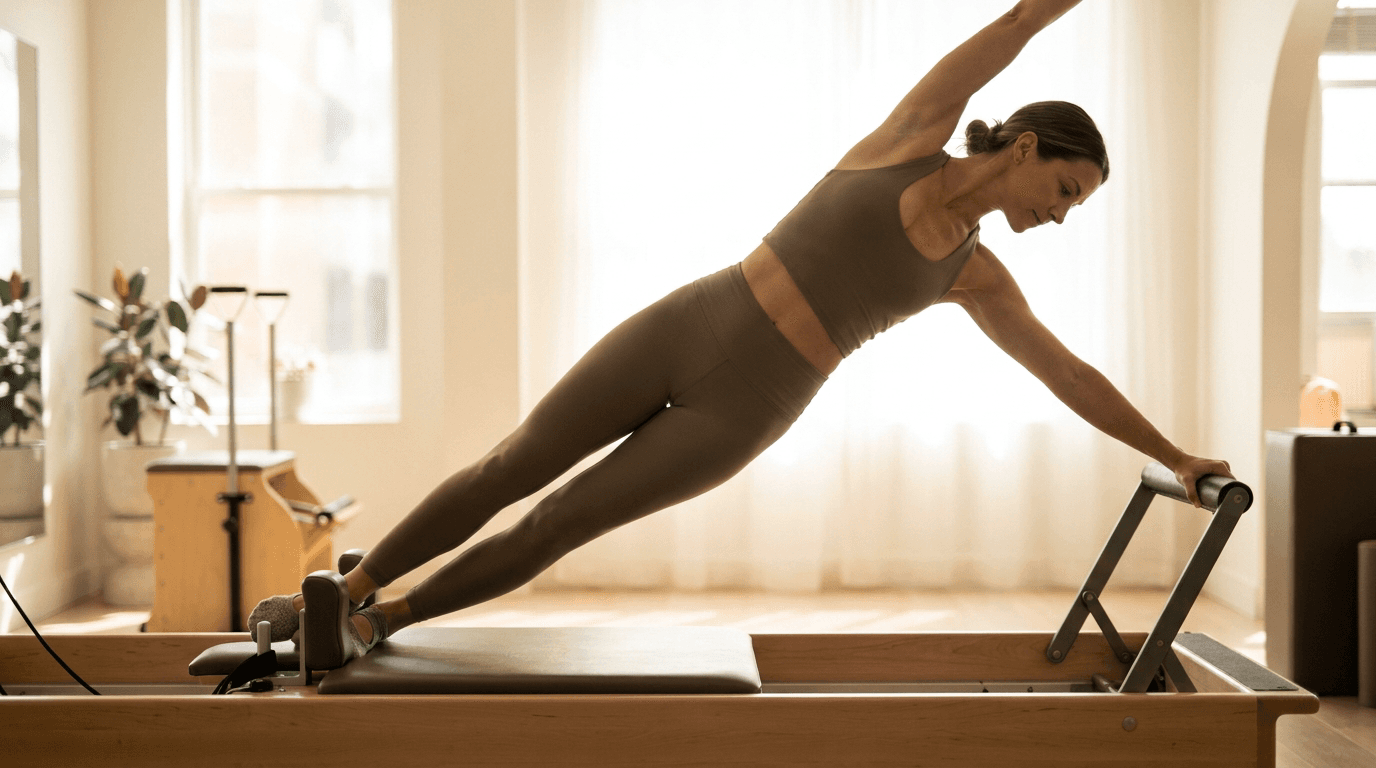
Advanced full-body reformer exercise rotating from a plank into a side arc requiring exceptional core and shoulder control.
Setup instructions
Stand beside the reformer and place one hand on the footbar with the outside edge of one foot on the shoulder block. Stack the feet and come into a side plank with the arm straight and the body in a long diagonal. Find a stable hip position before beginning the movement.
Breathing cues
Inhale to push. Exhale to pike.
Movement steps
- 1Inhale to push the carriage back, lowering the hips into a long arc.
- 2Exhale to pull the carriage in while lifting the hips to an inverted V position.
- 3Keep the shoulder firm and the core deeply engaged through both directions.
- 4Repeat, then switch sides.
Common mistakes
Collapsing the shoulder; letting the hips drop below the line; losing the side plank alignment; rushing the arc.
Safety notes
Requires advanced shoulder and wrist stability. Avoid with shoulder, wrist, or hip issues. Always progress with qualified instruction.
Connections
Muscles worked
Goals supported
Related exercises
FAQs
Is Snake suitable for beginners?
No. Snake is an advanced exercise requiring significant shoulder and wrist stability, rotational core control, and body-line awareness. It should only be attempted after establishing strong foundations in plank-based and kneeling reformer work.
What muscles does Snake work?
Snake primarily demands the obliques and deep core for rotational control. The shoulder stabilisers and wrist extensors work intensely to support the side plank on the footbar, and the hip flexors control the arc.
What is Snake good for?
Snake is exceptional for building full-body integration, rotational core strength, and shoulder stability. The dynamic arc challenges the body in a way few other exercises can, making it a landmark in advanced reformer practice.
How does Snake differ from Twist?
Snake focuses on the lateral arc of the body moving through a pike and plank transition. Twist adds a rotational threading movement of the free arm under the body, increasing the rotational core demand significantly.
Plan your class
Turn saved exercises into a class plan
Save exercises from the library, then build a reformer class plan with cues, timings, reps, and teaching notes.