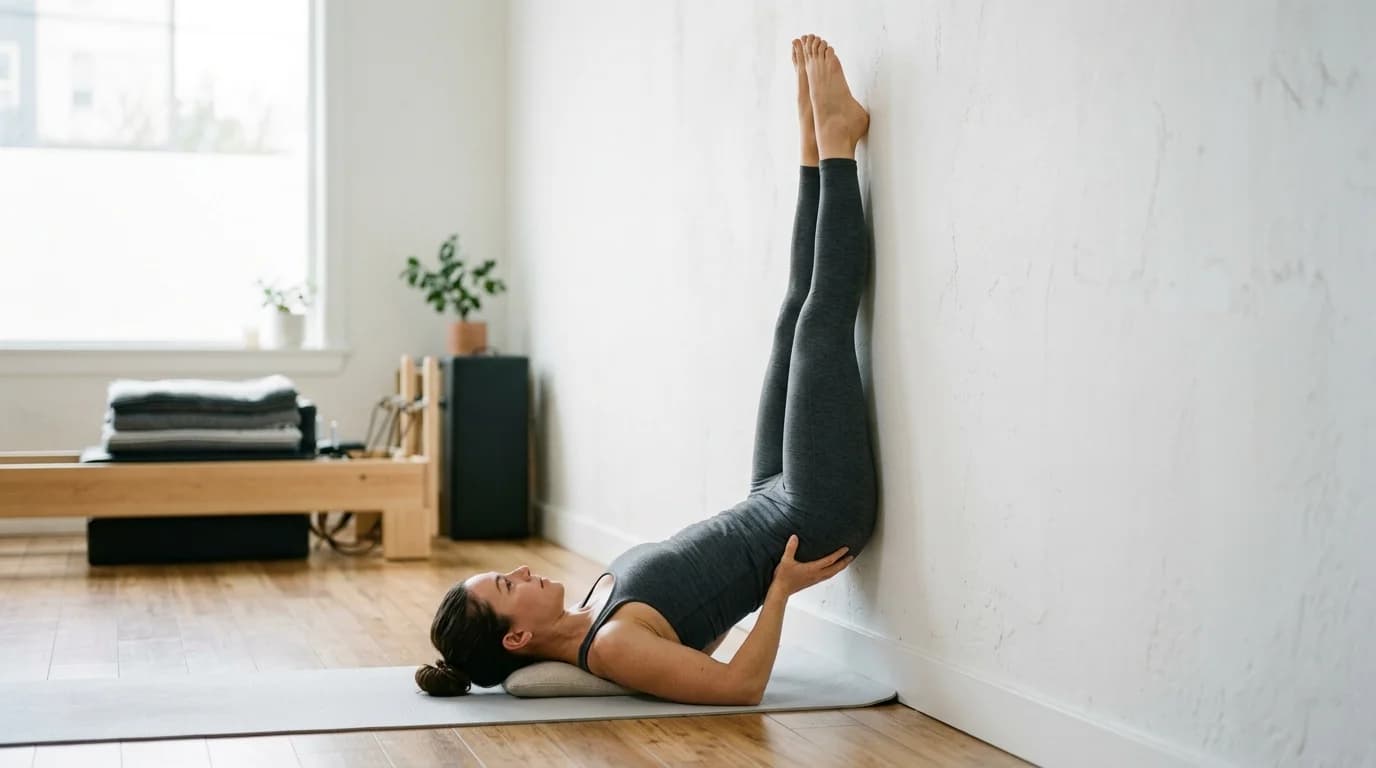
Exercise
Wall-supported inversion preparation for advanced body control, shoulder stability, and inverted alignment.
Setup instructions
Kneel facing a studio wall and place the forearms on the mat shoulder-width apart. Interlace the fingers and place the crown of the head on the mat with the wall behind the body. Walk the feet up the wall until the hips stack over the shoulders. Engage the core and press firmly through the forearms before lifting.
Breathing cues
Exhale to lift. Inhale to hold. Exhale to lower.
Movement steps
- 1Inhale to prepare in the supported position.
- 2Exhale to lift one or both feet away from the wall briefly with control.
- 3Hold the inverted position with the wall as a light safety contact.
- 4Inhale to maintain steady breath and shoulder organisation.
- 5Exhale to return the feet to the wall and lower with control.
Common mistakes
Kicking up into inversion without control; collapsing through the shoulders; holding the breath; placing too much weight on the head; attempting before wall handstand prep and neck strength are adequate.
Safety notes
Treat as an advanced progression requiring prior wall handstand and shoulder prep. Stop if neck tension, dizziness, wrist, or sharp shoulder discomfort appears.
Connections
Muscles worked
Goals supported
Equipment needed
Related exercises
FAQs
Is Wall Inversion Prep suitable for beginners?
No. It is an advanced progression requiring prior wall handstand prep and adequate neck and shoulder strength. Use the wall as a safety anchor.
What muscles does Wall Inversion Prep work?
The shoulders and upper back support the inverted load while the deep core maintains alignment during controlled foot lifts from the wall.
What is Wall Inversion Prep good for?
It builds confidence and alignment in inversion before freestanding headstand or forearm-stand work.
Plan your class
Turn saved exercises into a class plan
Save exercises from the library, then build a reformer class plan with cues, timings, reps, and teaching notes.