Exercise
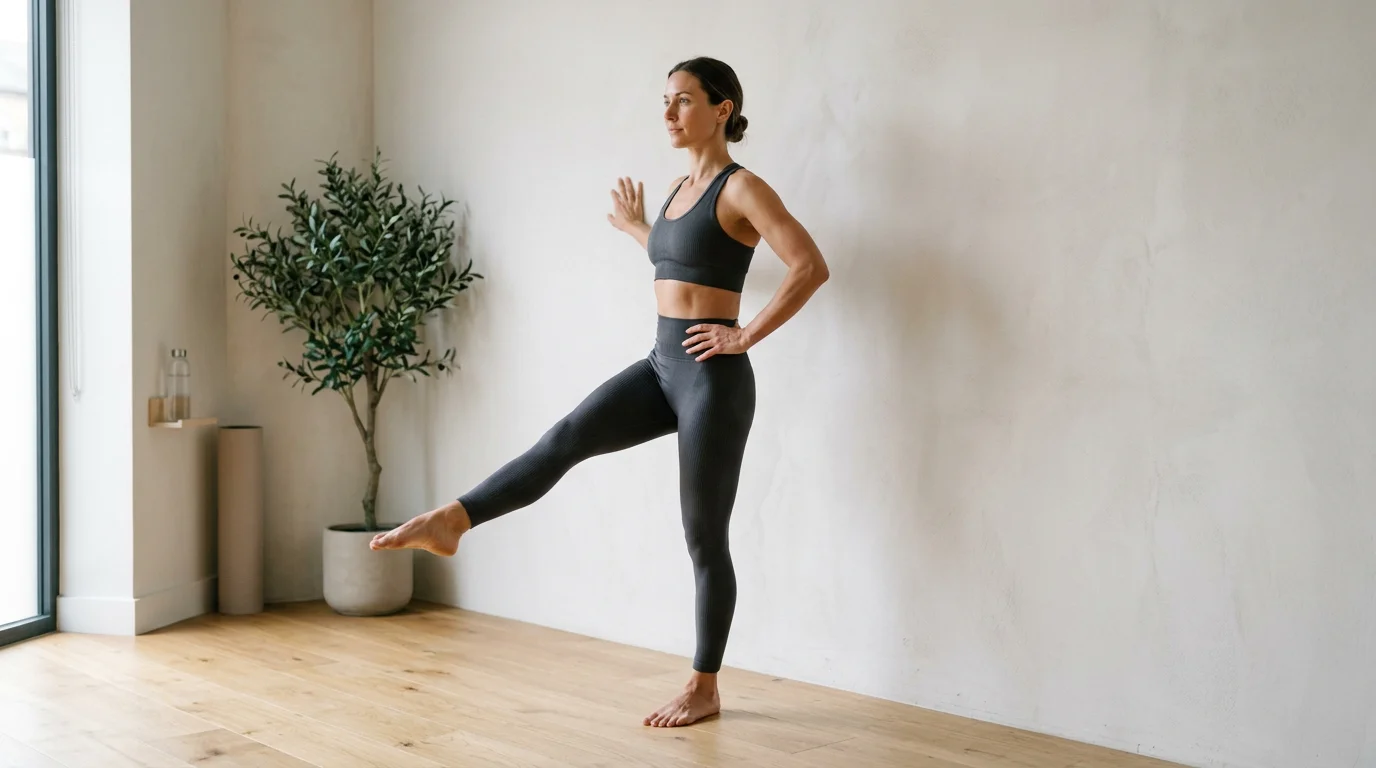
Single-leg balance with light wall support for hip stability and upright trunk control.
Setup instructions
Stand sideways or facing a studio wall within easy reach. Place one hand lightly on the wall for balance support. Stand tall on the supporting leg with the knee soft. Lift the opposite foot just off the floor to begin.
Breathing cues
Breathe steadily throughout the hold.
Movement steps
- 1Inhale to find length through the spine.
- 2Exhale to lift the non-supporting leg to a comfortable height.
- 3Hold the balance with minimal pressure through the fingertips.
- 4Breathe steadily for several counts.
- 5Lower with control and switch sides.
Common mistakes
Gripping the wall with full body weight; locking the standing knee; hiking the hip of the lifted leg; holding the breath; choosing a range that causes wobbling collapse.
Safety notes
Keep fingertip support light. Stop if ankle pain, dizziness, or significant balance loss occurs. Practice near a stable wall surface.
Connections
Muscles worked
Goals supported
Equipment needed
Related exercises
FAQs
Is Wall Single Leg Balance suitable for beginners?
It is best treated as an intermediate balance challenge. Beginners can use heavier fingertip support and a smaller lift range until stability improves.
What muscles does Wall Single Leg Balance work?
The glutes and deep core stabilisers of the standing leg do most of the work. The hip flexors of the lifted leg assist the leg position, and the ankle helps manage balance.
What is Wall Single Leg Balance good for?
It develops single-leg stability, hip control, and upright posture with a safe support option. It is useful before scooter, side kick, and other single-leg Pilates patterns.
How much should I lean on the wall?
Use the lightest fingertip contact needed to feel secure. The goal is to challenge balance, not to support most of your body weight through the arm.
Plan your class
Turn saved exercises into a class plan
Save exercises from the library, then build a reformer class plan with cues, timings, reps, and teaching notes.