Exercise
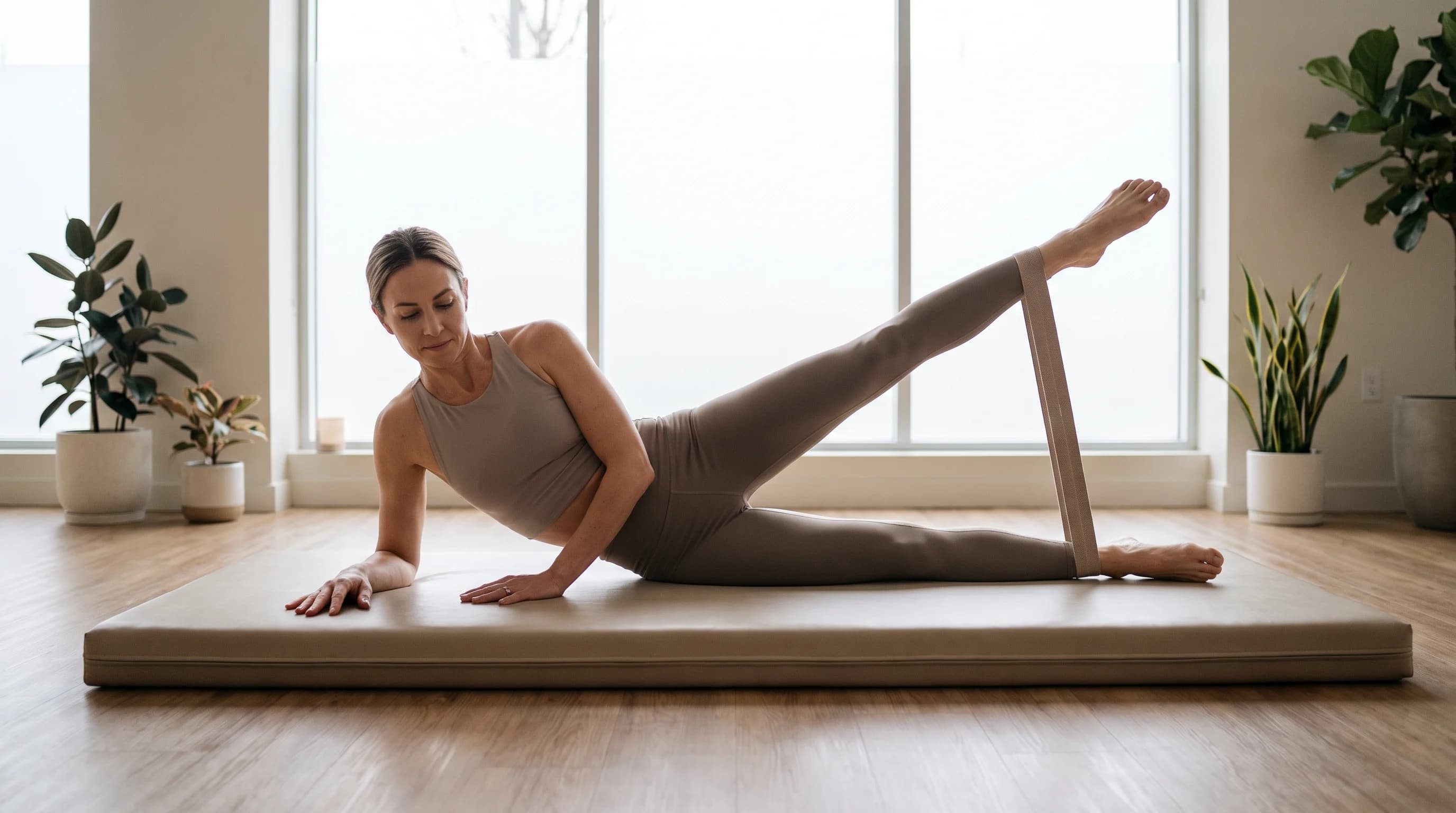
Resistance Band Side Kick Up and Down
BeginnerSaveSign in to save Resistance Band Side Kick Up and DownSide-lying up-and-down kick on the mat with a resistance band around the ankles for abductor and hip stability work.
Setup instructions
Lie on the side on the mat with the body in one long line. Loop a resistance band around the ankles. Prop the head on the lower hand and place the top hand on the mat in front of the chest. Keep the bottom leg slightly bent and the pelvis stacked.
Breathing cues
Exhale to lift. Inhale to lower.
Movement steps
- 1Inhale to prepare in the side-lying position.
- 2Exhale to lift the top leg toward the ceiling against band tension.
- 3Pause briefly at the top with the foot parallel.
- 4Inhale to lower the leg with control.
- 5Repeat with even tempo before switching sides.
Common mistakes
Rolling the pelvis backward to gain height; rotating the top foot outward; lifting the leg higher than hip control allows; collapsing the waist onto the mat; holding the breath.
Safety notes
Keep the lift range modest and the pelvis stacked. Stop if hip pinching or sharp lateral hip discomfort appears.
Connections
Muscles worked
Goals supported
Equipment needed
Related exercises
FAQs
Is Resistance Band Side Kick Up and Down suitable for beginners?
Yes. The band around the ankles provides abductor feedback during the vertical lift. Keep the range modest and the pelvis stacked.
What muscles does Resistance Band Side Kick Up and Down work?
The glute medius and lateral hip stabilisers lift the top leg vertically while the core maintains pelvic alignment.
What is Resistance Band Side Kick Up and Down good for?
It builds hip abductor control before mat side kick up and down and reformer standing side kick.
How is Resistance Band Side Kick Up and Down different from Resistance Band Side Lying Leg Lift?
Side kick up and down follows the classical vertical kick arc, while side lying leg lift is a simpler single-direction abductor lift.
Plan your class
Turn saved exercises into a class plan
Save exercises from the library, then build a reformer class plan with cues, timings, reps, and teaching notes.