Exercise
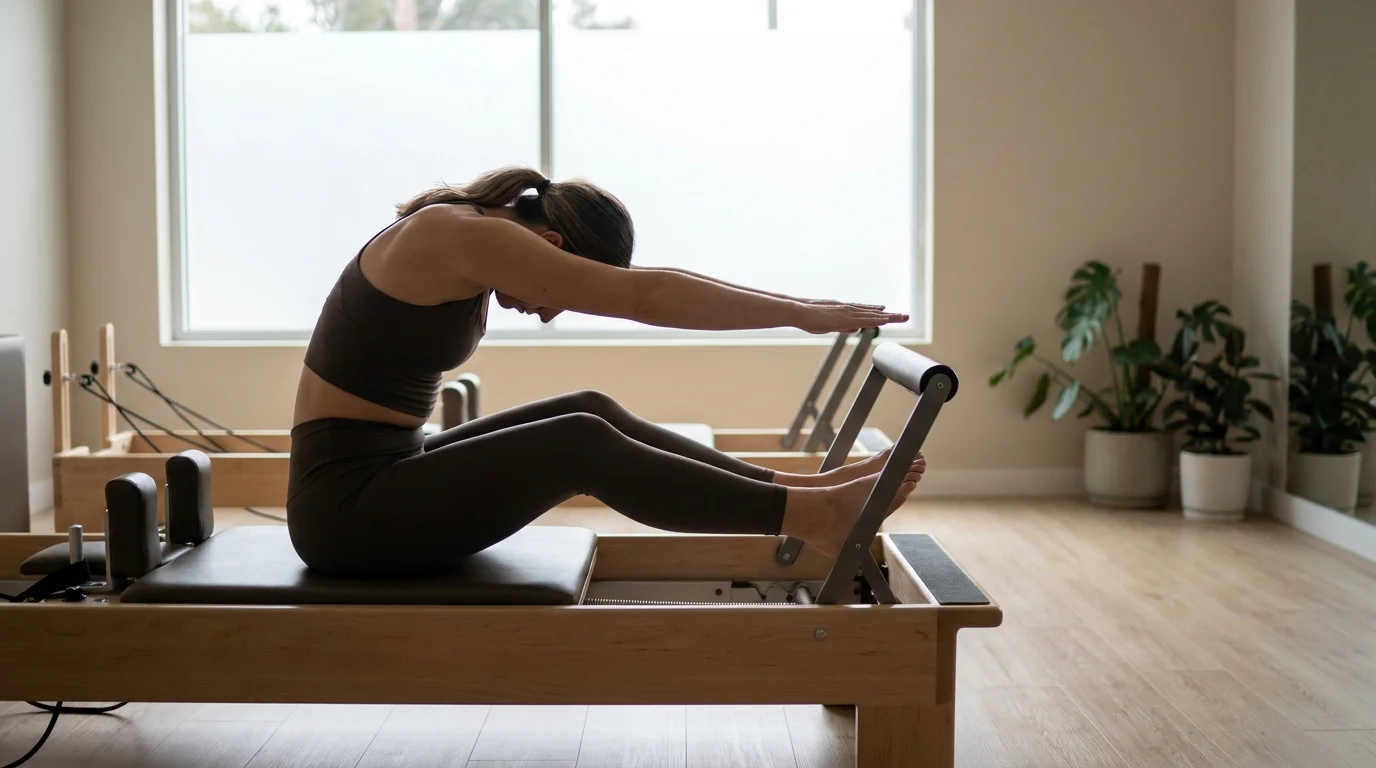
Seated reformer footbar pumps in a C-curve that build deep abdominal endurance and hip joint mobility.
Setup instructions
Sit close to the footbar with feet placed on the bar hip-width apart. Round the back into a clear C-curve, drawing the abdominals in and up. Hands may rest on the carriage edge or lightly hold the shins.
Breathing cues
Exhale to extend. Inhale to bend and return.
Movement steps
- 1Exhale to press the carriage out through the legs, maintaining the C-curve.
- 2Inhale to bend the knees and pull the carriage back in.
- 3Keep the rounding consistent and the shoulders settled throughout.
- 4Repeat with an even, rhythmic pace.
Common mistakes
Losing the C-curve partway through; overusing the hip flexors to pull in; hunching the shoulders; flattening the curve too early.
Safety notes
Avoid with acute disc issues or significant lumbar sensitivity. Keep the C-curve comfortable, not forced.
Connections
Muscles worked
Goals supported
Related exercises
FAQs
Is Stomach Massage Round Back suitable for beginners?
Stomach Massage Round Back is an intermediate exercise, but accessible beginners with reasonable core awareness can attempt it with a lighter spring and small range. Those with disc sensitivity should check with a healthcare provider first.
What muscles does Stomach Massage Round Back work?
The deep abdominals work to maintain the C-curve. The hamstrings and glutes drive the carriage, and the hip flexors are gently lengthened through the range.
What is Stomach Massage Round Back good for?
Stomach Massage Round Back builds deep abdominal endurance and hip joint mobility in a seated reformer position. It also helps practitioners develop rhythmic breath-movement coordination.
Why is it called Stomach Massage?
The name refers to the internal compression and decompression that the rounding and leg movement creates around the abdominal cavity, historically described as a gentle massaging effect on the digestive organs.
Plan your class
Turn saved exercises into a class plan
Save exercises from the library, then build a reformer class plan with cues, timings, reps, and teaching notes.