Exercise
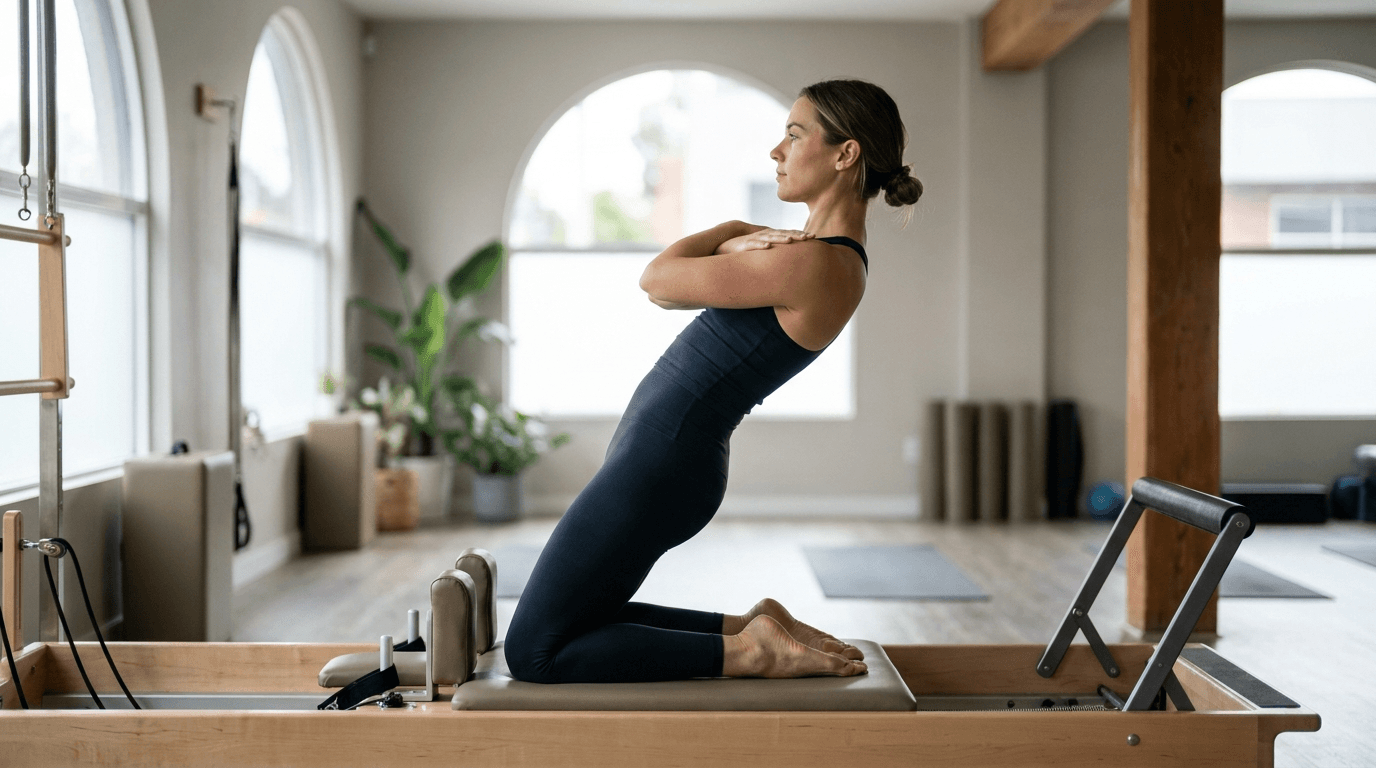
Kneeling back-bend on the reformer that lengthens the hip flexors and builds controlled trunk extension.
Setup instructions
Kneel on the carriage with shins parallel and knees near the shoulder blocks. Position the shins flat on the carriage and sit upright through the spine. Arms may rest by the sides or cross at the chest.
Breathing cues
Exhale to lean back. Inhale at the lowest point. Exhale to return.
Movement steps
- 1Inhale to prepare, growing tall through the crown.
- 2Exhale to lean the whole body back as one long diagonal, hinging from the knees.
- 3Keep the trunk in a single unit without breaking at the hips.
- 4Inhale to hold the lean at the lowest comfortable position.
- 5Exhale to contract the abdominals and return upright.
Common mistakes
Breaking at the hips and bending the low back; letting the ribs flare; sitting the hips back toward the heels; rushing the return.
Safety notes
Keep the body as one long inclined plank. Reduce the range of lean if lumbar discomfort appears. Avoid if knee issues make kneeling uncomfortable.
Connections
Muscles worked
Goals supported
Related exercises
FAQs
Is the Thigh Stretch suitable for beginners?
The Thigh Stretch is an intermediate exercise. Beginners should build comfortable kneeling on the reformer and some hip flexor awareness before attempting it. A smaller range of lean is a safe starting progression.
What muscles does the Thigh Stretch work?
The primary target is the hip flexors and quadriceps, which are lengthened under load as the trunk leans back. The core muscles work throughout to prevent the spine from collapsing into excessive extension.
What is the Thigh Stretch good for?
The Thigh Stretch is particularly useful for people who spend a lot of time seated, as it directly addresses hip flexor tightness. It also builds the trunk control needed for safe back-bending in more advanced exercises.
Why is it important to keep the body as one unit during the Thigh Stretch?
Keeping the body in a single inclined line ensures the hip flexors are genuinely lengthened. If the hips break at the crease, the stretch moves to the low back rather than the hip flexors, reducing the benefit and increasing compression risk.
Plan your class
Turn saved exercises into a class plan
Save exercises from the library, then build a reformer class plan with cues, timings, reps, and teaching notes.