Exercise
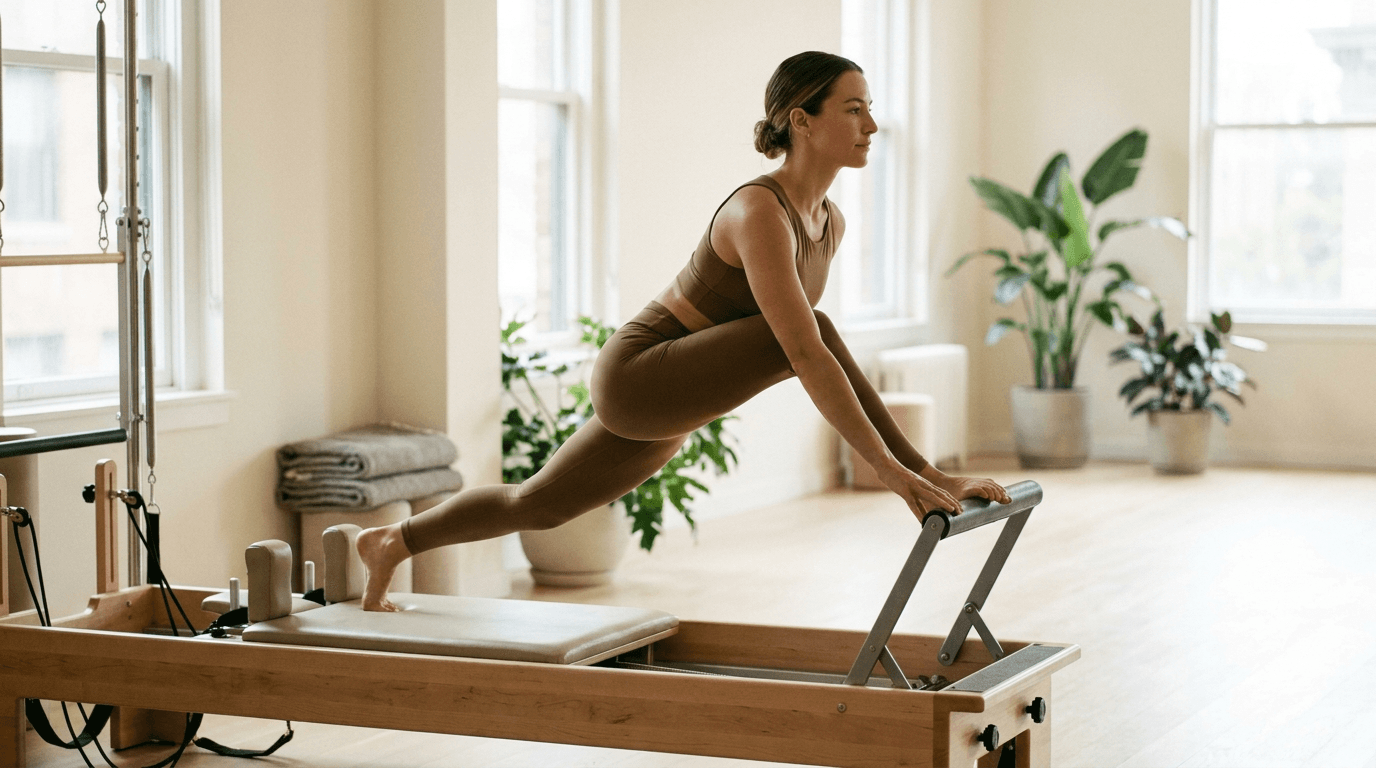
Standing lunge on the reformer platform using the footbar for balance that builds lower-body strength and hip control.
Setup instructions
Stand on the reformer platform with one hand lightly resting on the footbar for support. Feet are hip-width apart and the spine is tall. Find balance before stepping forward.
Breathing cues
Inhale to lunge. Exhale to return.
Movement steps
- 1Inhale to step one foot forward into a lunge, bending the front knee over the toes.
- 2Keep the trunk upright and the back heel lifted.
- 3Exhale to push through the front heel and return to the standing position.
- 4Keep the use of the footbar for balance only, not weight-bearing.
- 5Repeat on the same side, then switch legs.
Common mistakes
Leaning the trunk forward; letting the front knee cave inward; gripping the footbar for support rather than using it lightly; rushing the return.
Safety notes
Keep the lunge within a comfortable range. Use the footbar for light balance support only. Avoid with knee pain or balance concerns.
Connections
Muscles worked
Goals supported
Related exercises
FAQs
Is Standing Platform Lunge suitable for beginners?
Yes. The Standing Platform Lunge is a beginner-friendly exercise because the footbar provides balance support and the movement is a natural lunge pattern. It is an excellent introduction to standing reformer work.
What muscles does Standing Platform Lunge work?
The glutes and quadriceps of the front leg do most of the work to lower and raise the body. The hamstrings assist the hip extension on the return, and the core engages to keep the trunk upright throughout.
What is Standing Platform Lunge good for?
Standing Platform Lunge is good for building lower-body strength, hip control, and single-leg stability. The footbar support makes it accessible for those building confidence with standing balance exercises.
How is Standing Platform Lunge different from Front Splits?
Standing Platform Lunge keeps both feet on the platform and uses the footbar for support in a contained lunge movement. Front Splits places one foot on the footbar and the other on the carriage, opening into a wider split range as the carriage moves.
Plan your class
Turn saved exercises into a class plan
Save exercises from the library, then build a reformer class plan with cues, timings, reps, and teaching notes.