Exercise
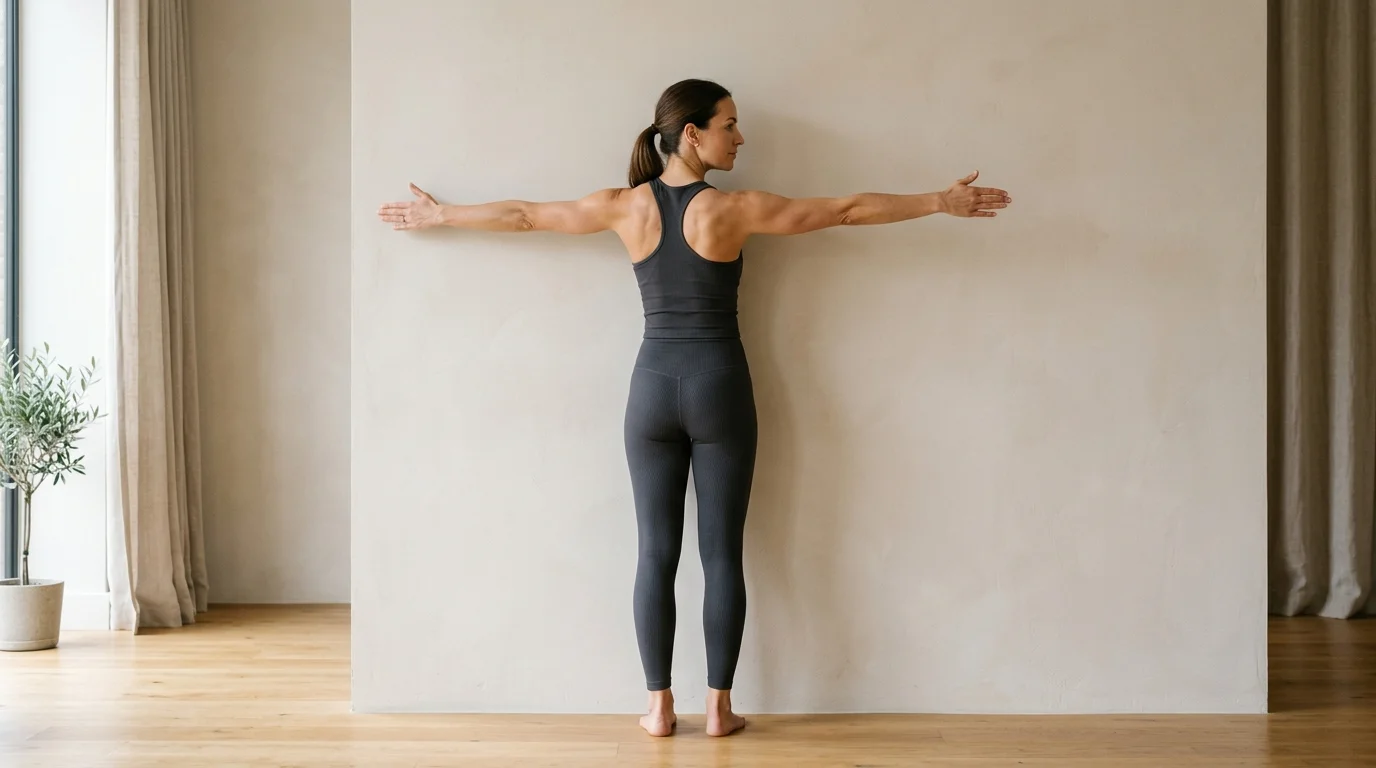
Standing rotational mobility drill with light wall contact for upright trunk control and thoracic rotation.
Setup instructions
Stand sideways to a studio wall with the feet hip-width apart. Place the fingertips of the back hand lightly on the wall at shoulder height. Reach the front arm forward at chest height. Grow tall through the spine and soften the knees.
Breathing cues
Exhale to rotate. Inhale to hold. Exhale to return.
Movement steps
- 1Inhale to prepare in the start position.
- 2Exhale to rotate the rib cage and shoulders toward the front arm.
- 3Keep the hips facing forward and the wall contact light.
- 4Inhale to hold briefly at the end range.
- 5Exhale to unwind back to centre and repeat on the other side.
Common mistakes
Rotating the pelvis instead of the thorax; forcing range with arm leverage; shrugging the shoulders; holding the breath; gripping the wall with full body weight.
Safety notes
Keep the rotation small and smooth. Stop if back pinching, dizziness, or sharp spinal discomfort appears.
Connections
Muscles worked
Goals supported
Equipment needed
Related exercises
FAQs
Is Wall Standing Spine Twist suitable for beginners?
Yes. Light wall contact makes the rotation easier to feel while keeping the hips stable. Range can stay small until mobility improves.
What muscles does Wall Standing Spine Twist work?
The obliques guide the rotation while the core stabilises the pelvis. The upper-back muscles help maintain upright posture against the wall.
What is Wall Standing Spine Twist good for?
It improves controlled thoracic rotation, posture awareness, and trunk mobility before reformer twist and rotational mat patterns.
Plan your class
Turn saved exercises into a class plan
Save exercises from the library, then build a reformer class plan with cues, timings, reps, and teaching notes.