Guide · Beginner reformer Pilates
What to Expect in Your First Reformer Pilates Class
Your first reformer Pilates class can feel a little unfamiliar because the equipment moves, the springs change resistance, and the instructor may use terms you have not heard before. This guide explains what usually h…
This guide is for educational discovery only. If you have pain, an injury, pregnancy, postnatal considerations, or a specific medical concern, speak to a qualified Pilates instructor or appropriate healthcare professional before trying new exercises.
Quick Answer
In your first reformer Pilates class, you can usually expect an introduction to the reformer, basic equipment setup, simple spring changes, and beginner-friendly exercises that teach control, breathing, and alignment. Common starting exercises may include Footwork Series, Bridging on Reformer, Hundred Prep, or Frog in Straps, depending on the class and instructor.
Who This Guide Is For
This guide may be useful if you:
- have booked your first reformer Pilates class
- are thinking about trying reformer Pilates but feel unsure what to expect
- want to understand the basic equipment before arriving
- want to recognise beginner exercises that may appear in class
- want to know what questions to ask an instructor
- are comparing group classes and 1:1 sessions
If you are nervous before your first class, that is completely normal. The reformer can look complicated, but a good beginner session should introduce the equipment gradually.
Before Your First Class
Before your first reformer Pilates class, it is useful to check whether the session is designed for beginners. Some studios label classes as beginner, fundamentals, intro, mixed level, intermediate, or dynamic. If you are new, a beginner or fundamentals class is usually the most sensible place to start.
You may also want to tell the instructor if you are completely new to the reformer. That gives them a chance to explain the carriage, springs, footbar, straps, and basic safety points before the class begins.
Useful things to check before you arrive:
- whether the class is suitable for first-time reformer users
- whether grip socks are required
- whether you need to arrive early for setup
- whether the instructor needs to know about injuries, pregnancy, or other personal considerations
- whether the class uses additional props such as a Pilates ring
You do not need to understand every exercise before your first class. A better goal is to arrive with a basic sense of the equipment and a willingness to ask questions.
What Happens At The Start Of Class
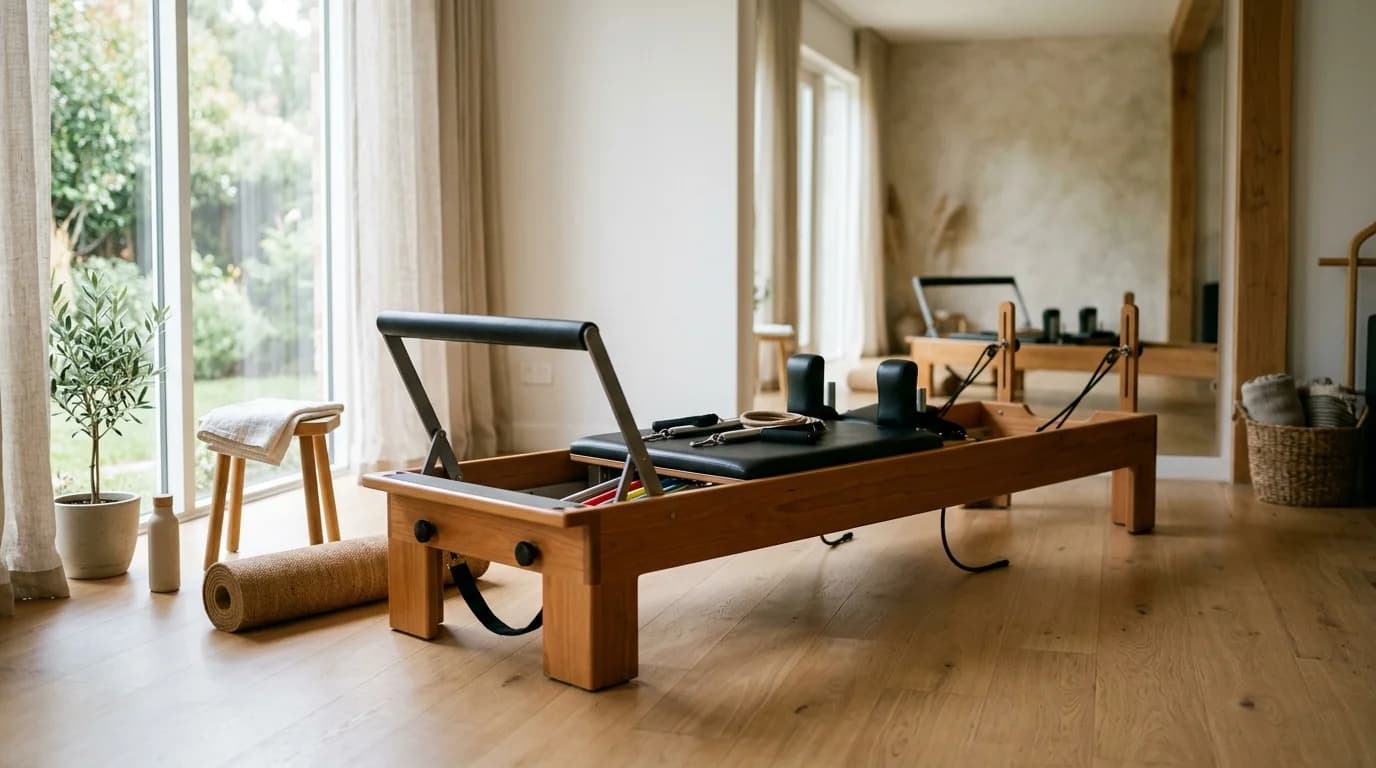
At the beginning of a first class, the instructor may explain the main parts of the reformer. This often includes the carriage, springs, footbar, shoulder blocks, headrest, and straps.
They may also show you how to get on and off the reformer safely. This matters because the carriage can move, and beginners need to understand when the reformer is stable and when it may slide.
The instructor may then set the springs for the first exercise. Spring settings can vary between machines and studios, so it is better to follow the instructor rather than guessing.
A first class will often begin with a controlled exercise to help you feel how the reformer moves. Footwork Series is a common example because it uses the footbar and lets you feel the carriage moving in a supported position.
Equipment You May Use
Reformer
The reformer is the main machine. It includes a moving carriage, springs, straps, and a footbar. In a beginner class, the instructor should help you understand how the reformer moves and how to stay controlled.
Footbar
The footbar is often used early in beginner classes. It gives your feet or hands a stable point of contact and appears in exercises such as Footwork Series.
Straps
Straps may be used for arm or leg exercises. They can feel unusual at first because they move with the springs and pulleys. Beginner strap exercises such as Frog in Straps can help introduce controlled leg movement.
Pilates Ring
Some classes use a Pilates ring, also called a magic circle. It can provide feedback for arm, shoulder, or trunk-control exercises. An example from the site library is Kneeling Arm Press with Pilates Ring.
Beginner Exercises You May See
Every studio and instructor is different, but beginner classes often include exercises that teach control, setup, and confidence with the reformer.
Footwork Series
Footwork Series is a common beginner exercise because the footbar gives a clear contact point and the carriage gives feedback as you press away and return. It can help you understand spring resistance, foot placement, lower-body alignment, and carriage control.
Bridging On Reformer
Bridging on Reformer may be used to introduce glute, hamstring, and trunk control in a supported position. It can help beginners explore how the pelvis and spine move with control.
Hundred Prep
Hundred Prep can introduce breath rhythm and core control before more demanding versions of the Hundred. It is a useful page to explore if you want to understand beginner core work.
Frog In Straps
Frog in Straps may appear when the class introduces straps. It can help beginners understand how the legs move against strap resistance while the trunk and pelvis stay organised.
Mermaid Stretch
Mermaid Stretch can be used to explore side-body movement, breathing, and mobility. It may feel less intense than some strength-focused exercises, but it still requires control and awareness.
What The Instructor May Cue
In a beginner reformer Pilates class, the instructor may give cues about setup, breathing, speed, and alignment.
Common cue themes include:
- where to place your feet or hands
- when to inhale and exhale
- how quickly to move the carriage
- how to keep the pelvis or trunk controlled
- how to avoid locking the knees or elbows
- how to adjust the range of movement
- how to keep the shoulders organised
- when to stop or modify the movement
Some cues may feel subtle. That is normal. Reformer Pilates is often about small adjustments, not just large movements.
If you do not understand a cue, ask. A good instructor would rather help you adjust than have you guess.
How Hard Should A First Class Feel?
A first reformer Pilates class may feel challenging, but it should not feel confusing, unsafe, or impossible to follow. Beginner classes should usually focus on control, confidence, and understanding the equipment.
You may feel your core muscles, glutes, hamstrings, or upper back working, depending on the exercises. You may also notice that slow movement feels harder than expected.
That does not mean you need to push through everything. If something feels unstable, painful, or unclear, ask for help or a modification.
Common First-Class Worries
“I do not know how the machine works.”
That is expected in a first class. The instructor should introduce the reformer and explain the main setup points. Reading the Reformer Pilates Equipment Guide before class may help you recognise the main parts.
“Everyone else will know what they are doing.”
In a beginner or fundamentals class, other people may also be learning. Even experienced users need reminders about setup, spring settings, and control.
“I am worried I will do it wrong.”
That is one reason to start with a beginner class or 1:1 session. The instructor can help with setup, cues, and modifications. Focus on control rather than trying to do the biggest range or hardest version.
“I am not flexible enough.”
You do not need to be very flexible to start. Beginner reformer Pilates can include strength, control, coordination, and mobility. If range of movement is limited, the instructor can usually suggest modifications.
“I do not know which class is right.”
Look for beginner, intro, or fundamentals classes. If you are unsure, contact the studio and explain that you are new to the reformer.
What To Ask Your Instructor
Useful first-class questions include:
- Is this class suitable for someone completely new to the reformer?
- Which spring setting should I use for this exercise?
- What should I feel during the movement?
- What should I do if the carriage moves too quickly?
- How do I know if my setup is correct?
- Can you give me a modification if this feels too difficult?
- Which beginner exercises should I practise before progressing?
- Are there any exercises I should avoid because of my circumstances?
If you have pain, an injury, pregnancy, postnatal considerations, or a medical concern, mention this before the class starts.
FAQs
Do I need experience before my first reformer Pilates class?
Not always. Many studios offer beginner, intro, or fundamentals classes for people who are new to the reformer. It is worth checking the class level before booking and telling the instructor if it is your first time.
What should I wear to a first reformer Pilates class?
Wear comfortable clothing that lets you move and allows the instructor to see your alignment. Many studios ask for grip socks. Check the studio’s instructions before attending, as requirements can vary.
Will I use straps in my first class?
You might. Some beginner classes introduce straps early, while others focus first on the footbar and carriage control. Frog in Straps is one beginner-friendly strap exercise you may want to explore before or after class.
Is the reformer difficult to use at first?
The reformer can feel unfamiliar because the carriage moves and the springs change resistance. A beginner class should introduce these features gradually. You do not need to understand everything before you arrive.
What exercises might be in a first reformer Pilates class?
A beginner class may include exercises such as Footwork Series, Bridging on Reformer, Hundred Prep, Frog in Straps, or Mermaid Stretch, depending on the instructor and class format.
Should I choose a group class or a 1:1 session first?
A beginner group class can be a good introduction if it is clearly designed for new users. A 1:1 session may be more suitable if you want more individual guidance, feel nervous, or have personal considerations that require closer support.
What if I feel unstable during class?
Tell the instructor. They can adjust the spring setting, reduce the range, change the setup, or offer a modification. You should not feel that you have to continue with a movement that feels unsafe or unclear.
Where should I go next after my first class?
After your first class, review the Beginner Reformer Pilates Exercises guide and revisit any exercises you recognised. You can also use Reformer Pilates for Beginners as a broader starting hub.