Guide · Equipment & apparatus
Footbar Exercises Guide
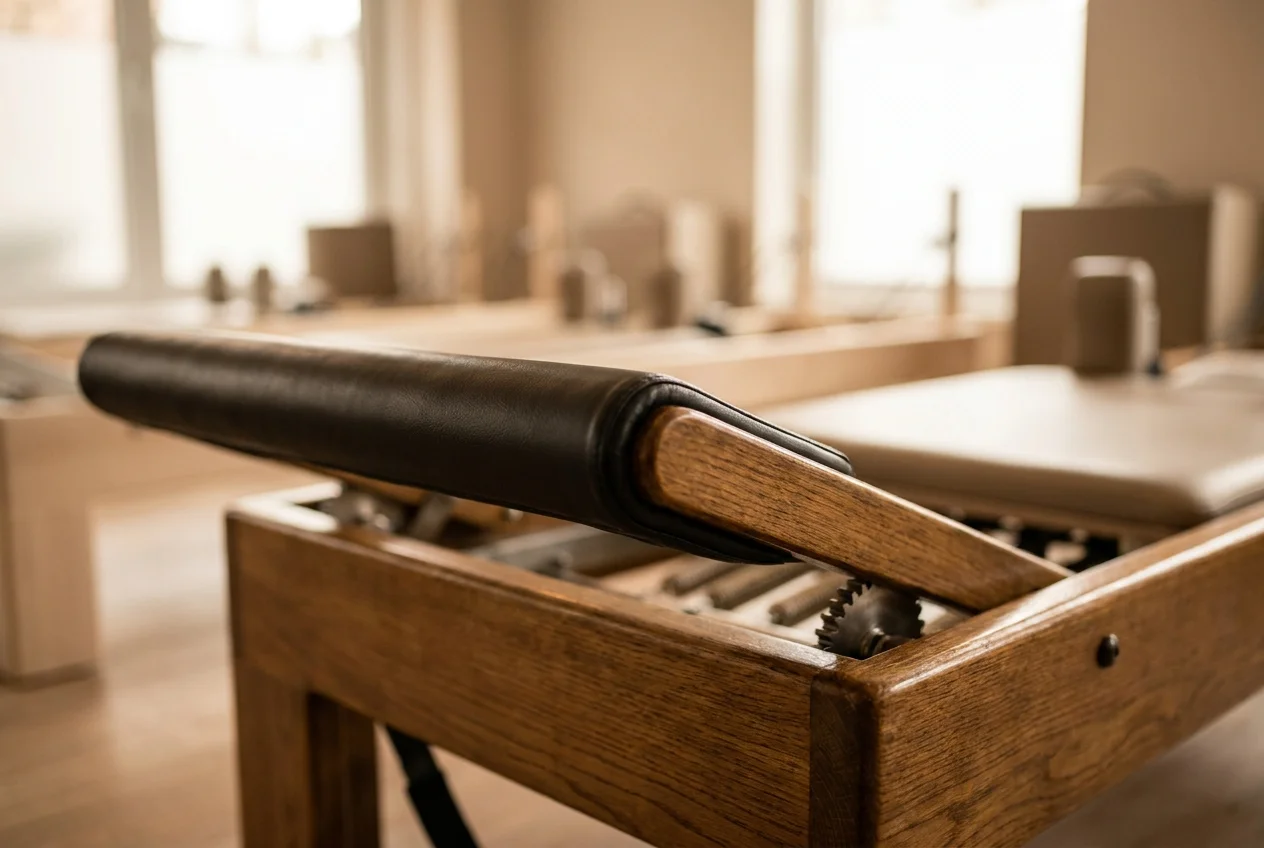
The [footbar](/equipment/footbar) is one of the most accessible parts of the [reformer](/equipment/reformer). It gives the feet or hands a stable contact point while the carriage moves along the rails. For beginners,…
This guide is for educational discovery only. If you have pain, an injury, pregnancy, postnatal considerations, or a specific medical concern, speak to a qualified Pilates instructor or appropriate healthcare professional before trying new exercises.
Quick Answer
The footbar is a bar at one end of the reformer used as a contact point for the feet or hands. Beginner footbar exercises include Footwork Series for lower-body alignment, Bridging on Reformer for hip and glute awareness, and Hundred Prep for core connection. Footbar work is often the best starting point before straps or props.
Who This Guide Is For
This guide may be useful if you:
- are new to reformer Pilates and want to understand footbar exercises
- have heard instructors mention footwork and want to know what that means
- want to explore beginner-friendly exercises on the reformer
- are preparing for your first class and want to recognise common footbar setups
- want exercises connected to core strength, posture support, or beginner confidence
- want better questions to ask before trying footbar movements
Footbar exercises are often the foundation of reformer classes. Many instructors use them to teach carriage control, spring feedback, and lower-body alignment before introducing straps or accessories.
What Is The Reformer Footbar?
The footbar is a horizontal bar attached to the reformer frame. It can usually be adjusted to different heights or angles depending on the exercise and the machine.
The footbar is used as a stable point to press from with the feet or hands. When the user presses, the carriage may move out along the rails. When the user controls the return, the springs bring the carriage back.
For beginners, the footbar is helpful because it:
- gives a clear place to put the feet or hands
- makes carriage movement easier to understand
- allows exploration of alignment before adding strap complexity
- connects directly to many foundational reformer exercises
Useful orientation page:
How The Footbar Changes An Exercise
The footbar is not just a place to rest the feet. Its height, angle, and spring setting all change how an exercise feels.
Factors that affect footbar work include:
- Footbar position — higher or lower settings change leg angle and range
- Foot placement — heels, toes, arches, or parallel versus turned-out positions
- Spring setting — affects how heavy or light the press and return feel
- Body position — supine, seated, standing, or kneeling on or off the carriage
- Range of movement — full or partial carriage travel
The same footbar can feel supportive in one exercise and demanding in another. Footwork Series is often used to teach these variables in a manageable way.
Foot Placement And Alignment Basics
Foot placement is one of the first things beginners learn on the footbar. Small changes in foot position can shift which muscles work and how the legs align.
Common ideas instructors may cue include:
- pressing evenly through the foot rather than collapsing to one side
- keeping knees tracking in line with feet during leg work
- maintaining a stable pelvis during bridging or supine footwork
- avoiding locking the knees at the end range
- controlling the carriage return rather than letting springs snap it back
These ideas appear across multiple footbar exercises. Footwork Series is the most direct place to explore them.
If foot placement feels uncomfortable or confusing, ask the instructor to check your setup before increasing spring tension or range.
Beginner Footbar Exercises To Explore
These exercises from the current library are useful starting points for footbar work. Your instructor will decide which are appropriate for your level.
Footwork Series
Footwork Series is the classic beginner footbar exercise. It usually involves lying on the carriage and pressing the feet into the footbar to move the carriage out and in through several foot positions.
Why beginners explore it:
- introduces carriage movement and spring feedback
- teaches foot placement and leg alignment
- builds lower-body awareness in a supported position
- connects to beginner confidence on the reformer
Bridging on Reformer
Bridging on Reformer uses the footbar as a contact point while the user lifts the hips into a bridge position. It connects to glute and hamstring awareness, core strength, and hip extension.
Why beginners explore it:
- builds on footbar familiarity from footwork
- explores hip lift with trunk organisation
- helps users feel how spring setting changes the bridge
Hundred Prep
Hundred Prep is a preparatory version of the classical Hundred exercise. On the reformer, it often uses the footbar for leg position while the user works on trunk lift and breath.
Why beginners explore it:
- introduces core connection with footbar support
- connects breath to movement
- prepares for more demanding abdominal work later
Footbar Exercises For Core And Glute Awareness
Footbar exercises are not only about the legs. Many also ask the trunk to stay organised while the lower body moves.
Useful pages:
These exercises connect to core strength because the user must stabilise the trunk while pressing or lifting. They connect to hip mobility and glute awareness because leg and hip position change through different foot placements and ranges.
When exploring these exercises, pay attention to:
- whether the lower back over-arches during bridging
- whether the ribs flare during trunk lift in Hundred Prep
- whether the glutes engage during the press phase of footwork
- whether the carriage returns with control
Footbar Exercises For Balance And Coordination
Some footbar exercises move beyond supine work into standing or partial-weight-bearing positions. These can build coordination and challenge balance while still using the footbar as a reference point.
Useful pages:
Elephant
Elephant is a standing exercise where the hands are on the footbar and the carriage moves while the user maintains an organised trunk and leg position. It connects to hamstring length, shoulder stability, and controlled carriage movement.
Why it matters for progression:
- introduces a different body orientation on the footbar
- asks for trunk organisation in a standing position
- builds confidence with carriage control outside supine work
Scooter
Scooter is a standing exercise where one foot is on the floor and one foot is on the carriage, often with the hands on the footbar for support. It explores single-leg stability and glute engagement.
Why it matters for progression:
- introduces single-leg balance on the reformer
- connects to hip and glute awareness
- may be more appropriate after basic footbar confidence is established
Both Elephant and Scooter should be introduced with clear instructor setup. They are not always first-session exercises.
Common Footbar Mistakes
Pressing unevenly through the feet
Uneven pressure can shift knee alignment and reduce the usefulness of the exercise. Aim for even contact through the part of the foot the instructor specifies.
Letting the carriage snap back
The return phase matters. Control the carriage home rather than relying on the springs to do the work for you.
Ignoring footbar height and spring setting
Footbar height and springs change the exercise significantly. Do not copy a neighbour's setup without checking with the instructor.
Over-arching the lower back during bridging
In Bridging on Reformer, lifting too high through the lower back rather than the hips and glutes reduces the benefit and may feel uncomfortable.
Rushing into standing footbar exercises
Elephant and Scooter require trunk control and familiarity with carriage movement. Supine footbar work such as Footwork Series is usually a better starting point.
What To Ask An Instructor
Useful footbar questions include:
- Which footbar height should I use for this exercise?
- Where exactly should my feet or hands go?
- Which spring setting is right for me today?
- Should I press fully out or only partway?
- What should I feel working — glutes, hamstrings, core, or something else?
- How do I know if my knees are tracking correctly?
- Is Elephant or Scooter appropriate for my level?
- When should I progress from footbar work to straps?
If footbar work causes pain or feels unstable, stop and ask before continuing.
FAQs
What is the footbar on a reformer?
The footbar is a bar at one end of the reformer used as a contact point for the feet or hands. It is commonly used in exercises such as Footwork Series where the user presses against the bar to move the carriage.
What are the best beginner footbar exercises?
Useful beginner footbar exercises include Footwork Series, Bridging on Reformer, and Hundred Prep. Your instructor will choose based on your level and class focus.
Why is footwork often the first reformer exercise?
Footwork uses a clear setup, supported body position, and direct feedback from the footbar and carriage. It helps beginners understand spring resistance, foot placement, and controlled movement before trying straps or more complex exercises.
Can footbar exercises build core strength?
Yes. Exercises such as Hundred Prep and Bridging on Reformer ask the trunk to stay organised while the lower body moves. They connect to core strength, though they are not the only way to explore core work on the reformer.
What is the difference between Elephant and Scooter?
Elephant is a standing exercise with hands on the footbar and both feet on the carriage in a folded position. Scooter is a standing single-leg exercise with one foot on the floor and one on the carriage. Both require trunk control but challenge balance differently.
Do heavier springs make footbar exercises harder?
Not always. Heavier springs add resistance to the press but can also feel more stable. Lighter springs may require more control on the return. Ask your instructor what the spring setting is intended to do for each exercise.
When should I try strap exercises instead of footbar work?
Many instructors introduce footbar exercises first, then move to straps once carriage control and basic alignment are established. See the Reformer Straps Guide when you are ready to explore strap work.
Where should I start if I am new to the reformer?
Start with Reformer Pilates for Beginners and Beginner Reformer Pilates Exercises. For footbar-specific practice, begin with Footwork Series.