Guide · Equipment & apparatus
Pilates Ring Exercises on the Reformer
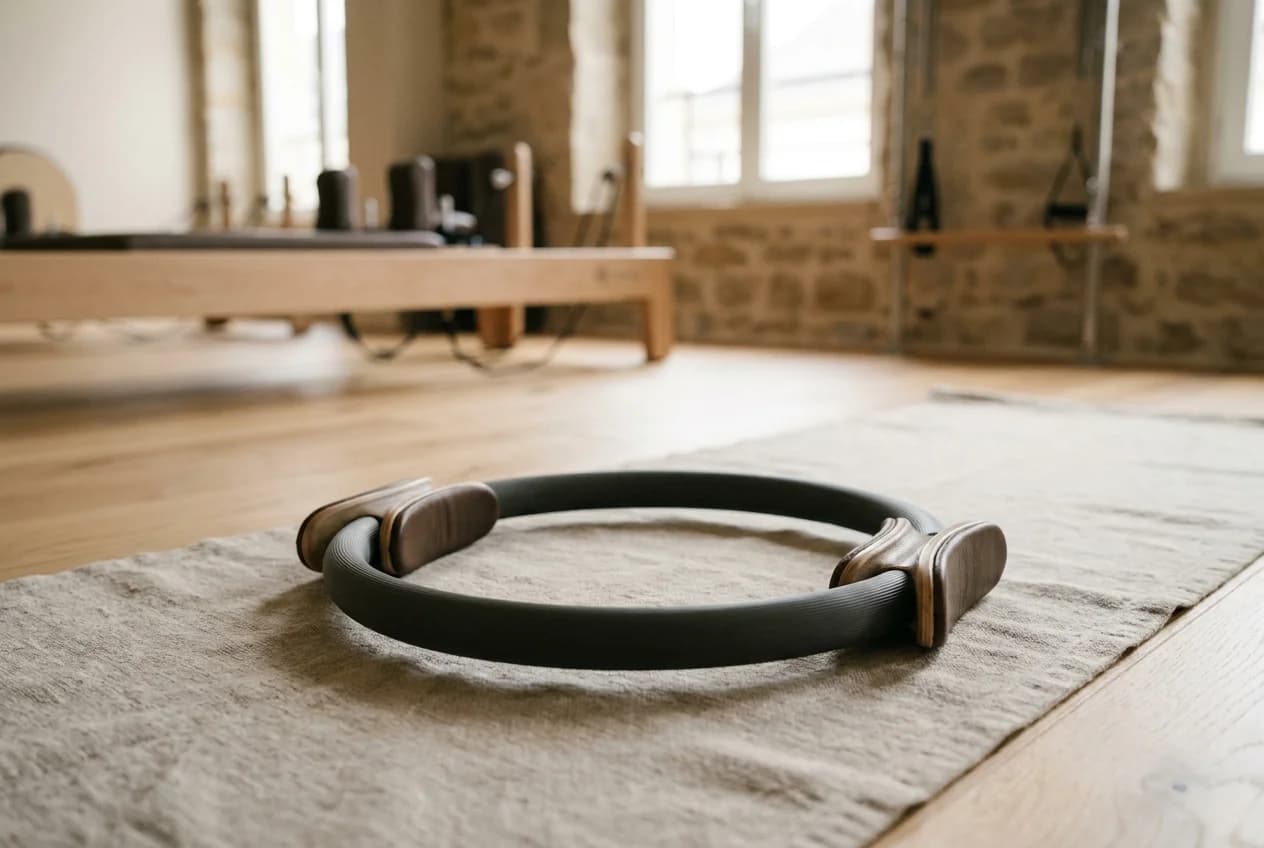
The [Pilates ring](/equipment/pilates-ring), sometimes called a magic circle, is a flexible resistance ring used as a prop in Pilates. It is not part of the [reformer](/equipment/reformer) itself, but it is commonly u…
This guide is for educational discovery only. If you have pain, an injury, pregnancy, postnatal considerations, or a specific medical concern, speak to a qualified Pilates instructor or appropriate healthcare professional before trying new exercises.
Quick Answer
The Pilates ring is a flexible prop used during reformer exercises to give tactile feedback for arm, leg, or trunk position. It is not attached to the reformer — the instructor adds it to an exercise when useful. A relevant exercise in the current library is Kneeling Arm Press with Pilates Ring, which connects to shoulder control and posture support.
Who This Guide Is For
This guide may be useful if you:
- are new to reformer Pilates and have seen a Pilates ring in class
- want to understand how the ring is used on the reformer
- want to explore exercises connected to posture support or core strength
- are curious about props and how they change an exercise
- want better questions to ask before trying ring work
- want to understand how the ring differs from footbar or strap exercises
The Pilates ring is a common accessory, but it is not always used in beginner classes. Many sessions focus on foundational footbar and strap work first.
What Is A Pilates Ring?
The Pilates ring is a flexible circular prop, usually made of metal or composite with padded handles. It provides gentle resistance when pressed or pulled, and tactile feedback when held between the hands, arms, or legs.
The ring is not part of the reformer frame. It is a portable accessory that instructors may add to mat or reformer exercises when it helps the user feel alignment, pressure, or muscle engagement more clearly.
Common ring placements include:
- between the hands in front of the chest
- between the palms during arm presses
- between the inner thighs during leg work
- behind the upper back or head in certain setups depending on the exercise
Because the ring is small and portable, it can appear in many different exercise contexts. On the reformer, it is usually combined with carriage, footbar, or kneeling positions rather than used alone.
Useful orientation page:
Why Use A Pilates Ring On The Reformer?
The reformer already provides spring resistance and movement feedback. The ring adds a different kind of information: direct pressure and contact that helps the user notice position and engagement.
Reasons instructors may add a ring to reformer work include:
- giving the user a clear point of contact between the hands or arms
- encouraging even pressure rather than collapsing to one side
- supporting shoulder organisation during arm work
- adding gentle inner-thigh or arm engagement during an exercise
- helping beginners feel where they should be working
The ring is not only for making exercises harder. Often it is useful because it makes an exercise clearer.
How The Ring Provides Feedback
Unlike straps or the footbar, which connect to the reformer spring system, the ring provides local feedback through pressure.
Examples of what the ring can help users notice:
- whether both arms press evenly in Kneeling Arm Press with Pilates Ring
- whether the shoulders stay settled rather than lifting toward the ears
- whether the trunk stays organised during arm movement
- whether inner-thigh engagement is even during leg-based ring work
This feedback can support beginner confidence because it gives a concrete sensation to focus on. It can also support posture support when the ring is used for upper-back and shoulder awareness.
If the ring feels like it is forcing an awkward position, the setup or exercise choice may need adjusting. Ask the instructor rather than pushing through discomfort.
Beginner Pilates Ring Exercises To Explore
The current exercise library includes ring work that can be explored on or alongside the reformer. Your instructor will decide which are appropriate for your level.
Kneeling Arm Press with Pilates Ring
Kneeling Arm Press with Pilates Ring is the primary ring exercise in the current library. The user kneels — often on the reformer carriage — and presses the ring between the hands while maintaining trunk organisation.
Why beginners explore it:
- introduces ring pressure in a clear, upright position
- connects to shoulder control and upper-back awareness
- builds on kneeling stability before more complex arm work
- links to posture support and core strength
This exercise may be more appropriate after basic reformer familiarity is established. Kneeling on a moving carriage requires trunk control.
Ring Exercises For Upper Body And Posture
Ring work on the reformer often emphasises the upper body because the ring gives direct feedback between the hands or arms.
Useful page:
Related exercises without the ring that connect to similar ideas:
- Chest Expansion — strap-based upper-back work; see Reformer Straps Guide
- Long Box Pulling Straps — upper-back strap work on the long box; see Long Box Exercises Guide
When exploring ring-based upper-body work, pay attention to:
- whether the shoulders stay away from the ears
- whether pressure on the ring is even between both sides
- whether the trunk stays organised rather than arching or collapsing
- whether the press comes from controlled effort rather than momentum
These ideas connect to posture support because they emphasise organisation rather than force.
Ring Exercises For Core And Hip Awareness
Although the current library emphasises Kneeling Arm Press with Pilates Ring, the ring can also appear in exercises that connect to core strength and hip mobility depending on class setup.
Useful related pages without the ring:
- Hundred Prep — core connection with footbar support; see Footbar Exercises Guide
- Frog in Straps — hip control with straps
- Mermaid Stretch — side-body and hip mobility
Instructors may add the ring to leg or trunk exercises to help users feel inner-thigh engagement or lateral trunk support. These variations are not always in the published exercise library, but the underlying ideas — core organisation and hip awareness — connect to the goals above.
If you are exploring ring work for the first time, Kneeling Arm Press with Pilates Ring is the most direct starting point in the current library.
Common Pilates Ring Mistakes
Gripping the ring too hard
The ring is meant to provide feedback, not to be crushed. Excessive grip can create tension in the neck, shoulders, and wrists.
Letting the shoulders lift during arm press work
In Kneeling Arm Press with Pilates Ring, shrugging reduces shoulder organisation and may feel uncomfortable.
Using the ring before understanding basic reformer setup
Ring exercises often combine prop feedback with carriage or kneeling stability. Footwork Series and basic reformer orientation from Reformer Pilates for Beginners are useful foundations.
Assuming the ring always makes an exercise harder
Sometimes the ring clarifies an exercise rather than intensifying it. Pressing evenly on the ring may feel more manageable than free-form arm movement for some beginners.
Ignoring trunk organisation
Ring work fails when the arms move but the trunk collapses. Core support matters in kneeling and seated ring exercises.
What To Ask An Instructor
Useful Pilates ring questions include:
- Where should I hold the ring for this exercise?
- How much pressure should I use — light contact or firm press?
- What should I feel working when I press the ring?
- Is Kneeling Arm Press with Pilates Ring appropriate for my level?
- Should my shoulders stay relaxed or actively engaged?
- How does the ring change this exercise compared to doing it without the prop?
- Is kneeling on the carriage stable enough for me today?
- What is a sensible progression after my first ring exercise?
If ring work causes wrist, shoulder, or neck discomfort, stop and ask before continuing.
FAQs
What is a Pilates ring used for on the reformer?
The Pilates ring provides tactile feedback during reformer exercises. It may be held between the hands, arms, or legs to help the user notice pressure, alignment, and engagement. A relevant exercise is Kneeling Arm Press with Pilates Ring.
Is the Pilates ring the same as a magic circle?
Yes. Pilates ring and magic circle are common names for the same prop — a flexible circular ring with padded contact points.
Are Pilates ring exercises suitable for beginners?
Some ring exercises can be suitable for beginners with clear setup. Kneeling Arm Press with Pilates Ring may be introduced once basic reformer and kneeling stability are established. Follow instructor guidance.
Does the ring make reformer exercises harder?
Not always. The ring often clarifies an exercise by giving a clear point of contact. It can add gentle resistance when pressed, but its main value is frequently feedback rather than intensity.
How is ring work different from strap or footbar exercises?
Straps and the footbar connect to the reformer spring system. The Pilates ring is a separate prop that provides local pressure feedback. See the Reformer Straps Guide and Footbar Exercises Guide for comparison.
Can Pilates ring exercises help with posture?
Kneeling Arm Press with Pilates Ring explores shoulder organisation and upper-back awareness, which connect to posture support. This is educational guidance, not individual postural assessment.
Do I need my own Pilates ring for reformer class?
Most studios provide rings and other props. You do not usually need to bring your own for a class, but policies vary by studio.
Where should I start if I am new to reformer props?
Start with Reformer Pilates for Beginners and the Reformer Pilates Equipment Guide. Build familiarity with Footwork Series and basic reformer work before exploring the Pilates ring.